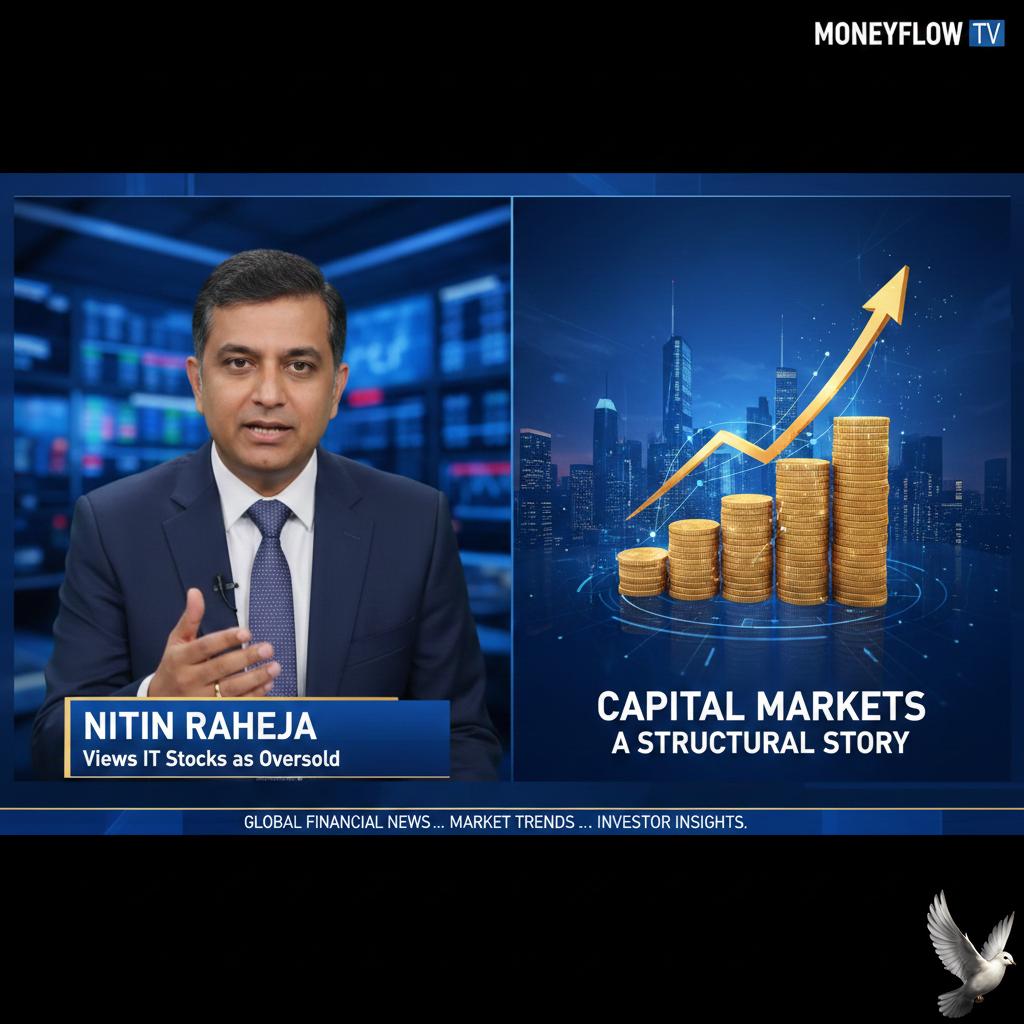
Nitin Raheja Views IT Stocks as Oversold and Capital Markets as a Structural Story
Market dynamics in early 2026 suggest a significant shift in the Indian technology landscape. The Nifty IT index recently experienced a sharp correction, dropping between **11% and 15%** due to investor anxiety regarding artificial intelligence.
Analysts at Julius Baer maintain that this selloff is an overreaction. They argue that while AI disruption is a fundamental reality, its impact will unfold gradually over several years rather than causing immediate displacement.
Top-tier IT firms are currently utilizing their substantial cash reserves to pivot. Major players have already announced aggressive investments in data centers and AI-focused acquisitions. By leveraging these "cash war chests," the sector is evolving from being a target of AI to an active participant in the global infrastructure boom.
Current valuations for these companies remain resilient, supported by attractive dividend yields and strong free cash flow. The strategic shift toward engineering R&D and generative AI is expected to help the industry reach a **$350 billion** mark by the end of 2026, contributing nearly **10%** to India's GDP.
The capital markets present a separate but equally compelling structural story. Despite short-term volatility and increased regulatory oversight in the futures and options segment, the long-term outlook remains positive.
A primary growth driver is the remarkably low household equity allocation in India. Current estimates place this allocation at just **6% to 7%**, far below levels seen in developed economies or regional peers. This gap represents a massive potential for sustained domestic inflows as financial literacy deepens.
Institutional observers favor asset managers and wealth management firms in this environment. As retail investors move away from speculative trading toward long-term wealth creation, asset management companies are positioned to capture the resulting surge in assets under management.
The broader economy continues to provide a stable backdrop for these sectors. Real GDP growth for the current fiscal year is projected between **6.8% and 7.2%**, supported by historically low inflation and robust service-sector expansion.
While global conditions remain complex, the deepening of India's domestic markets serves as a stabilizing force. The transition from a savings-heavy mindset to a capital-market-led approach is still in its early stages, providing a long runway for the financial services and technology sectors.