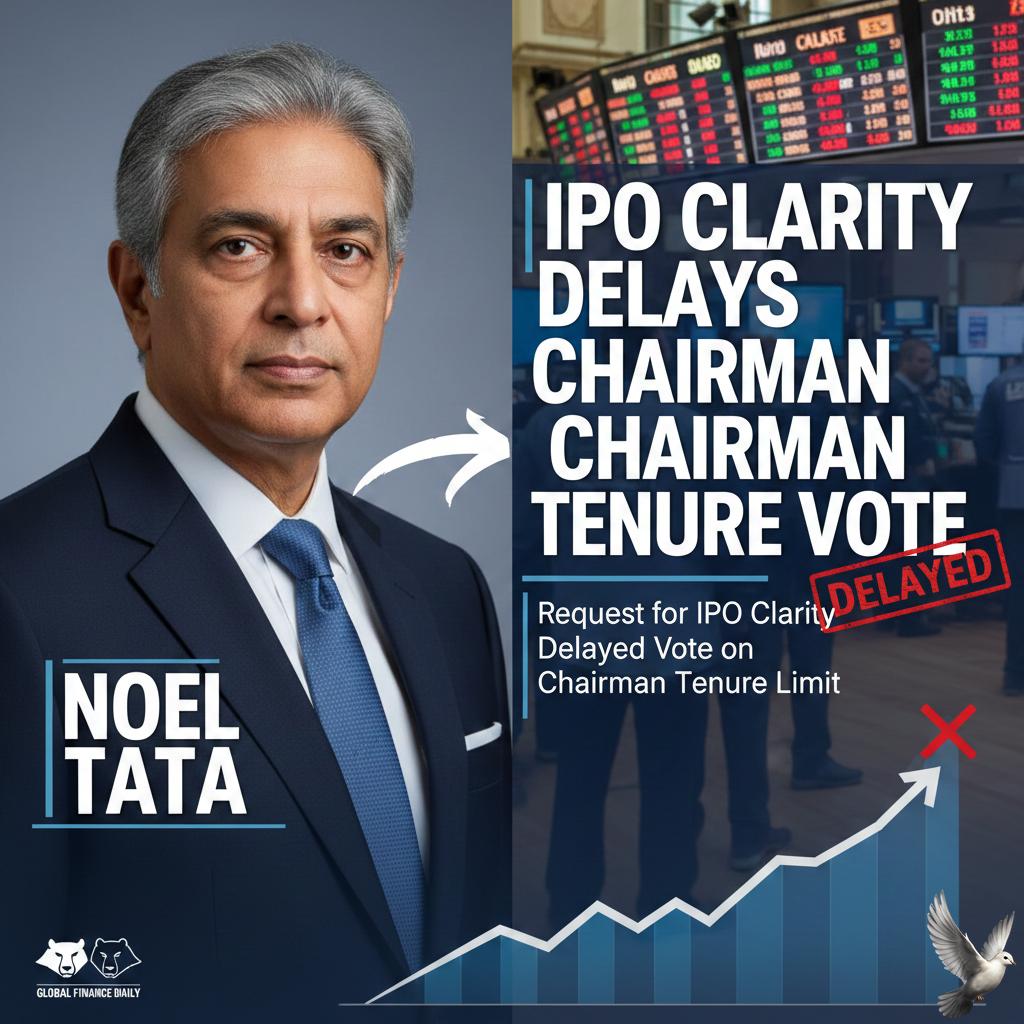
Noel Tata’s Request for IPO Clarity Delayed Vote on Chairman Tenure Limit
At 11:30 a.m. on Tuesday, February 24, 2026, the six board directors of Tata Sons convened at Bombay House for a high-stakes meeting. While the agenda initially appeared to be the straightforward approval of a third five-year term for Chairman Natarajan Chandrasekaran, the session revealed significant shifts in the group’s internal governance.
The board ultimately deferred the decision on the reappointment, which would extend Chandrasekaran's leadership beyond February 2027. This move follows a period of notable growth but also recent financial pressure. Under Chandrasekaran’s tenure, the group's 15 largest listed companies nearly doubled their revenue and profits. However, 2025 proved to be a volatile year, with the conglomerate’s combined market capitalization falling by approximately 3 lakh crore (nearly $73 billion) to reach 26.3 lakh crore by year-end.
The deferral was influenced by Noel Tata, Chairman of Tata Trusts, which holds a decisive 66% stake in Tata Sons. During the meeting, concerns were raised regarding persistent losses in newer ventures, specifically Air India and Tata Digital. Reports indicate that the Trusts are seeking greater accountability and have set specific conditions for the chairman's next term.
One critical point of discussion is the potential mandatory listing of Tata Sons. To comply with Reserve Bank of India regulations for core investment companies, the firm faced a deadline of late 2025 to go public. Tata Sons has applied to surrender this registration to avoid a listing, a strategy Noel Tata reportedly supports through a demand for a written commitment against a public debut.
Despite the temporary impasse, Chandrasekaran retains the support of several board members who credit him with modernizing the group and steering it through major restructurings since 2017. Key drivers such as Tata Steel and Titan showed resilience in 2025, gaining 24% and 20% respectively. Conversely, heavyweights like TCS and Tata Motors faced headwinds, with TCS declining 19% amid global IT spending caution.
The meeting concluded with Chandrasekaran himself recommending the deferral to maintain unity between the holding company and its principal shareholders. While operational continuity remains, the focus now shifts to how the leadership will address capital allocation and the profitability of high-stakes bets in semiconductors and electric mobility.
Daily operations continue without change as the board seeks a consensus. The next round of deliberations will likely define the group’s strategic direction through 2032, balancing the aggressive expansion of the last decade with a renewed focus on fiscal discipline and subsidiary performance.