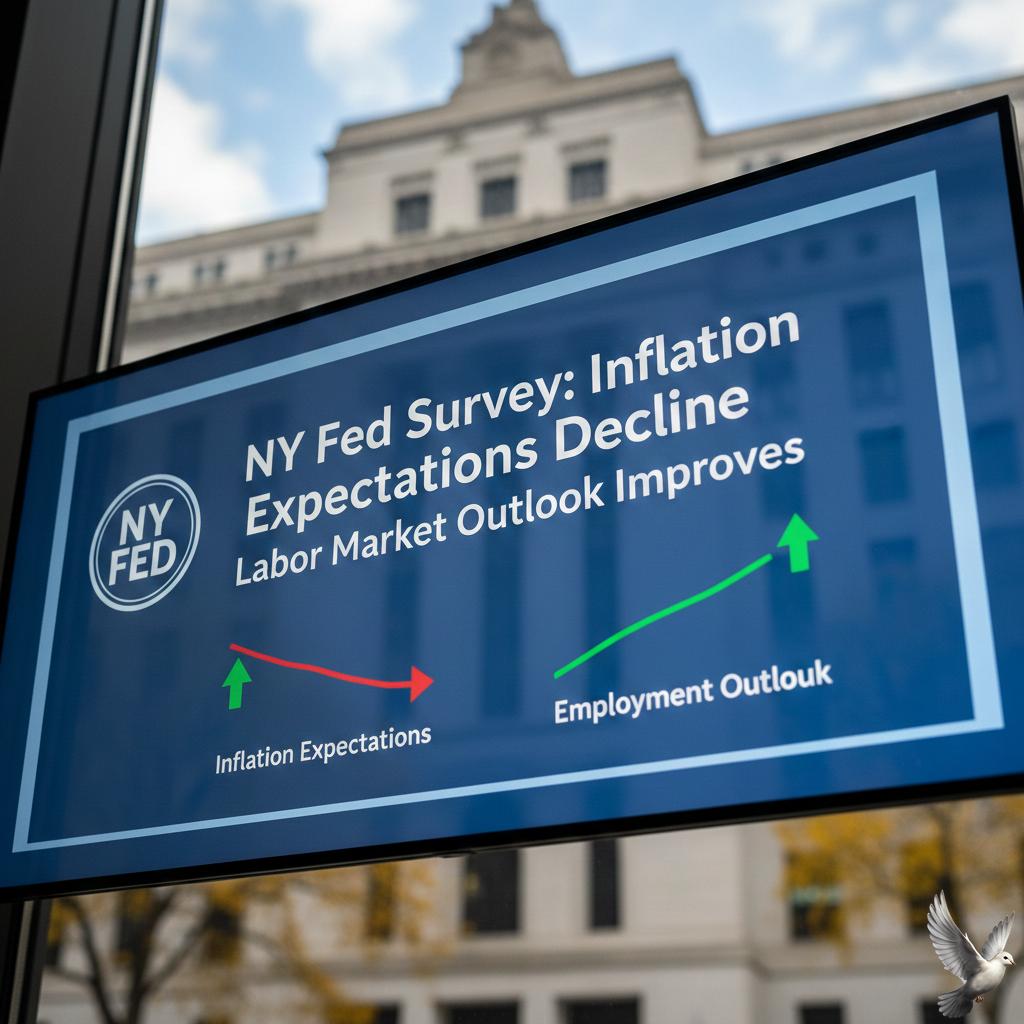
NY Fed Survey: Inflation Expectations Decline as Labor Market Outlook Improves
**US MARKET BRIEF: CONSUMER SENTIMENT AND LABOR TRENDS**
US households are signaling a pivot toward cautious optimism as 2026 begins. A primary Federal Reserve report released on **February 9, 2026**, indicates that short-term inflation expectations have declined to **3.1%**, down from **3.4%** in the previous month. This marks a significant cooling in price anxiety, though medium- and long-term expectations remain anchored at **3.0%**, still slightly above the central bank’s **2%** target.
Labor market confidence is also showing resilience. The perceived risk of job loss fell to **14.8%** in January, while the probability of finding a new position within three months improved to approximately **46%**. Expected earnings growth has ticked up to **2.7%**, providing a modest cushion against living costs.
**Key Economic Indicators**
* **One-Year Inflation Forecast:** **3.1%** (down from **3.4%**)
* **Unemployment Rate:** Held steady at **4.4%** as of the latest December data
* **Household Income Growth:** Median expectations sit at **2.9%**
* **Consumer Sentiment Index:** Rose to **57.3** in February, the highest level since August 2025
Despite the improved outlook, consumers remain wary of specific cost pressures. Expectations for gas price increases dropped sharply to **2.8%**, and rent growth projections cooled to **6.8%**. However, the cost of medical care and college education remains a concern, with expected price hikes of **9.8%** and **9.0%** respectively.
The Federal Reserve is monitoring these shifts closely. Stabilizing labor expectations and cooling inflation forecasts supported the decision to hold interest rates steady following three consecutive cuts at the end of 2025. While households feel more secure, they also report that credit is becoming harder to obtain, suggesting a tightening in financial conditions that may temper future spending.
This "low-hire, low-fire" equilibrium in the job market, combined with a gradual descent in inflation, provides the Fed with a narrow path to support growth without reigniting price surges. Markets are now focused on upcoming employment data to confirm if this stabilization can be sustained through the first half of the year.