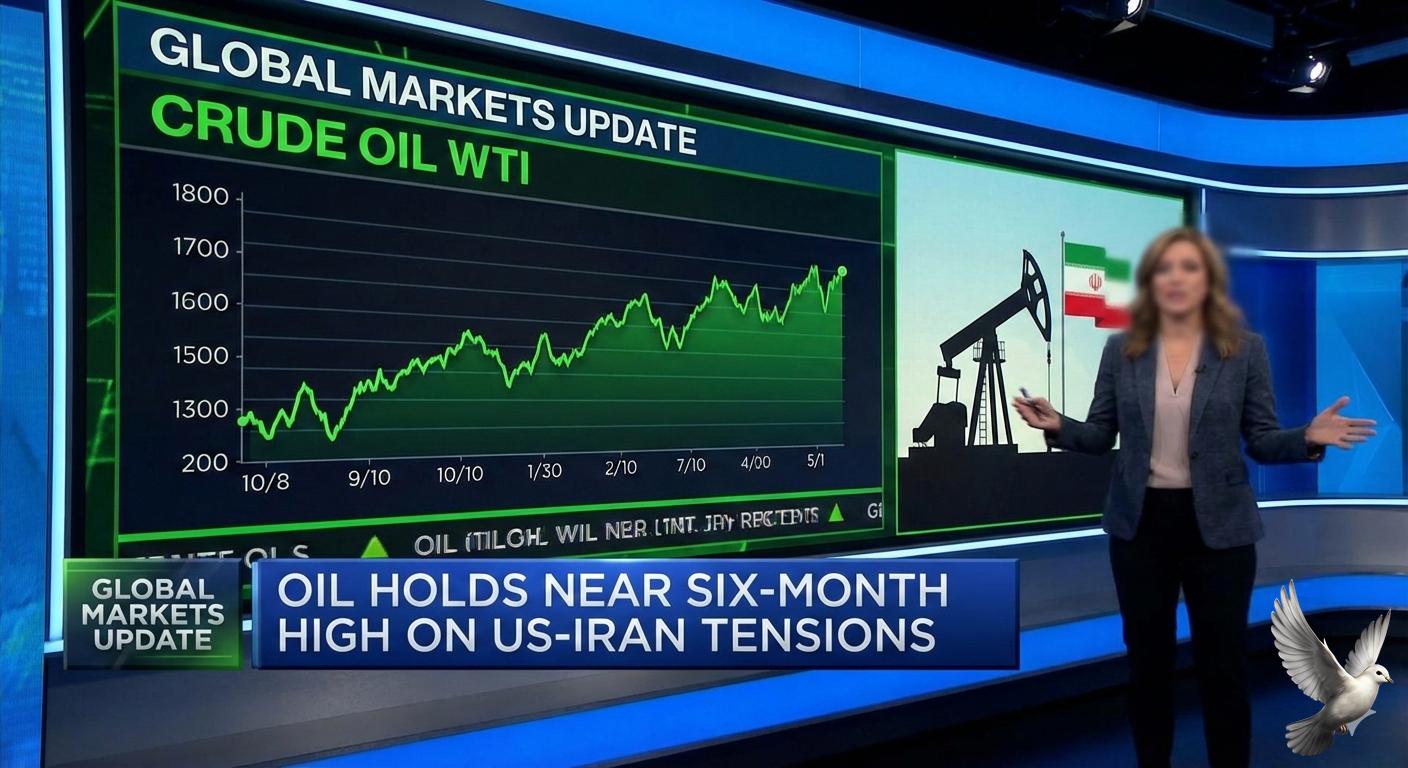
Oil Holds Near Six-Month High on US-Iran Tensions
**Global Oil Market Brief – January 31, 2026**
**Current Market Status**
Oil prices have rallied to near four-month highs, driven by renewed geopolitical instability and supply constraints. **Brent Crude** is currently trading around **$69.80 – $70.70** per barrel, while **WTI Crude** has climbed to approximately **$65.20 – $65.75**.
**Key Drivers**
* **Geopolitical Tensions:** escalating friction between the U.S. and Iran has re-emerged as a primary market mover. Recent warnings from the U.S. administration regarding nuclear talks and naval readiness have reintroduced a risk premium, with traders fearing potential disruptions in the Strait of Hormuz.
* **OPEC+ Policy:** The alliance is reportedly set to extend its oil production pause through **March 2026**. This decision to withhold additional supply is intended to counter seasonal demand weakness and support a price floor near **$70**.
* **Supply Disruptions:** Severe winter storms in the U.S. have temporarily shut in approximately **600,000 barrels per day** of production. Simultaneously, outages in Kazakhstan (Tengiz field) are tightening immediate global availability.
* **Strategic Buying:** China continues to act as a stabilizer, with record crude imports and aggressive stockpiling estimated at **2.67 million bpd** in December, taking advantage of lower prices to build strategic reserves.
**Market Outlook**
While the immediate trend is bullish due to war risk and weather outages, analysts remain cautious about the broader 2026 horizon. Projections from agencies like the EIA suggest prices could average lower later in the year—potentially dipping towards **$56**—as global production eventually outpaces demand. For now, the market remains volatile, effectively balancing immediate supply fears against long-term oversupply forecasts.