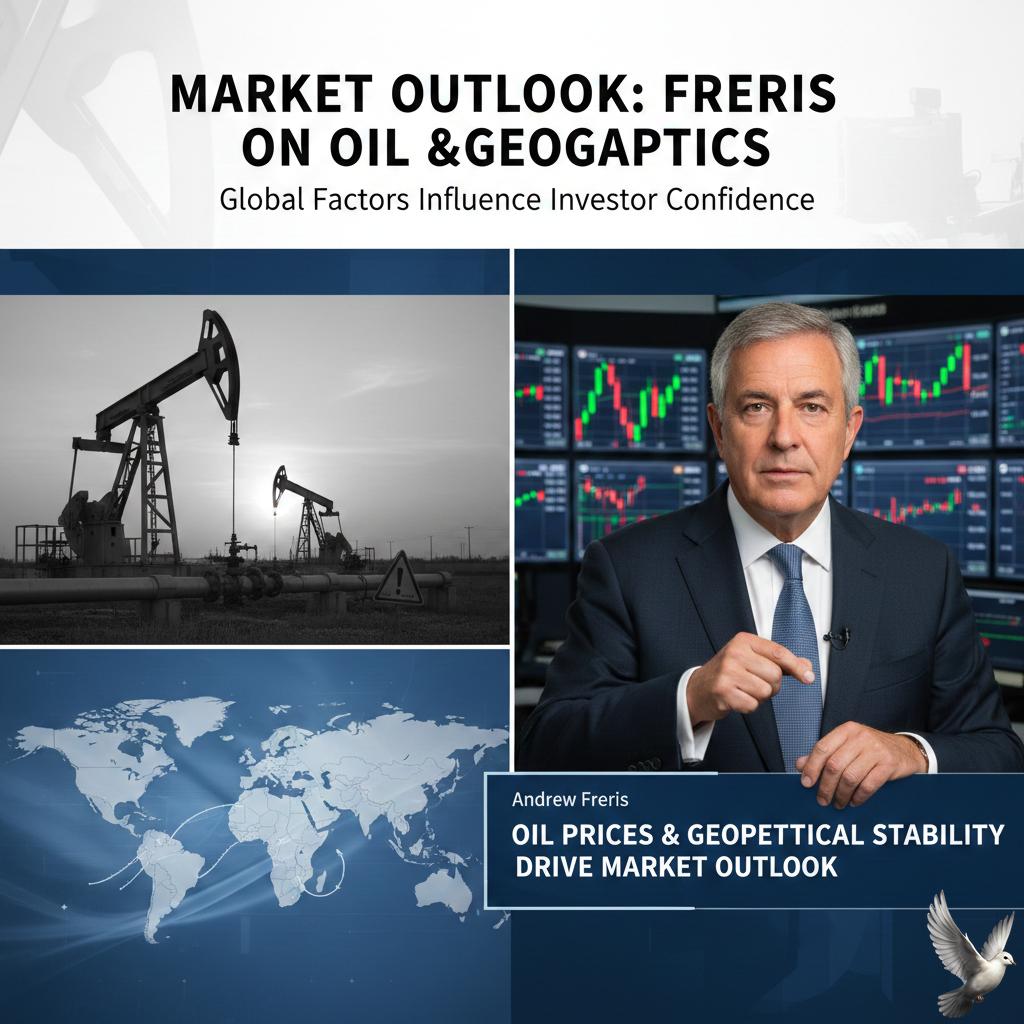
Oil Prices and Geopolitical Stability Drive Market Outlook, Says Andrew Freris
Market participants are showing increased resilience toward geopolitical shocks, with investors largely overlooking international conflicts unless they present a direct threat to global growth or inflationary stability. While regional tensions remain a critical variable, markets have increasingly priced in these risks as part of the broader macroeconomic landscape.
Crude oil continues to be the primary indicator of geopolitical stress. West Texas Intermediate (WTI) futures recently climbed toward $67 per barrel, reaching a six-month high amid heightened tensions in the Middle East. Despite these price spikes, global supply remains relatively balanced. This stability is underpinned by record-breaking U.S. production, which reached 13.74 million barrels per day in February 2026, alongside strategic output decisions from OPEC.
Investor attention has shifted toward domestic economic resilience. Recent U.S. data remains mixed but firm, with weekly jobless claims falling to a five-week low of 206,000 and the Philadelphia business outlook survey unexpectedly rising to a five-month high of 16.3. These figures suggest a labor market and manufacturing sector that are holding steady despite restrictive monetary conditions.
The Federal Reserve's policy path remains the central focus for capital markets. Current interest rates are held at a range of 3.50% to 3.75%. Although the Fed delivered three rate cuts in 2025, the outlook for further reductions in 2026 has been delayed. Policymakers have signaled a patient approach, as core inflation metrics—specifically the Personal Consumption Expenditures (PCE) price index—show a persistent climb toward 2.8% to 2.9%.
Equities have reflected this "higher-for-longer" sentiment through increased volatility. The S&P 500 is currently hovering near 6,843, while the Nasdaq Composite sits around 22,578. While major indices have touched record highs, gains are increasingly concentrated in sectors like healthcare and utilities, as tech-heavy benchmarks face pressure from rising Treasury yields. The 10-year Treasury yield has edged up to 4.07%, reflecting the market's expectation that the central bank will not rush into further easing.
Global demand for oil is forecast to rise by 850,000 barrels per day in 2026, driven almost entirely by non-OECD economies. However, with global supply projected to increase by 2.4 million barrels per day in the same period, the long-term outlook for energy prices remains tempered. This supply-side cushion provides a buffer that allows broader financial markets to maintain a constructive outlook even as regional instabilities persist.