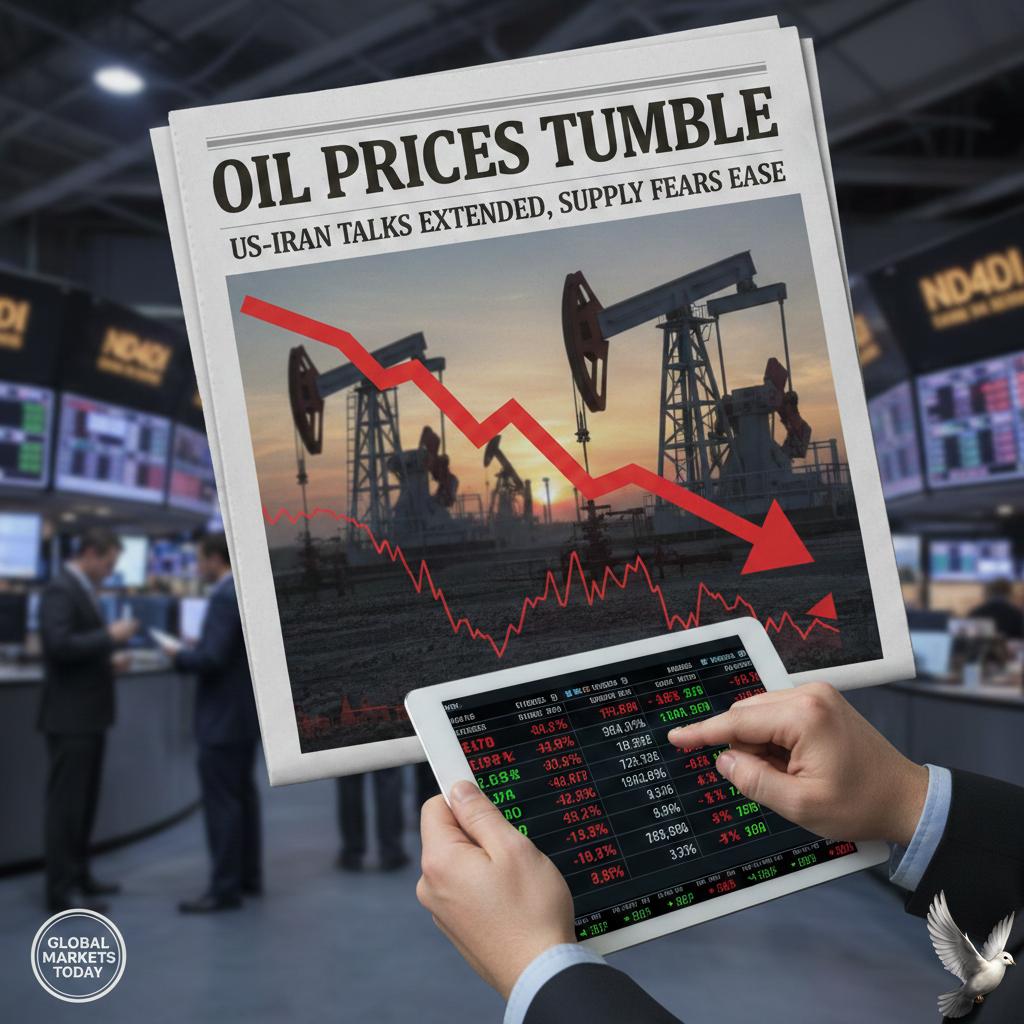
Oil Prices Decline Amid Extension of US-Iran Negotiations
Crude oil prices are moving into the weekend on a downward trajectory, with benchmarks posting weekly losses as high-stakes diplomacy in Geneva alters the risk landscape.
WTI crude futures settled near $65.46 per barrel, while Brent crude fluctuated just above the $70.00 mark. These levels represent a weekly decline of approximately 2.2% for WTI and 1.8% for Brent, reversing much of the geopolitical premium added earlier in the month.
The primary driver for this cooling sentiment is the extension of nuclear negotiations between the United States and Iran. While American officials expressed some disappointment with the lack of a definitive breakthrough, the agreement to continue technical discussions in Vienna next week has temporarily eased immediate fears of a military escalation.
Market participants are closely watching a looming March deadline set by Washington. The situation remains volatile, as Tehran recently stated it would not allow enriched uranium to leave the country—a key sticking point for Western negotiators.
Supply dynamics are also weighing on prices. Recent data shows U.S. crude inventories jumped by 16 million barrels last week, the largest increase in three years. This surge in domestic stocks coincides with U.S. production holding steady near record highs of 13.7 million barrels per day.
Additionally, output from major exporters is rising. Saudi Arabia’s exports are approaching a three-year peak, and increased flows have been noted from Iraq, Kuwait, and the UAE. This contributed to a broader narrative of a looming global supply glut, with some agencies forecasting a surplus as high as 3.7 million barrels per day for 2026.
Focus now shifts to the upcoming OPEC+ meeting this Sunday. The group is widely expected to discuss a modest production hike of 137,000 barrels per day for April. Traders are looking for clarity on whether the alliance will stick to its plan to restore production or maintain current cuts to combat the growing inventory builds.
Global demand remains a point of contention among analysts. While the IEA recently lowered its 2026 demand growth forecast to 850,000 barrels per day citing economic uncertainty, other agencies remain more optimistic. Non-OECD economies, led by China and India, are expected to account for nearly all consumption gains this year.
For the immediate term, technical-level meetings in Vienna and the Sunday OPEC+ decision will serve as the next major catalysts for price direction. Support for WTI is currently identified in the $62.00 to $63.00 range, while any further breakdown in nuclear talks could quickly reintroduce a risk premium toward the $72.00 resistance level.