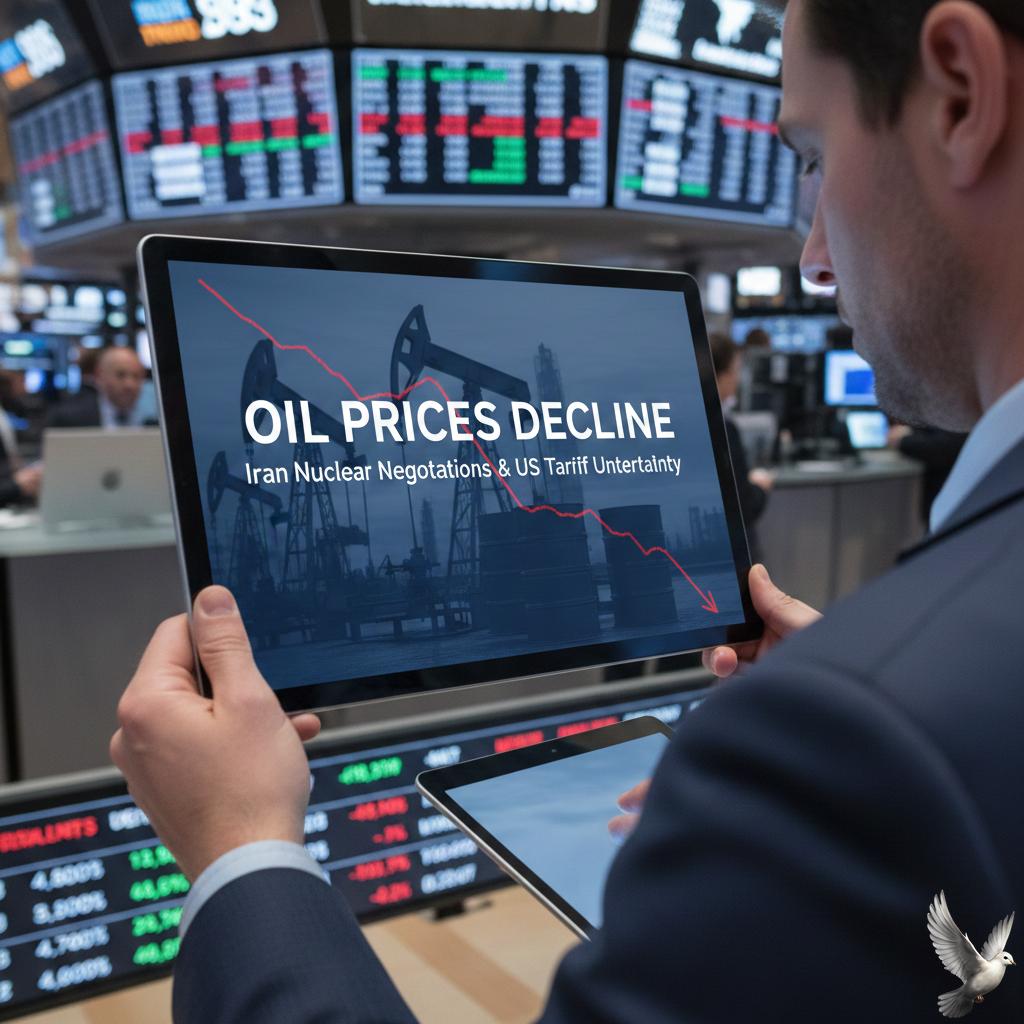
Oil Prices Decline Amid Iran Nuclear Negotiations and US Tariff Uncertainty
Crude oil markets are currently caught in a tug-of-war between escalating Middle East tensions and a shifting U.S. trade policy. Prices recently reached six-month highs as the risk of military confrontation in the Persian Gulf overshadowed bearish supply fundamentals.
Brent crude is trading around $72.21 per barrel, reflecting a weekly gain of nearly 6%. U.S. West Texas Intermediate (WTI) has climbed to approximately $67.05, representing a weekly surge of over 5.5%. These levels mark a significant recovery from the $55 range seen earlier this year.
Geopolitical risk is the primary driver. The Trump administration has issued an ultimatum to Tehran, giving Iran a 10 to 15-day window to negotiate a new nuclear deal. This diplomatic pressure is backed by the largest U.S. military buildup in the Middle East since 2003, with carrier strike groups moving into the region.
The market is pricing in a high "risk premium" due to the vulnerability of the Strait of Hormuz. Roughly 20% of global oil and 20% of LNG trade passes through this chokepoint. Analysts warn that a limited disruption to Iranian exports could add $10 to $12 to per-barrel prices, while a full blockade of the strait could push oil past $130.
On the economic front, President Trump has introduced fresh uncertainty by signing a proclamation for a 10% global import surcharge. This move follows a Supreme Court ruling that invalidated previous emergency levies. The president has already signaled an intent to raise this tariff to 15% effective immediately.
These trade barriers are expected to dampen global growth and fuel demand. The IEA has already revised its 2026 demand growth forecast down to 850,000 barrels per day. While demand slows, a supply surplus is looming; total global liquids inventories are projected to build by over 4 million barrels per day in the second quarter of 2026.
OPEC+ remains a stabilizing force for now. The group has reaffirmed its decision to pause production increases through March 2026. However, the combination of slowing demand and rising production from non-OPEC+ sources creates a complex outlook for the remainder of the year.
While the "energy phase" of the current commodity supercycle appears to be underway, the market remains on a knife-edge. Traders are closely monitoring the 15-day deadline for Iran, as any transition from diplomatic pressure to kinetic action would likely trigger immediate volatility.