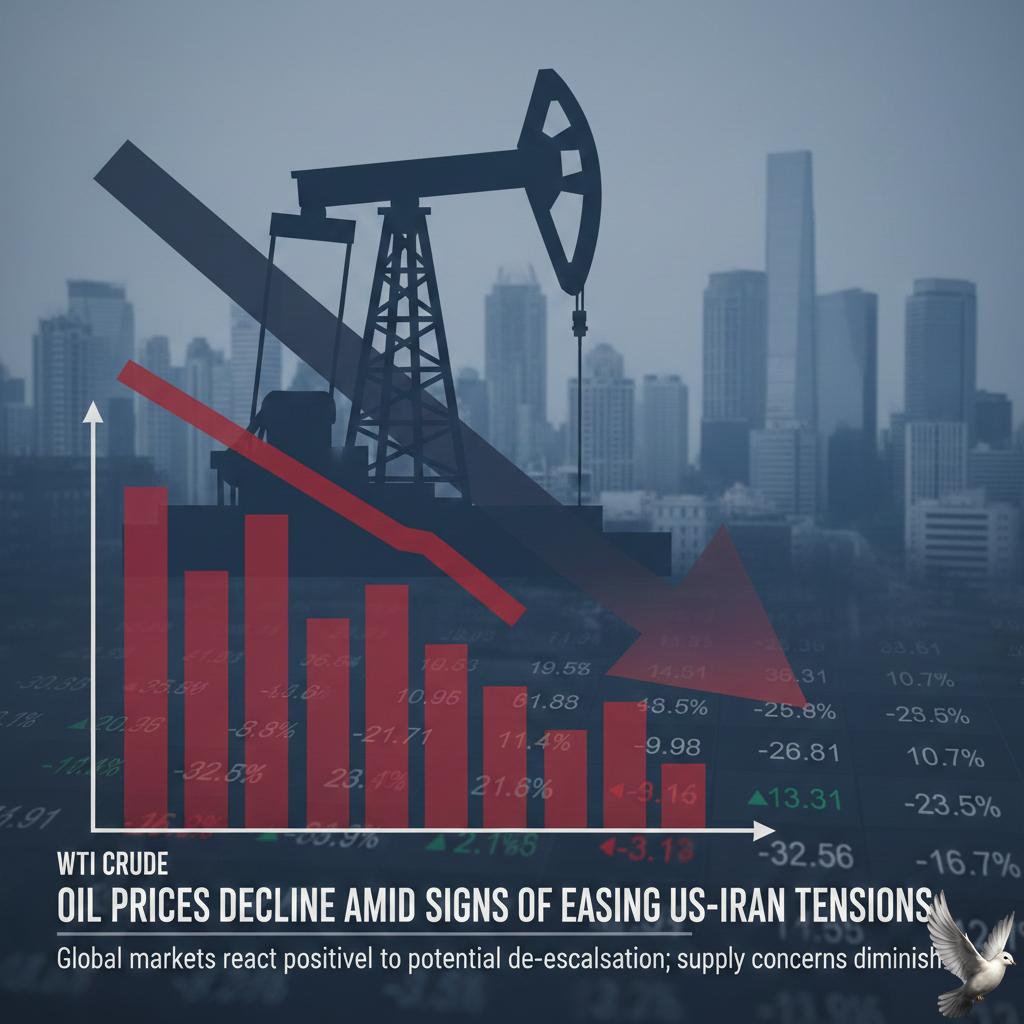
Oil Prices Decline Amid Signs of Easing US-Iran Tensions
Energy markets are experiencing a cautious pull-back as geopolitical shifts and rising production capacity alter the supply-demand balance.
As of February 18, 2026, Brent crude is trading near **$67.45** per barrel, down approximately **0.10%**. Simultaneously, WTI crude has slipped to **$62.24**, marking a **0.14%** daily decline. Both benchmarks are currently hovering near two-week lows as traders digest a complex mix of diplomatic progress and physical supply growth.
A primary driver for the current softening is the second round of indirect talks between the U.S. and Iran held in Geneva. While "guiding principles" for a potential nuclear dispute resolution have been discussed, officials emphasize that a final deal is not imminent. Despite the lack of an immediate breakthrough, the mere "steady drip" of diplomatic optimism has significantly eased fears of sudden supply disruptions in the Persian Gulf.
Supply-side pressure is also mounting from Central Asia. Kazakhstan's Tengiz field—one of the world's largest—has successfully ramped up output following recent expansion projects. Production at the field exceeded **39 million tons** in 2025, a significant jump from previous years. This surge in Kazakh crude, combined with a broader recovery from winter-related production shut-ins in North America, is contributing to a growing global inventory cushion.
Market participants are now pivotally focused on upcoming U.S. inventory data. Recent figures showed a massive surge in U.S. crude stocks by **13.4 million barrels** in a single week, reversing previous draws and signaling a potential domestic glut.
Wider trends for 2026 suggest a "market reset" may be underway. Global supply is projected to rise by **2.4 million barrels per day** this year, while demand growth is expected to slow to roughly **850,000 barrels per day**. This widening surplus of over **1.5 million barrels per day** is keeping a firm lid on price rallies, even amidst ongoing regional tensions.
Short-term volatility remains high, with the market alternating between bearish supply data and bullish geopolitical headlines. For now, the combination of diplomatic engagement and robust output from non-OPEC+ sources like Kazakhstan continues to weigh on the price floor.