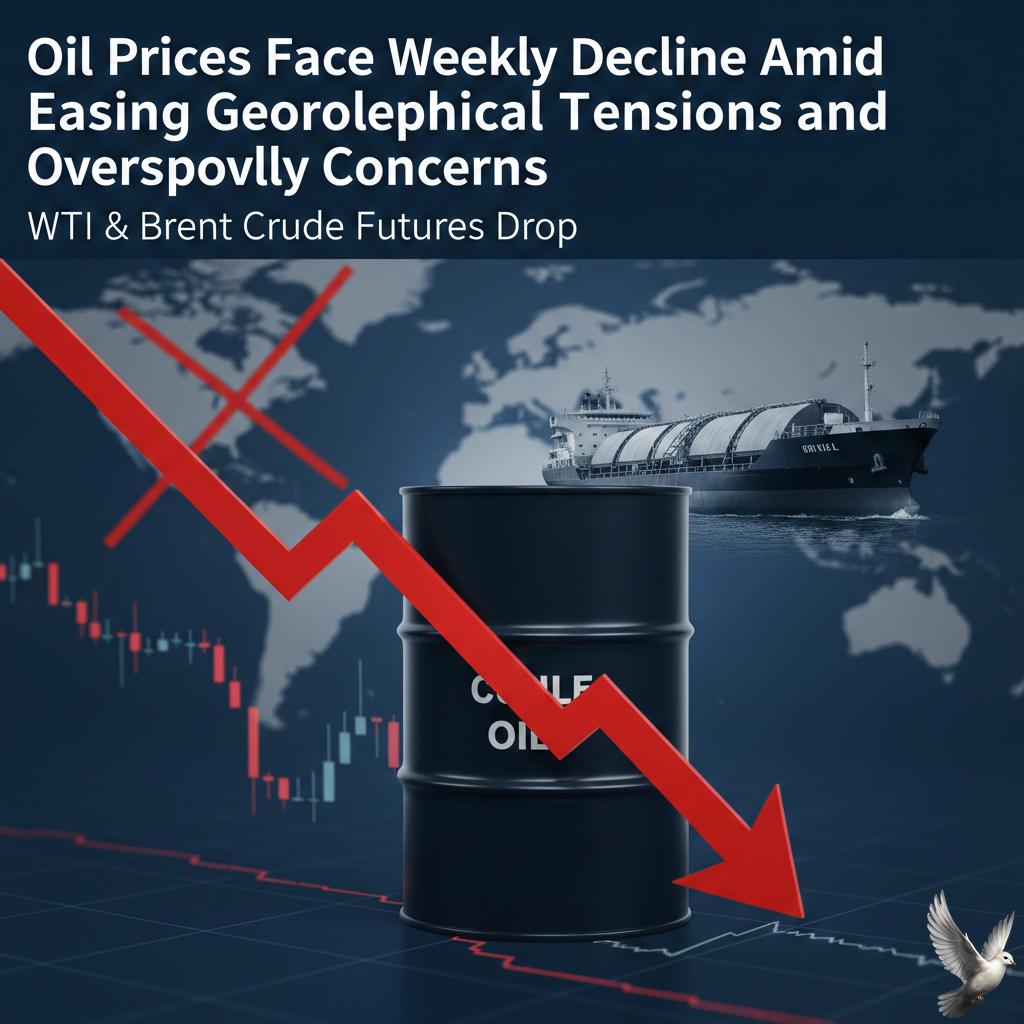
**Oil Prices Face Weekly Decline Amid Easing Geopolitical Tensions and Oversupply Concerns**
Global Energy Market Brief: February 13, 2026
Crude oil futures experienced a sharp decline this Friday, heading toward a second consecutive weekly loss. The market is currently balancing a significant supply surplus against lingering geopolitical risks in the Middle East.
Price Action and Benchmarks
Brent crude futures fell by **$1.88** to settle at **$67.52** per barrel, a drop of **2.71%**. Simultaneously, U.S. West Texas Intermediate (WTI) declined by **$1.79**, or **2.77%**, closing at **$62.84**.
Despite a mid-week rally that saw Brent briefly approach the **$70** mark, gains were erased as technical resistance met bearish fundamental data. The weekly trend remains negative, reflecting a broader cooling of the "war premium" that had supported prices earlier in the year.
Supply and Demand Outlook
The International Energy Agency (IEA) has revised its 2026 demand growth forecast downward to **850,000** barrels per day (bpd), citing high prices and economic uncertainty. This stands in contrast to OPEC’s more optimistic projection of **1.38 million** bpd.
Global oil supply is projected to rise by **2.4 million** bpd in 2026. This growth is expected to create a substantial surplus of approximately **3.7 million** bpd, the largest buffer seen since the 2020 pandemic.
Inventory and Production Data
U.S. commercial crude inventories surged by **8.5 million** barrels last week, reaching a total of **428.8 million** barrels. This was the largest weekly build in over a year and far exceeded analyst expectations of a modest **793,000** barrel increase.
Domestic U.S. production has recovered from recent winter disruptions, rising by nearly **500,000** bpd. Meanwhile, OPEC+ production fell by **439,000** bpd in January due to outages in Kazakhstan and Russia, though these volumes are expected to return to the market through February.
Geopolitical Factors
Tensions between the U.S. and Iran remain a focal point for volatility. While initial hopes for a diplomatic breakthrough cooled, recent remarks from President Donald Trump suggesting no definitive agreement has been reached added to the uncertainty.
The market continues to monitor the Strait of Hormuz, where a potential disruption could impact the **20 million** barrels of oil—roughly **20%** of global consumption—that transit the waterway daily. However, the current inventory overhang provides a significant cushion against localized supply shocks.