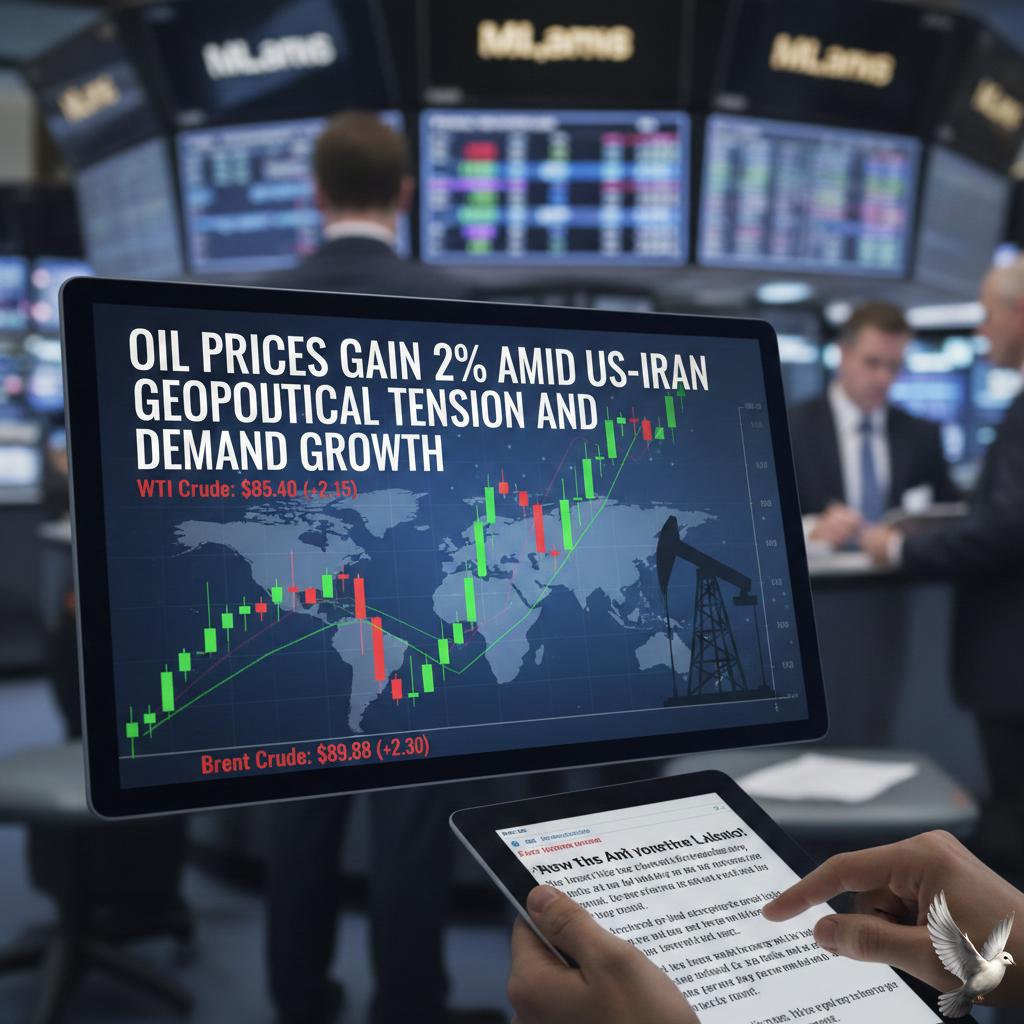
Oil Prices Gain 2% Amid US-Iran Geopolitical Tension and Demand Growth
Crude oil prices surged by more than 1% on Wednesday, with market activity dominated by escalating geopolitical risks in the Middle East. West Texas Intermediate (WTI) climbed past 64.50 per barrel, while Brent crude moved above the 70.00 threshold. This upward momentum reflects a significant risk premium as traders weigh the possibility of direct confrontation between the U.S. and Iran.
Tensions have intensified following reports that Washington is considering the interception of tankers carrying Iranian crude. The potential deployment of an additional carrier strike group to the region has further heightened fears of supply disruptions. While diplomatic channels remain open, the market is pricing in the threat of retaliatory actions or strikes that could jeopardize flows through critical maritime corridors.
The geopolitical rally is currently contending with a surge in domestic supply. The latest industry data revealed a sharp build in U.S. crude inventories, which rose by 13.4 million barrels last week. This represents the largest weekly increase since late 2023. Additionally, gasoline stockpiles reached a 5.5-year high, and domestic crude production remains near record levels at 13.7 million barrels per day.
Despite the inventory build, physical market indicators suggest pockets of tightening. Distillate stockpiles fell by 2.7 million barrels, surpassing analyst expectations for a smaller draw. Furthermore, a slightly weaker U.S. dollar has provided an additional floor for prices, making dollar-denominated oil more attractive to international buyers.
The broader outlook for the year remains a tug-of-war between immediate risk and long-term surplus. The International Energy Agency (IEA) has warned that global supply is on track to outpace demand, potentially resulting in a sizable surplus. While January saw Brent prices average 67.00 due to weather-related disruptions and conflict risks, many analysts expect a downward trend later in the year as production growth from non-OPEC+ nations continues to climb.
Market participants are now shifting their focus to upcoming monthly reports from OPEC and the IEA. These assessments will be critical in determining whether the current geopolitical premium can withstand the pressure of rising global stockpiles and a projected slowing of demand growth in major economies.