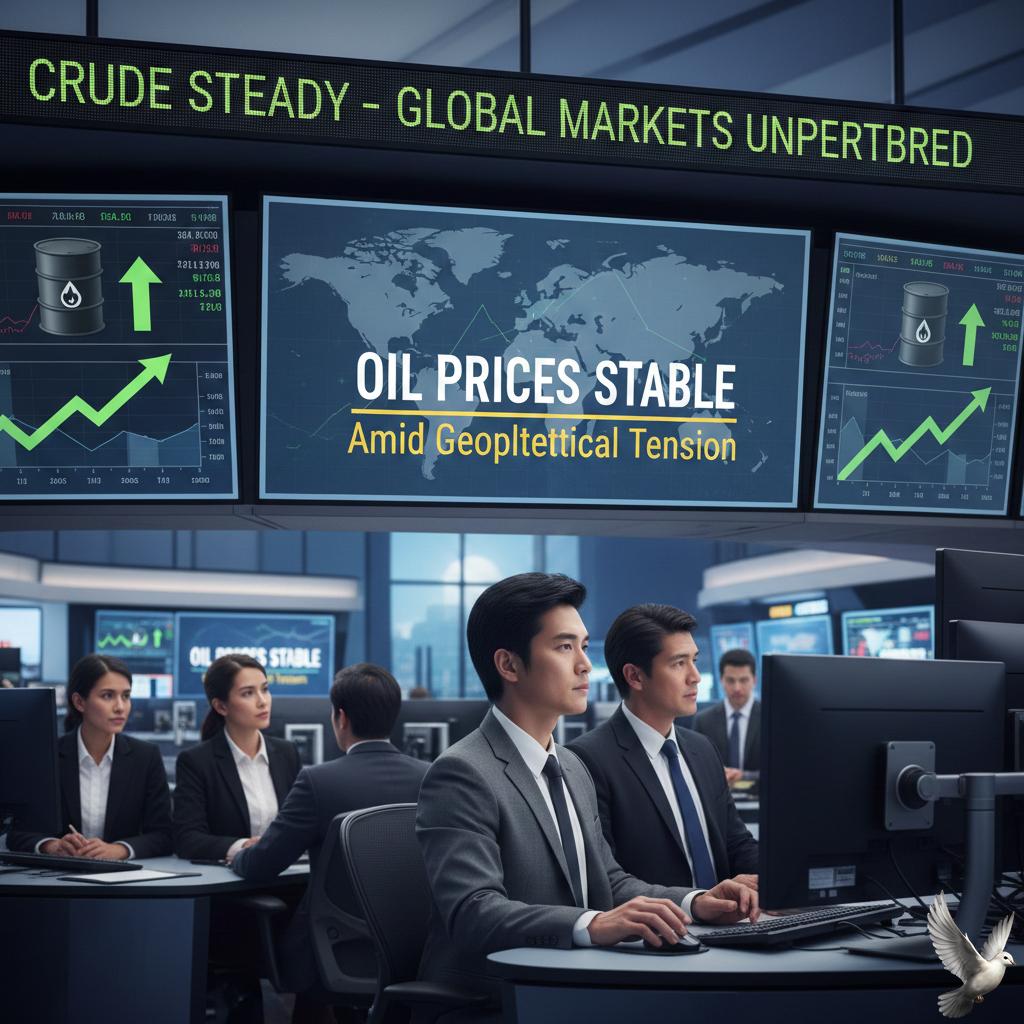
Oil Prices Remain Stable Amid Geopolitical Tension
Oil markets remained stable this Wednesday as traders balanced signs of diplomatic progress with persistent geopolitical risks. Brent crude futures held firm at approximately 69.03 per barrel, while West Texas Intermediate (WTI) stood at 64.19. The market is currently trapped between a potential easing of tensions and the threat of fresh supply disruptions.
A primary focus for investors is the ongoing negotiation between the U.S. and Iran. While recent talks in Oman were described as a step forward, significant hurdles remain regarding Iran's nuclear program. Tehran has expressed a willingness to continue the diplomatic track, yet the U.S. administration has signaled it may increase its military presence in the Middle East if negotiations stall.
Geopolitical premiums are further supported by a new U.S. trade agreement with India. This deal reportedly includes a freeze on Russian oil imports by New Delhi, one of the world's largest buyers of Russian crude. Any significant shift in these trade flows could tighten global supply and put upward pressure on prices.
On the supply side, the American Petroleum Institute reported a substantial crude inventory build of 13.4 million barrels for the week ending February 6. This figure far exceeded analyst expectations of a modest 800,000-barrel increase. Official data from the Energy Information Administration (EIA) is expected later today to confirm if domestic stocks are indeed surging.
Global demand outlooks remain mixed for the 2025-2026 period. The IEA projects demand growth will average around 1.1 million barrels per day in 2025, driven largely by the petrochemical sector in China and India. However, this growth is being met by rising production from non-OPEC+ nations, particularly the U.S., Brazil, and Canada.
Market participants are also watching OPEC+ closely. The group is currently maintaining steady output through March, following a year in which oil prices saw their steepest annual decline since 2020. With a projected global surplus on the horizon, the cartel faces the challenge of balancing market share against price stability.
In the short term, crude is expected to fluctuate within its current range. Significant movement will likely depend on concrete outcomes from the U.S.-Iran talks or evidence that geopolitical tensions are materially impacting the 20 million barrels of oil that pass daily through the Strait of Hormuz.