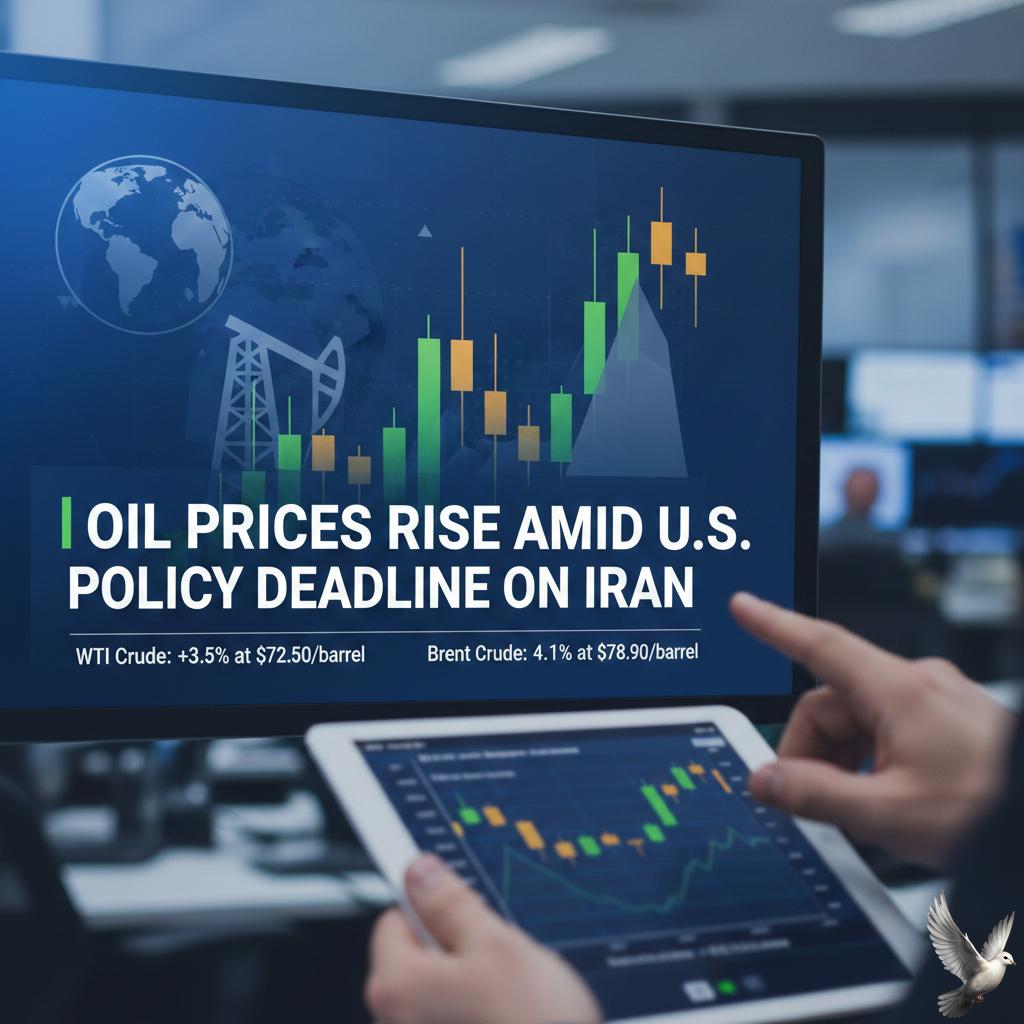
Oil Prices Rise Amid U.S. Policy Deadline on Iran
Market Brief: Persian Gulf Escalation
Oil markets are entering a period of high volatility as the standoff between the United States and Iran intensifies. On **February 20, 2026**, benchmark prices reached their highest levels in months. Brent crude surged to **$71.93** per barrel, while West Texas Intermediate (WTI) climbed to **$66.74**.
The rally follows a breakdown in nuclear negotiations in Geneva. Washington has issued a final **10-day** deadline for Tehran to offer concessions or face military consequences. In response, Iran has moved its national defense systems to a wartime footing and conducted naval drills featuring ballistic missiles near the coast.
Strategic Chokepoint Risks
The primary driver of the current "war premium" is the threat to the Strait of Hormuz. This narrow waterway facilitates the passage of approximately **21 million** barrels of oil per day, representing roughly **21%** of global consumption.
Recent reports of a temporary **2-hour** closure of the Strait by Iranian forces have unnerved traders. Analysts suggest that a significant blockage could trigger a supply shock, potentially driving prices toward the **$100** mark. Currently, markets have priced in a risk premium of **$5** to **$10** per barrel based on the immediate threat level.
Military and Economic Indicators
The U.S. has significantly bolstered its regional presence, deploying the **USS Abraham Lincoln** carrier strike group and over **50** advanced combat jets, including F-35s and F-22s. Reports indicate that the **USS Gerald R. Ford** is also en route to the region.
Simultaneously, U.S. domestic energy data shows a tightening market. Crude and gasoline inventories fell unexpectedly for the week ending **February 13**, defying analyst predictions of a **2.1 million** barrel increase. This domestic drawdown, combined with geopolitical fears, has created a dual-pressure environment for prices.
Supply and Demand Outlook
Despite the immediate price spikes, the International Energy Agency (IEA) notes that global oil supply actually rose by **2.4 million** barrels per day in early **2026**, split between OPEC+ and non-OPEC producers like Guyana.
However, Iranian exports have already begun to contract, falling to **1.39 million** barrels per day in January—a **26%** year-over-year decline. If diplomatic efforts fail to produce a resolution by the end of February, market volatility is expected to expand by another **15%** to **25%** as hedging activity intensifies across the energy sector.