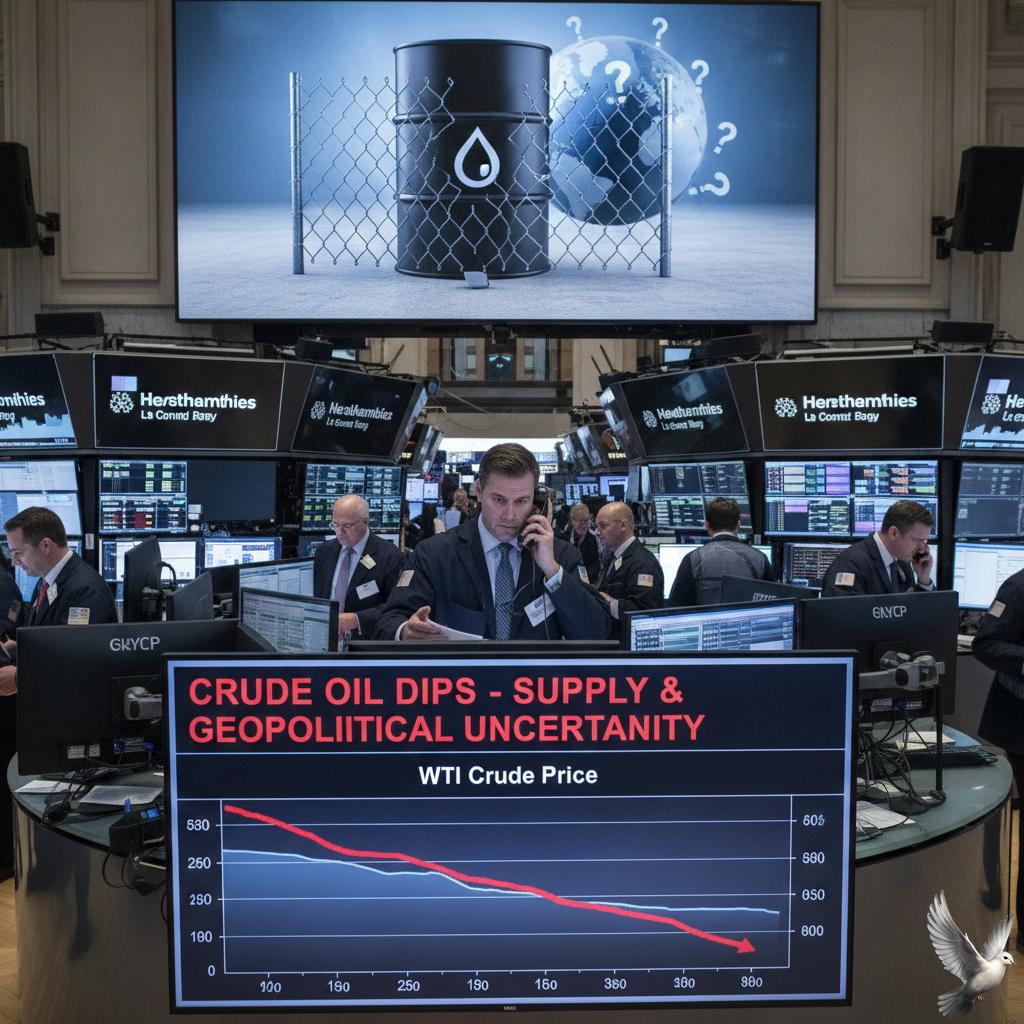
Oil prices soften as market assesses supply outlook and geopolitical developments
Oil markets are currently navigating a landscape of shifting geopolitical risk and high-stakes diplomacy. On Tuesday, February 10, 2026, West Texas Intermediate (WTI) crude futures are holding steady near **$64.31** per barrel, while Brent crude is trading at approximately **$69.00**.
Price action follows a period of heightened volatility. Just days ago, markets saw a significant **2%** surge after a series of military escalations. These events included the downing of a drone near a U.S. aircraft carrier and reports of armed vessels approaching tankers.
The Strait of Hormuz remains the focal point for supply concerns. Roughly **21%** of global oil consumption passes through this narrow waterway. Recent U.S. navigational advisories warning American-flagged ships to avoid Iranian waters have reinforced the risk premium currently baked into prices.
Diplomatic efforts are running in parallel with these tensions. While negotiations in Oman have been described as a "step forward," a definitive breakthrough remains elusive. Iran continues to maintain its stance on uranium enrichment, which remains a primary point of contention for U.S. officials.
Fundamental supply data is also influencing the market. Recent figures from the American Petroleum Institute (API) revealed a substantial draw of **11.1 million** barrels in U.S. crude stocks. This was significantly larger than the modest draw analysts had anticipated.
Broader demand trends show a global market in transition. For 2026, global oil demand growth is projected to reach **1.1 million** barrels per day. China continues to be the largest source of growth, though its expansion is increasingly driven by the petrochemical sector rather than traditional fuels.
On the supply side, non-OPEC+ producers are filling the gap. Output from the United States, Canada, and Brazil is expected to expand by **1.4 million** barrels per day this year. This production surge from the Americas is currently outpacing the rate of demand growth.
Market participants are also monitoring trade dynamics in Asia. New trade agreements involving India have linked future energy deals to a freeze on certain imports, potentially shifting long-standing flow patterns for global crude.
Economic forecasters expect a continued oversupply in the coming months. Projections suggest global oil inventories could build by as much as **2.8 million** barrels per day through 2026. This potential surplus is expected to keep long-term price targets for Brent near the **$56** mark as the year progresses.