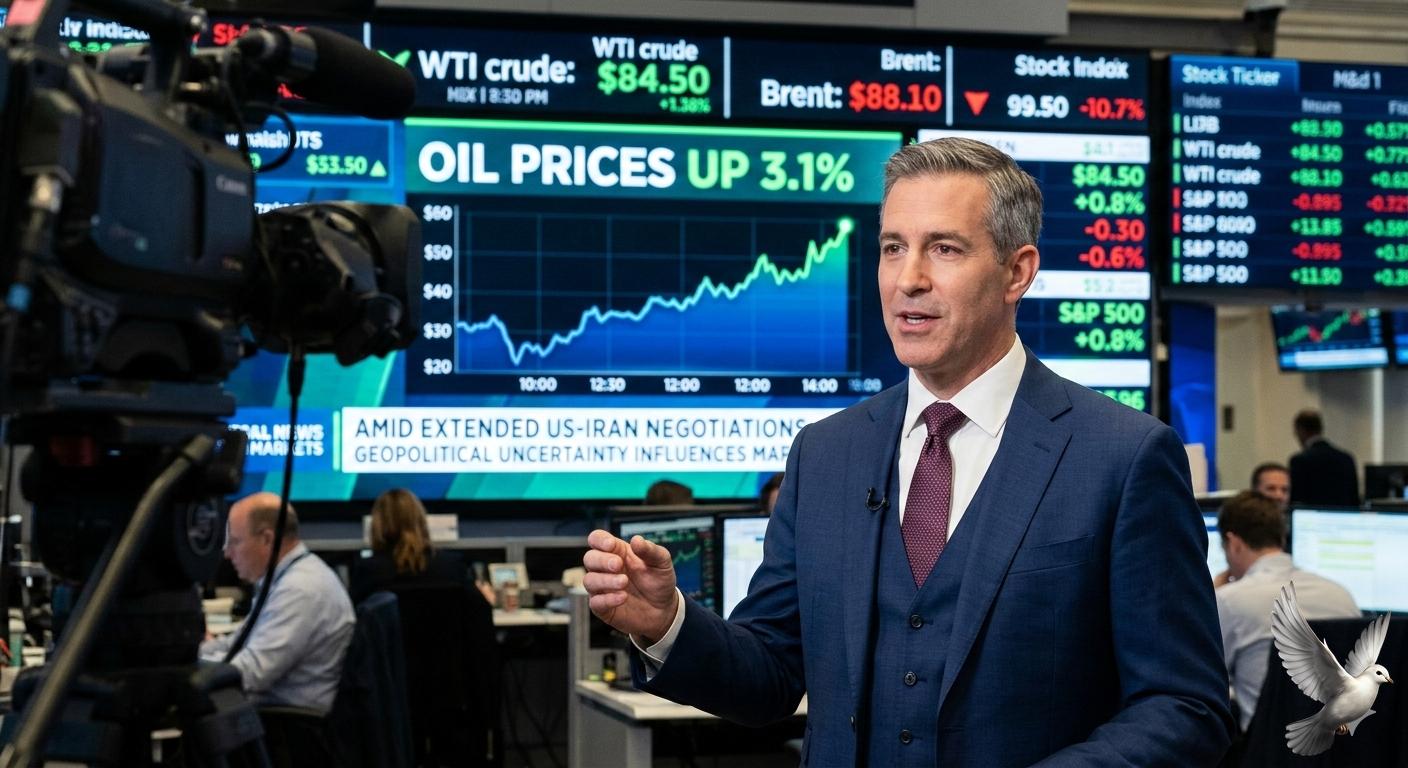
Oil Prices Up 3% Amid Extended US-Iran Negotiations
Oil prices surged nearly 3% on Friday as energy markets reacted to a high-stakes extension of nuclear negotiations between the United States and Iran. Traders are increasingly concerned that a potential breakdown in diplomacy could trigger immediate supply shocks in the Middle East.
WTI crude futures climbed toward $67 per barrel, reaching a seven-month high. Brent crude also saw significant movement, trading around $72.78. These gains were fueled by reports that while Iran described talks in Geneva as progressive, U.S. officials expressed disappointment, signaling a widening gap between the two sides.
Geopolitical risk premiums are currently estimated between $4 and $10 per barrel. The market is pricing in the possibility of a disruption to Iran’s 3.3 million barrels per day of production. Concerns are also mounting over the security of the Strait of Hormuz, a critical maritime artery that handles approximately 20% of the world's global oil supply.
Regional tensions have escalated further following the U.S. decision to authorize the departure of non-emergency staff and families from Mission Israel. This atmosphere of uncertainty has overshadowed recent data showing a massive 15.9 million barrel build in U.S. crude stocks, which would typically exert downward pressure on prices.
Supply dynamics remain complex as OPEC+ prepared for its Sunday meeting. The group is widely expected to maintain its cautious stance, with analysts anticipating a modest production increase of 137,000 barrels per day for April. This comes as Saudi Arabia reportedly nears a three-year high in exports as part of a contingency plan to stabilize the market in the event of regional conflict.
For the month of February, oil prices have risen approximately 2.5%, extending a sharp 13.6% rally recorded in January. While long-term forecasts from the IEA and major banks suggest a global supply surplus for 2026, the immediate focus of the market remains fixed on the March 1–6 deadline for a nuclear agreement.
Technical indicators show WTI has broken above its 200-day moving average, confirming a reversal of the previous bearish trend. Investors are now watching the $70 mark as the next psychological resistance level for WTI, provided geopolitical frictions remain unresolved.