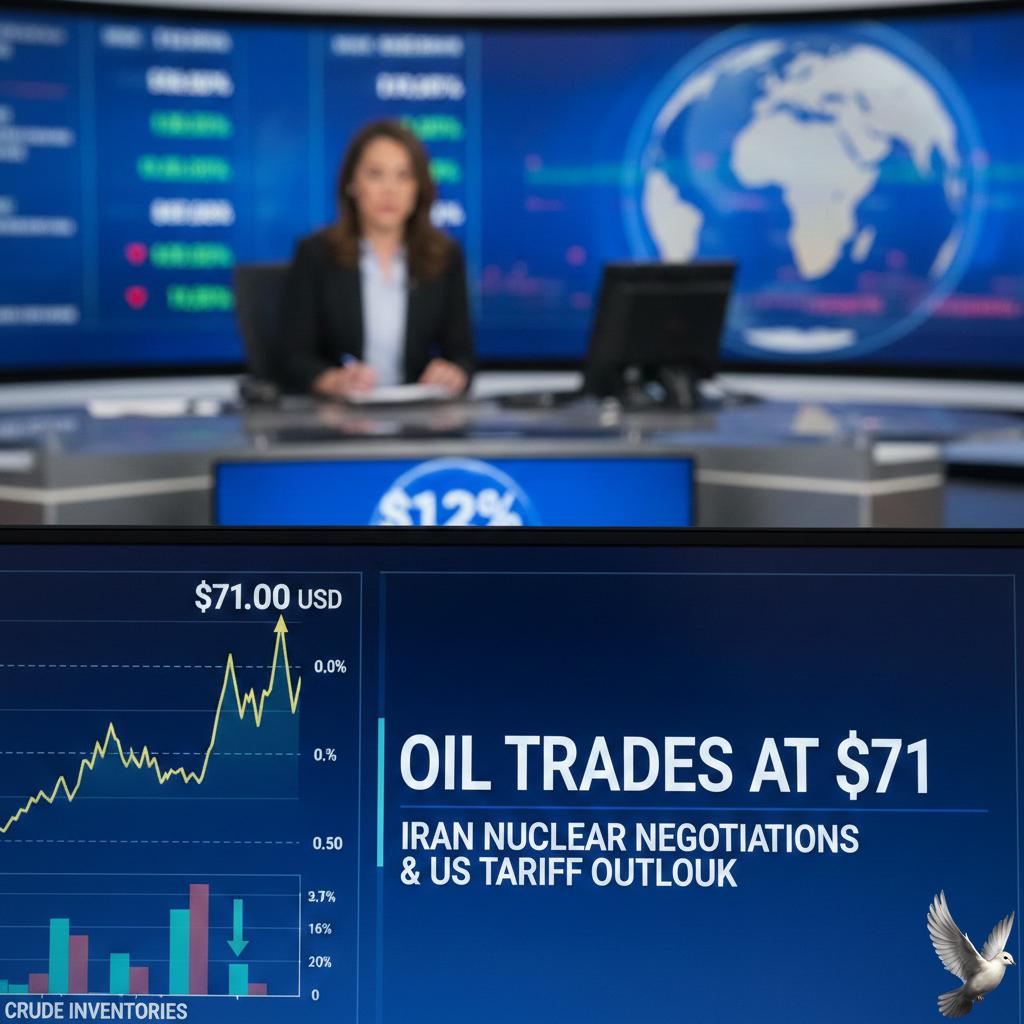
Oil trades at $71 as markets weigh Iran nuclear negotiations and US tariff outlook
Energy markets are navigating a period of sharp volatility as of February 23, 2026. Global crude prices have retreated from recent six-month highs following a pivot toward diplomacy between Washington and Tehran.
Brent crude futures fell 76 cents, or approximately **1.06%**, to settle near **$71.00** per barrel. Simultaneously, West Texas Intermediate (WTI) dropped 74 cents, or **1.11%**, to trade at **$65.75**. This pullback follows a week where prices surged more than **5%** on fears of active military engagement.
Geopolitical De-escalation
The primary driver for the price dip is the announcement of a third round of nuclear talks scheduled for Thursday in Geneva. Reports indicate that Iran may be willing to offer concessions regarding its enrichment programs in exchange for sanctions relief.
This diplomatic shift has temporarily reduced the "war premium" that had been baked into prices. Investors had previously braced for strikes on Iranian government sites, which had pushed Brent above the **$72.00** mark just days ago.
Trade Policy and Demand Concerns
Adding to the downward pressure is the introduction of a new **15%** global tariff by the U.S. administration. This measure follows a recent court ruling that struck down previous trade structures.
Market participants view these tariffs as a potential hurdle for global economic growth. Analysts estimate that higher trade costs could dampen fuel demand by roughly **1 million barrels per day** through the remainder of 2026.
Supply Risks and Military Presence
Despite the cooling sentiment, several factors prevent a deeper slide in prices. The U.S. has maintained a significant naval presence in the Middle East, including the deployment of a carrier strike group.
This military buildup remains a critical point of concern for the Strait of Hormuz. Approximately **20%** of the world’s petroleum liquids pass through this narrow waterway daily. Any disruption to this corridor would likely send prices toward triple digits.
Market Outlook
Current inventories remain tight, with U.S. crude stockpiles recently falling by **9 million barrels**. While OPEC+ is considering a gradual production increase for the second quarter of 2026, the market remains in a state of "backwardation," where near-term supply is valued higher than future deliveries.
Economic indicators suggest a surplus of **2.3 million barrels per day** could emerge later this year if geopolitical tensions fully resolve. However, for the immediate term, the balance between Geneva’s diplomatic outcomes and the physical security of Gulf shipping routes remains the decisive factor for price direction.