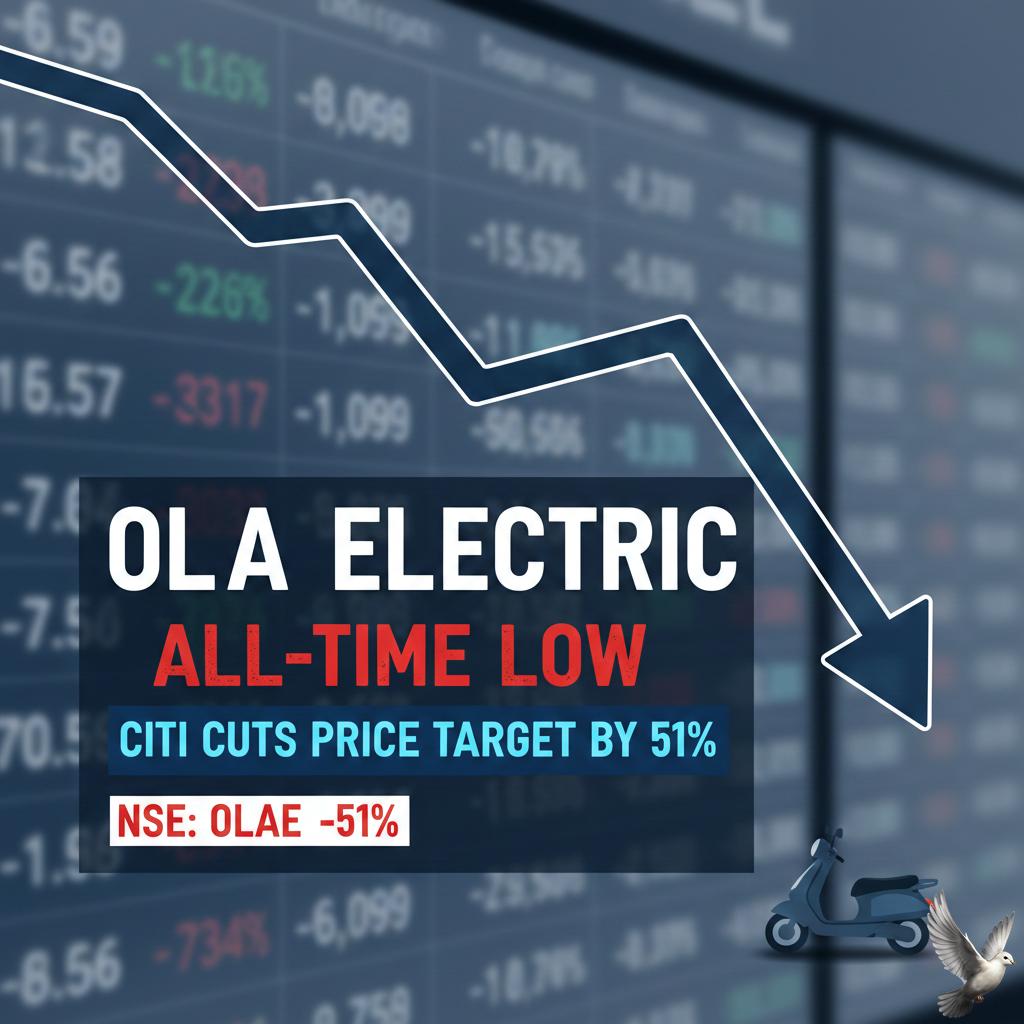
Ola Electric Hits All-Time Low After Citi Cuts Price Target by 51%
Shares of Ola Electric Mobility plunged to a new all-time low of **₹27.36** on February 17, 2026, marking a significant collapse from its August 2024 peak of **₹157.40**. The stock has shed nearly **19%** of its value in the last month alone, with its market capitalization shrinking to approximately **₹12,315 crore**.
This downward spiral follows a severe downgrade from Citigroup, which shifted its rating to **Sell** and slashed the price target by **51%** to **₹27**. The brokerage cited a "structural reset" in the business, highlighting deeper concerns over slowing electric vehicle (EV) penetration and a narrowing price gap between electric and traditional fuel engines.
Market share erosion has become a critical pressure point. Once holding a dominant **35%** share in 2024, Ola Electric saw its market presence more than halve to **15.57%** by the end of 2025. Recent data from early 2026 indicates the share has further slipped toward the **6%** mark as legacy manufacturers like TVS Motor and Bajaj Auto aggressively reclaim the top spots.
Financial results for the December quarter (Q3 FY26) underscore the operational strain. Revenue from operations crashed **55%** year-on-year to **₹470 crore**, down from **₹1,045 crore** in the same period last year. This revenue slump was driven by a sharp drop in sales volume, with quarterly registrations falling to **32,680 units** compared to over **84,000 units** a year ago.
Despite the shrinking top line, the company reported a narrowed consolidated net loss of **₹487 crore**, an improvement from the **₹564 crore** loss recorded in the previous year. Management points to improving gross margins, which reached **34.3%** this quarter, as a sign of vertical integration through its new battery cell technology and leaner operating structures.
Concerns remain regarding liquidity and long-term viability. Analysts have flagged persistent negative free cash flows and a high dependence on rapid scaling to reach a break-even point. While the company is betting on its Gigafactory completion by March 2026 to stabilize unit economics, the broader market remains cautious due to ongoing service-related complaints and heightening competition from both startups and established giants.
Investor sentiment is further tested by a cooling adoption rate in the two-wheeler segment. Regulatory shifts and tax adjustments have improved the affordability of internal combustion engine vehicles, making the transition to electric slower than early industry forecasts suggested. The stock currently trades nearly **64%** below its initial public offering price of **₹76**.