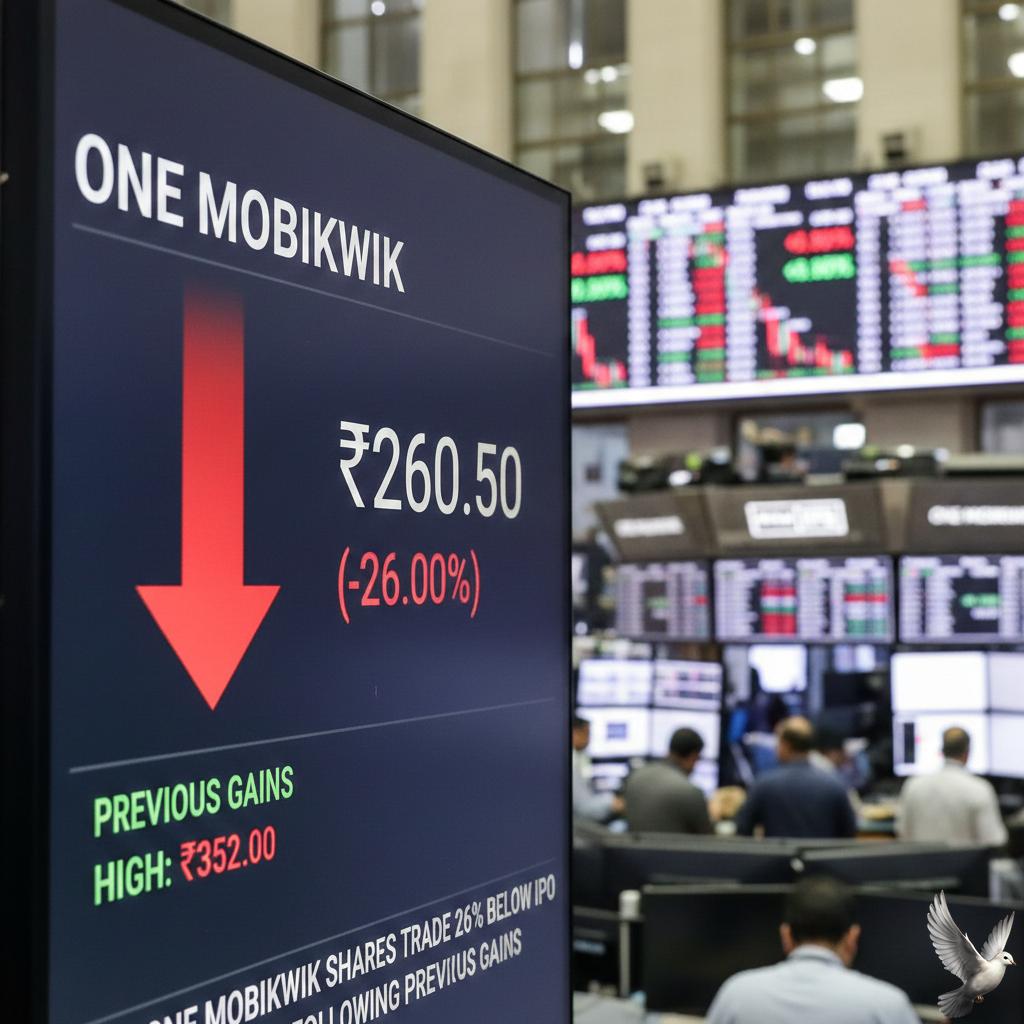
One Mobikwik Shares Trade 26% Below IPO Price Following Previous Gains
One MobiKwik Systems Ltd (MOBIKWIK) saw significant market movement following the formal activation of its stockbroking subsidiary on the Bombay Stock Exchange.
The company’s wholly-owned unit, MobiKwik Securities Broking Private Limited, officially commenced operations on **February 24, 2026**. This milestone allows the firm to offer full-scale equity trading, clearing, and settlement services to its base of over **186 million registered users**.
Market Response and Stock Action
Investor reaction was immediate but volatile. On the day of the announcement, the stock surged as much as **12.6%** to hit an intraday high of **227.37** on the NSE. However, the gains were partially pared back.
As of **February 25, 2026**, the share price is trading near **199.45**. Despite the recent momentum, the stock remains approximately **28%** below its IPO issue price of **279**. Market analysts identify a crucial support zone between **190 and 195**, noting that consistent execution in the crowded broking sector is now essential for a long-term trend reversal.
Financial Turnaround
The regulatory breakthrough coincides with a return to profitability. For the third quarter of FY26, MobiKwik reported a consolidated net profit of **40 million** (4 crore), a sharp recovery from the **552 million** loss recorded in the same period last year.
Total income for the quarter reached **2,972 million**, marking an **8%** year-on-year growth. This turnaround was driven by a reduction in payment processing costs and improved margins in the digital credit segment.
Operational Highlights
The company is seeing record-level engagement across its core platforms.
* **Payments GMV:** Reached an all-time high of **481 billion**, up **63%** year-on-year.
* **UPI Transactions:** Surged **3.2 times** compared to the previous year.
* **Digital Credit:** The ZIP EMI product saw GMV grow by **126%**, hitting **9,000 million**.
Strategic Outlook
The activation of the broking license transforms MobiKwik from a digital wallet into a diversified financial services hub. By integrating stockbroking, the firm aims to capture the rising wave of retail investor participation in India, particularly in Tier-3 and Tier-4 cities.
While the new vertical opens a fresh revenue stream, the company faces stiff competition from established discount brokers. Future performance will depend on the platform's ability to convert its high-frequency payment users into active investors while maintaining the cost discipline that led to its recent quarterly profit.