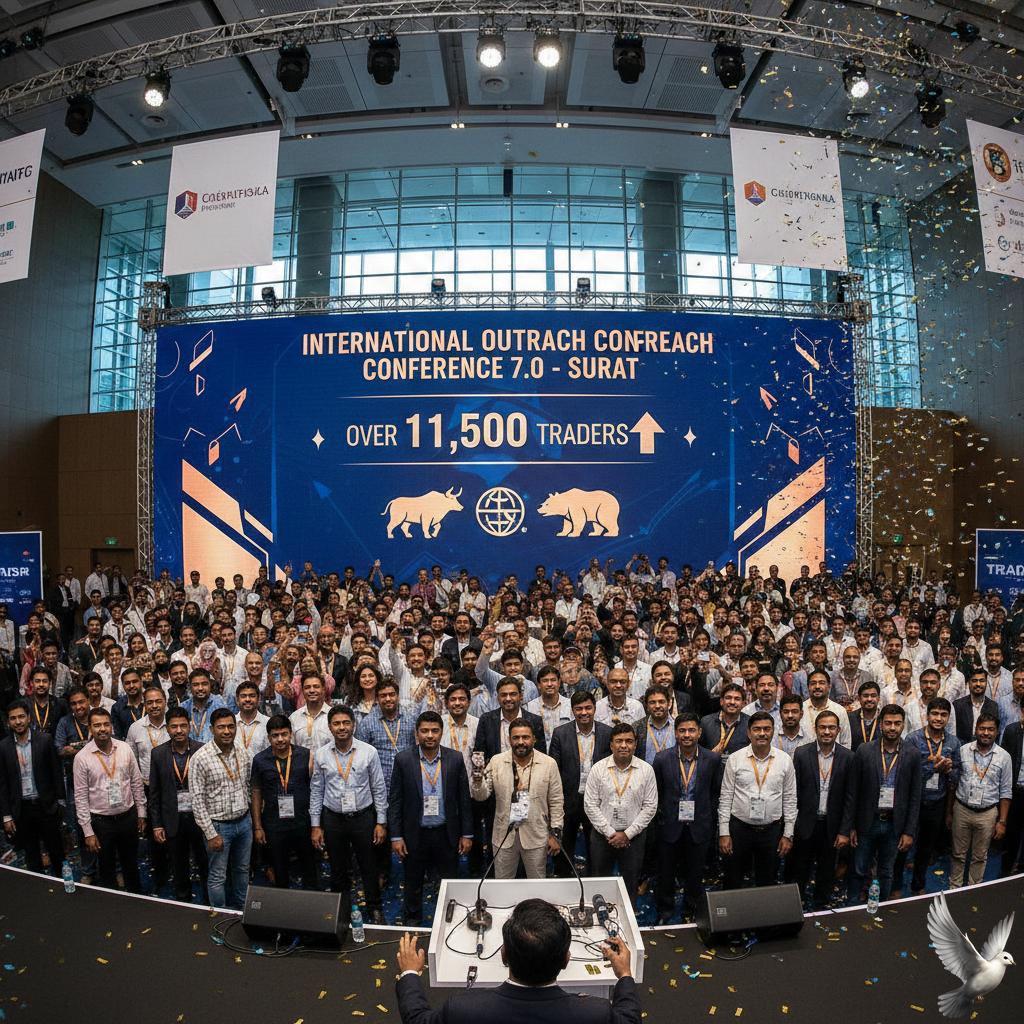
Over 11,500 Traders Attend International Outreach Conference 7.0 in Surat
The Indian derivatives landscape reached a significant milestone this February as the Indian Options Conclave (IOC 7.0) in Surat attracted over 11,500 participants from more than 450 cities. The event, themed "Evolve," underscored a structural shift in the market toward disciplined risk management and technology-driven execution.
This surge in educational interest coincides with a period of heightened volatility and regulatory transition. As of February 16, 2026, the benchmark Nifty 50 is navigating a sensitive technical zone, trading near 25,471 with immediate support established at the psychological 25,000 mark. Meanwhile, the Bank Nifty remains in a consolidation phase, fluctuating between 59,500 and 60,800.
Market dynamics are currently being shaped by the Union Budget 2026 mandates and recent SEBI reforms. Transaction costs for participants have risen following the hike in Securities Transaction Tax (STT) on options premiums to 0.15% and on futures to 0.05%. These measures, combined with the February 1 implementation of 100% upfront premium requirements for option buyers, aim to curb excessive speculation.
The profile of the Indian trader is also transforming. Retail investors now hold a record 18.75% of NSE market capitalization, valued at approximately 84 lakh crore. Notably, inclusivity is rising; women now represent 12.2% of registrations at major trading conclaves, while over 60% of new participants are expressing a direct preference for options over cash equity.
Institutional behavior reflects a growing divergence. While Foreign Portfolio Investors (FPIs) recorded net outflows exceeding 1.2 lakh crore over the past year, Domestic Institutional Investors (DIIs) continue to provide a stabilizing counter-force. SIP contributions have reached a new peak, averaging over 31,000 crore monthly, ensuring a steady flow of domestic liquidity despite global headwinds.
The focus for the 2026 trading year has moved decisively toward capital preservation. Market experts emphasize that with the elimination of expiry-day calendar spread benefits and the introduction of a 2% Extreme Loss Margin (ELM) on short positions, professional-grade tools and psychological discipline are no longer optional.
Traders are increasingly adopting multi-leg, defined-risk strategies such as iron condors and bull call spreads to optimize capital under the new margin regime. This evolution reflects a maturing ecosystem where the depth of market knowledge is beginning to match the scale of participation.