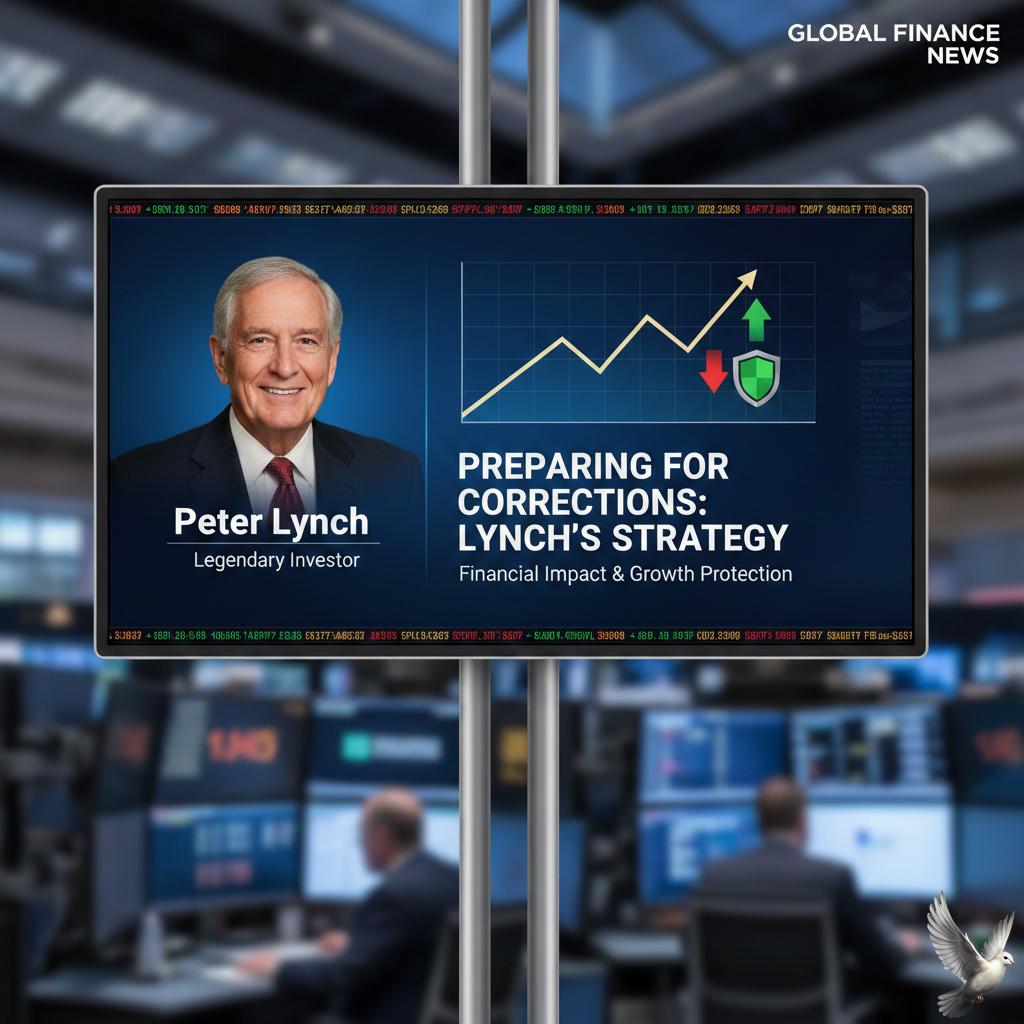
Peter Lynch on the Financial Impact of Preparing for Market Corrections
Market performance as of February 2026 continues to demonstrate the high cost of hesitating on the sidelines. Despite a backdrop of shifting global debt and geopolitical tensions, major indices are maintaining a strong upward trajectory. In the first half of February, the Dow Jones and S&P 500 have shown significant gains, while India’s Nifty 50 recently jumped 3.5% to reach the 25,694 level.
Volatility remains a constant factor, with the India VIX recently dropping 21% to 12.01, indicating a temporary cooling of fear. However, the wider market environment is marked by "air pockets"—sharp, short-lived corrections that often trigger panic selling. Recent data shows that investors who missed just 30 of the best trading days over a 30-year period destroyed 83% of their potential total returns.
Peter Lynch’s classic observation holds true today: more money is lost preparing for corrections than in the corrections themselves. In 2025, while the S&P 500 returned 25.02%, the average equity fund investor earned only 16.54%. This 8.48% performance gap is largely attributed to behavioral errors—buying after rallies when confidence is high and selling during dips when fear takes over.
Current economic indicators provide a complex signal for those attempting to time the market. The U.S. Federal Reserve has held interest rates steady at 3.5% to 3.75%, while India is undergoing a major "inflation reset" by updating its CPI and GDP base years. These structural shifts create noise that frequently misleads short-term traders but offers little threat to disciplined, long-term holders.
Systematic Investment Plans (SIPs) continue to prove their efficacy in this environment. In the past year, 97% of SIP schemes delivered positive returns, with some investor returns climbing as high as 37%. These results highlight that staying invested through volatility allows for the accumulation of more units at lower prices, which is essential for wealth compounding.
Asset allocation remains a primary driver of stability. A balanced, equal-weighted portfolio across equity, debt, and gold has delivered a 10-year compounded return of 13%, successfully cushioning drawdowns during stressful periods. While equities remain the decade's top performer, the inclusion of gold has provided a critical hedge during recent periods of dollar weakness.
The core message for February 2026 is that time in the market consistently beats timing the market. With global GDP expansion increasingly driven by emerging markets like India—now contributing 18% to global growth—the risk of being "out of the market" is far greater than the risk of a temporary downturn. Patience and diversification remain the most reliable tools for navigating the current high-valuation environment.
[How to be a long-term investor](https://www.youtube.com/watch?v=akn48UBqyDk)
This video provides a deep dive into navigating global macro pressures and the importance of maintaining a disciplined investment strategy during the shifting liquidity trends of early 2026.
http://googleusercontent.com/youtube_content/0