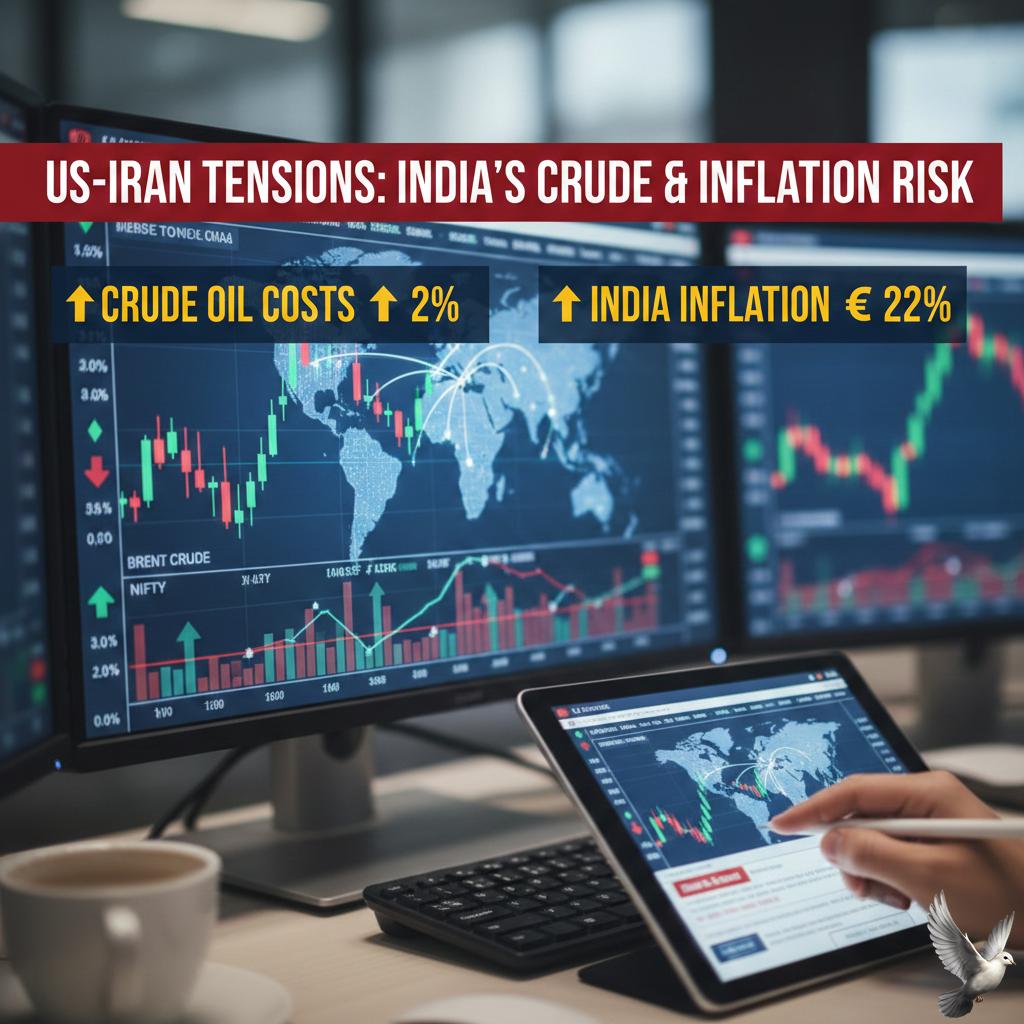
Potential Impact of US-Iran Tensions on India’s Crude Oil Costs and Inflation Rates
Market Brief: Strait of Hormuz Tension and Energy Volatility
Geopolitical friction between the United States and Iran has pushed global energy markets to a six-month high. As of **February 21, 2026**, Brent crude is trading near **$71.68** per barrel, marking a sharp recovery of over **12%** within the last month. Market anxiety is centered on a **10-day** ultimatum issued by the U.S. administration for Iran to reach a nuclear agreement, fueling fears of a potential military escalation.
The Strait of Hormuz remains the primary global concern. Approximately **20-21%** of the world’s seaborne-traded crude oil and nearly **20%** of global liquefied natural gas (LNG) transit through this **21-mile** wide waterway. Iranian naval exercises and the temporary closure of shipping lanes earlier this week have already triggered a risk premium in pricing, adding an estimated **$5-10** per barrel to current benchmarks.
India faces significant economic exposure due to its **87%** import dependency. More than **40%** of India's crude imports pass directly through the Strait of Hormuz. For every **$1** increase in the price of oil, India’s annual import bill expands by approximately **$2 billion**. While the Reserve Bank of India has maintained the repo rate at **5.25%** and projected a manageable inflation rate of **2.1%** for **FY26**, sustained energy price spikes threaten these stability targets.
Logistical shifts are already visible as regional risks intensify. Indian refiners have reduced Russian oil imports to roughly **1.2 million** barrels per day, down from peaks of over **2 million**, while increasing intake from Saudi Arabia to **1.1 million** barrels. This diversification aims to mitigate supply chain shocks, but alternative routes like the Cape of Good Hope add **25-30 days** to transit times and up to **$2.25 million** in costs per shipment.
Market analysts assign a **70%** probability to a U.S. strike if diplomacy fails. A partial transit disruption could push Brent into the **$85-95** range, while a full chokepoint closure would likely trigger triple-digit pricing. Shipping insurance premiums have already surged **200-400%** above baseline rates, reflecting the heightened risk of maritime incidents in the Persian Gulf.
This video provides a deep dive into the maritime geography and historical significance of the world's most critical oil transit point.