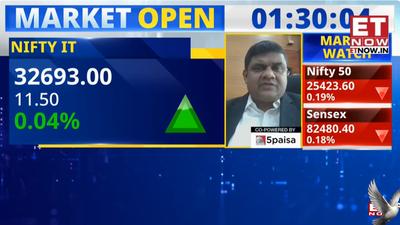
PSU Banks and Capital Goods Drive Market Growth: Dipan Mehta
Market Outlook: PSU Banks and Infrastructure Lead 2026 Growth
The Indian equity market continues to show a distinct divide between cyclical strength and consumption-led caution. As of February 18, 2026, the **Nifty 50** remains in a consolidation phase near the **25,700** level, while the **Sensex** hovers around **83,300**. Despite a subdued tone in the broader indices caused by a retreat in IT counters, Public Sector Undertaking (PSU) banks and the capital goods sector are demonstrating significant technical momentum.
PSU Banking Sector Re-Rating
The valuation gap between PSU banks and their private peers is narrowing rapidly as state-run lenders undergo a structural revival. The **Nifty PSU Bank index** has recently surged to **9,304**, reflecting a **1.5%** gain in a single session. This outperformance is driven by improved asset quality, with top-tier PSU banks reporting Net Non-Performing Assets (NPAs) below **0.5%** to **1.0%**.
**Indian Bank** hit an all-time high of **928** today, marking a **78.55%** return over the past year. **State Bank of India (SBI)** has also shown strong momentum, with its market capitalization crossing **11.14 lakh crore** and share prices reaching **1,206.5**. Investors are increasingly viewing these entities as value plays due to healthy Return on Assets (ROA) of approximately **1%** and credit growth sustained at **14%**.
Capital Goods and Infrastructure Surge
The capital goods sector is emerging as a primary pillar of India’s investment-led growth. The Union Budget 2026-27 has bolstered this sentiment by increasing public capital expenditure to **12.2 lakh crore**, a **9%** rise from previous estimates. This fiscal push is directly benefiting firms with robust order books and diversified engineering portfolios.
**Larsen & Toubro (L&T)** continues to dominate the segment, with its market capitalization nearing the **6 trillion** milestone. The firm holds a record order backlog of **7.33 trillion**, supported by a **30%** year-on-year increase. Its stock currently trades near a 52-week peak of **4,279**, fueled by a **10%** rally over the last month. Other major players like **BHEL** have also secured significant contracts, including a recent power plant order valued between **1,200 and 1,500 crore**.
FMCG Growth Deceleration
In contrast to the industrial boom, the Fast-Moving Consumer Goods (FMCG) sector faces a cautious outlook. High wholesale inflation, which rose to **1.81%** in January 2026, has put pressure on margins. While volume-led growth is expected to stay between **6% and 8%** for the fiscal year, revenue realizations remain constrained by intense competition and rising input costs for manufactured products.
Rural demand remains a relative bright spot, showing a **7.7%** volume expansion compared to **3.7%** in urban markets. However, the **Nifty FMCG index** has slipped as investors rotate capital away from defensive consumption stocks into high-growth infrastructure and cyclical banking themes. Selective premium offerings and quick commerce channels remain the only segments showing high-double-digit growth potential within the consumer space.