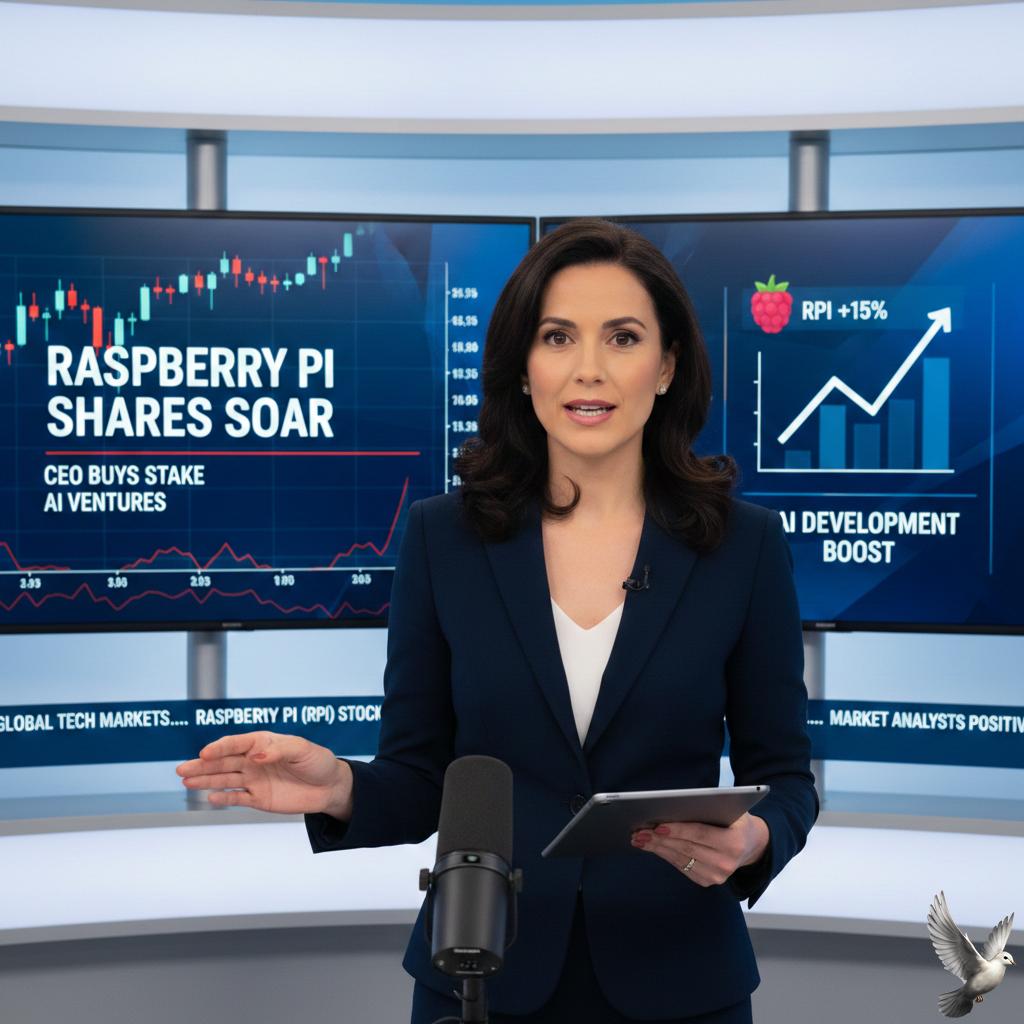
Raspberry Pi Shares Rise Following CEO Purchase and AI Developments
Raspberry Pi Holdings PLC (LSE: RPI) experienced a dramatic market reversal this week, with shares surging as much as **42%** during Tuesday's trading session. This movement represents a record two-day rally for the UK-based hardware firm, effectively halting a consistent downward trend that had characterized the stock's performance since late 2025.
The primary catalyst for the recovery was a series of strategic stock acquisitions by CEO Eben Upton. Regulatory filings confirmed that Upton purchased approximately **13,224 GBP** worth of shares at a price near **282 pence** per share on Monday. This follows a broader pattern of insider buying, with Upton and other directors collectively increasing their stakes throughout January and February 2026 to signal confidence in the company’s valuation.
The share price reached an intra-day peak of **436 pence** on Tuesday, closing at **411.60 pence**. Despite the recent surge, the stock remains approximately **50%** below its all-time high of **766 pence** achieved last year. Market capitalization currently sits at roughly **827 million GBP**.
Investor sentiment is being bolstered by the company’s expanding role in the artificial intelligence sector. Public interest has spiked following the release of the Raspberry Pi AI HAT+ 2, priced at **$130**. This new hardware, powered by the Hailo 10H accelerator, is designed to run vision models and light Large Language Models (LLMs) like Llama 3.2. Analysts noted that social media buzz regarding "low-cost AI" has driven retail interest, as users look for alternatives to more expensive computing platforms.
Financial fundamentals remain stable despite operational headwinds. Raspberry Pi reported an adjusted EBITDA of at least **$45 million** for the 2025 fiscal year, marking a **20%** increase over 2024. The company shipped **7.6 million** units in 2025, with **4 million** units delivered in the second half of the year alone. Net cash reserves were reported at **$28 million** at year-end.
A significant challenge for 2026 remains the volatility of memory component pricing. The cost of LPDDR4 DRAM has risen sharply as global memory suppliers divert capacity toward AI data centers. While Raspberry Pi maintains inventory buffers and has qualified additional suppliers to mitigate these costs, the company indicated that visibility for the second half of 2026 remains limited.
Industrial OEM relationships continue to be the backbone of the business, accounting for **70%** of total demand. For the first time, semiconductor unit volumes are expected to exceed board unit volumes in 2026, marking a shift in the company’s revenue mix toward its proprietary silicon.