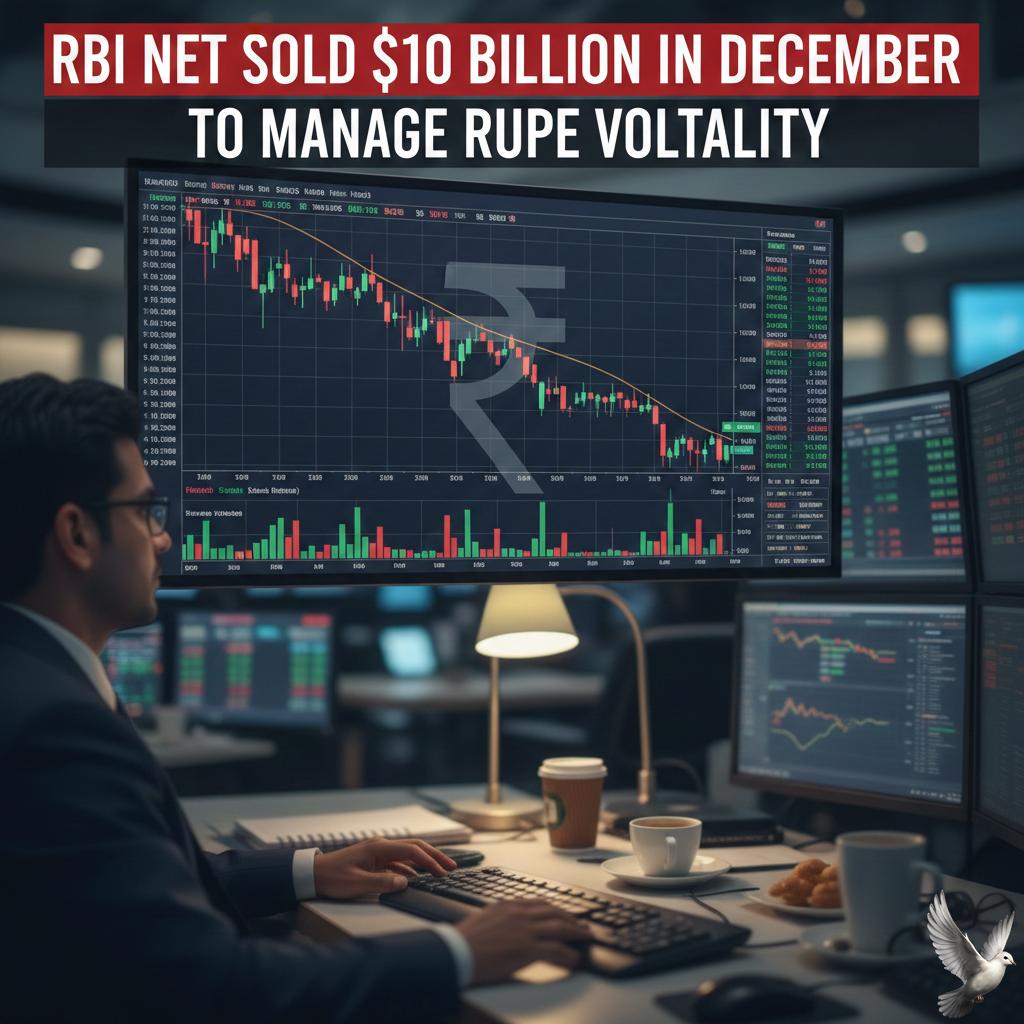
RBI Net Sold $10 Billion in December to Manage Rupee Volatility
RBI Market Intervention & Rupee Stability
The Reserve Bank of India (RBI) continues its active role in the foreign exchange market to manage currency volatility. Recent data confirms a significant net sale of **$10.02 billion** in December. This intervention was driven by the central bank's goal to shield the rupee from extreme fluctuations after a period of high pressure.
In December, the RBI total activity included **$18.33 billion** in purchases and **$28.35 billion** in sales. This followed a November period that also saw substantial net sales of **$9.7 billion**. These aggressive moves were designed to defend the currency as it touched record lows near **91.07** late last year.
Record Reserves & Liquidity Management
Despite heavy selling to support the currency, India’s total foreign exchange reserves have surged to an all-time high of **$725.73 billion** as of mid-February 2026. This reflects a weekly increase of **$8.66 billion**, supported by rising gold valuations and foreign currency assets.
* **Gold Reserves:** Now valued at **$128.47 billion**.
* **Foreign Currency Assets:** Increased to **$573.60 billion**.
* **Import Cover:** Current reserves provide approximately **11 months** of protection.
To counter the "rupee drain" caused by selling dollars, the RBI has deployed over **$2 billion** in FX swaps. These operations help replenish local liquidity without compromising the bank’s ability to defend the exchange rate.
Current Rupee Performance
The rupee has shown signs of stabilization following a preliminary U.S.-India trade deal in early February. After falling past the **91.00** mark in January, the currency rebounded to trade in the **90.60 to 90.99** range this month.
Global factors remain a primary influence. While the dollar index has stayed strong at **97.14**, lower crude oil prices near **$68.33** per barrel have provided a much-needed cushion for the Indian economy.
Economic Context
The intervention comes as India maintains a robust growth outlook. Real GDP is projected to grow by **7.4%** in the current fiscal year. Fiscal discipline is also a priority, with the government targeting a deficit of **4.4%** for the upcoming cycle.
Policymakers are now focused on converting this episodic strength into long-term stability. While record reserves offer a significant buffer, the market remains sensitive to foreign institutional outflows and global trade developments.
This [analysis of the Indian Rupee's outlook](https://www.youtube.com/watch?v=f5zyOnpxABQ) provides a detailed breakdown of how global trade shifts and central bank policies are expected to shape the currency's path through 2026.
http://googleusercontent.com/youtube_content/0