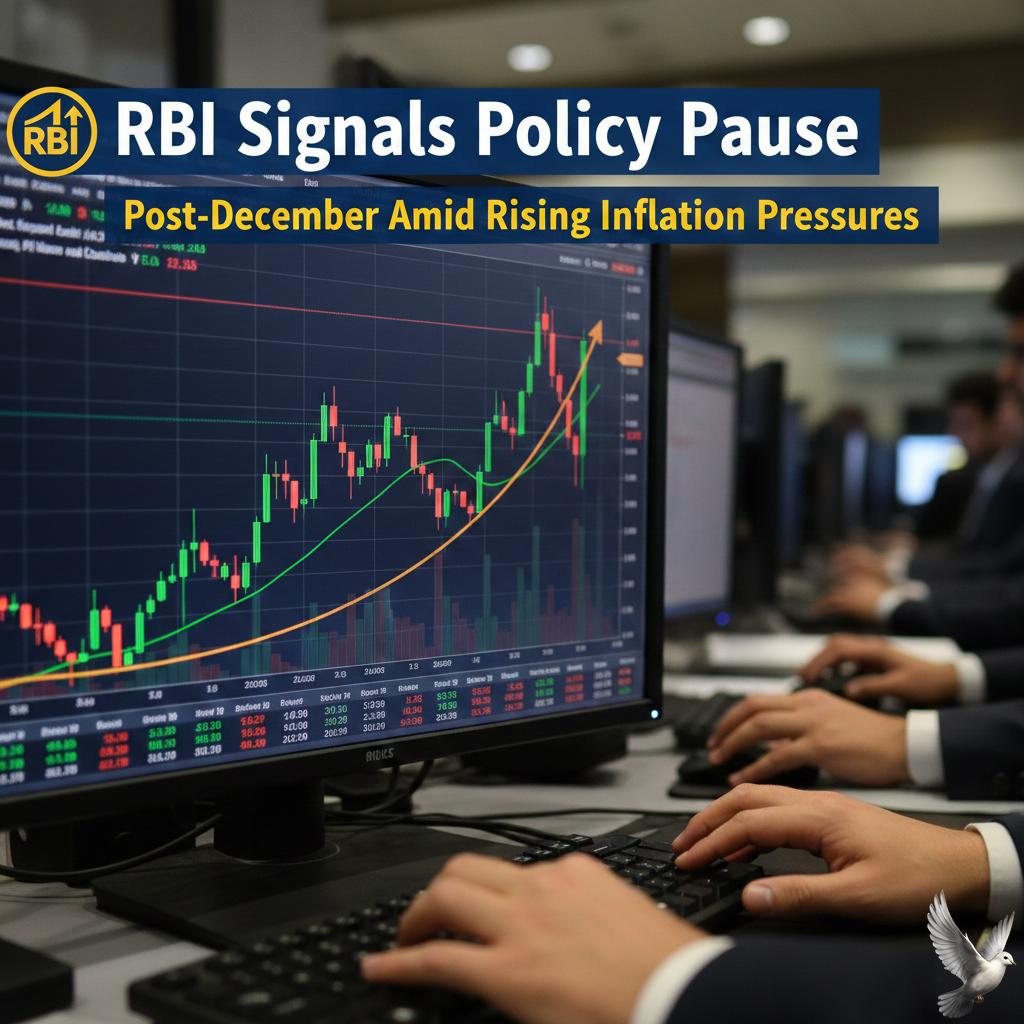
RBI Signals Post-December Policy Pause Amid Rising Inflation Pressures
The Reserve Bank of India (RBI) has signaled a shift toward stability, maintaining the benchmark repo rate at 5.25% following its February 2026 meeting. This decision marks a definitive pause in the recent easing cycle, which saw cumulative rate cuts of 125 basis points over the past year. While some analysts previously hoped for a final reduction, the central bank’s transition to a "neutral" stance suggests that the window for further monetary stimulus has effectively closed.
Economic growth remains a primary driver for this cautious approach. The RBI recently upgraded its GDP growth forecast for the 2025-26 fiscal year to 7.4%, up from the previous estimate of 7.3%. This optimism is fueled by strong domestic consumption and a significant revival in manufacturing activity. Projections for the first half of the 2026-27 fiscal year also look robust, with growth expected to hold steady at 6.9% to 7.0%.
Inflation dynamics are evolving, prompting the central bank to stay vigilant. While headline inflation remained at a benign 1.33% in December 2025, the RBI has nudged its full-year forecast for 2025-26 up to 2.1%. Looking further ahead, inflation is projected to climb toward 4.0% in early 2026-27 due to unfavorable base effects and rising prices in precious metals. This upward trajectory reinforces the likelihood of a prolonged pause in rate adjustments.
The external sector has received a massive boost from landmark trade agreements. India recently finalized a major deal with the United States, targeting a total trade value of $500 billion and slashing tariffs on Indian goods from 50% to 18%. Simultaneously, a comprehensive Free Trade Agreement with the European Union has been inked, which is expected to eliminate or reduce duties on over 96% of exports. These deals are anticipated to be highly growth-accretive, further reducing the need for aggressive monetary support.
Financial markets have reacted with a mix of volatility and consolidation. Following the recent Union Budget 2026, the Nifty 50 and Sensex experienced sharp swings, with the Nifty trading near the 25,750 level. The rupee has faced some pressure, weakening beyond ₹90 against the US dollar, which further complicates the case for any additional rate cuts.
For the average consumer, this policy environment means stability. Home and auto loan EMIs are expected to remain unchanged for the foreseeable future. With the central bank prioritizing "growth with stability," the focus has moved from cutting costs to ensuring the transmission of previous rate hikes while monitoring global geopolitical risks and commodity price volatility.