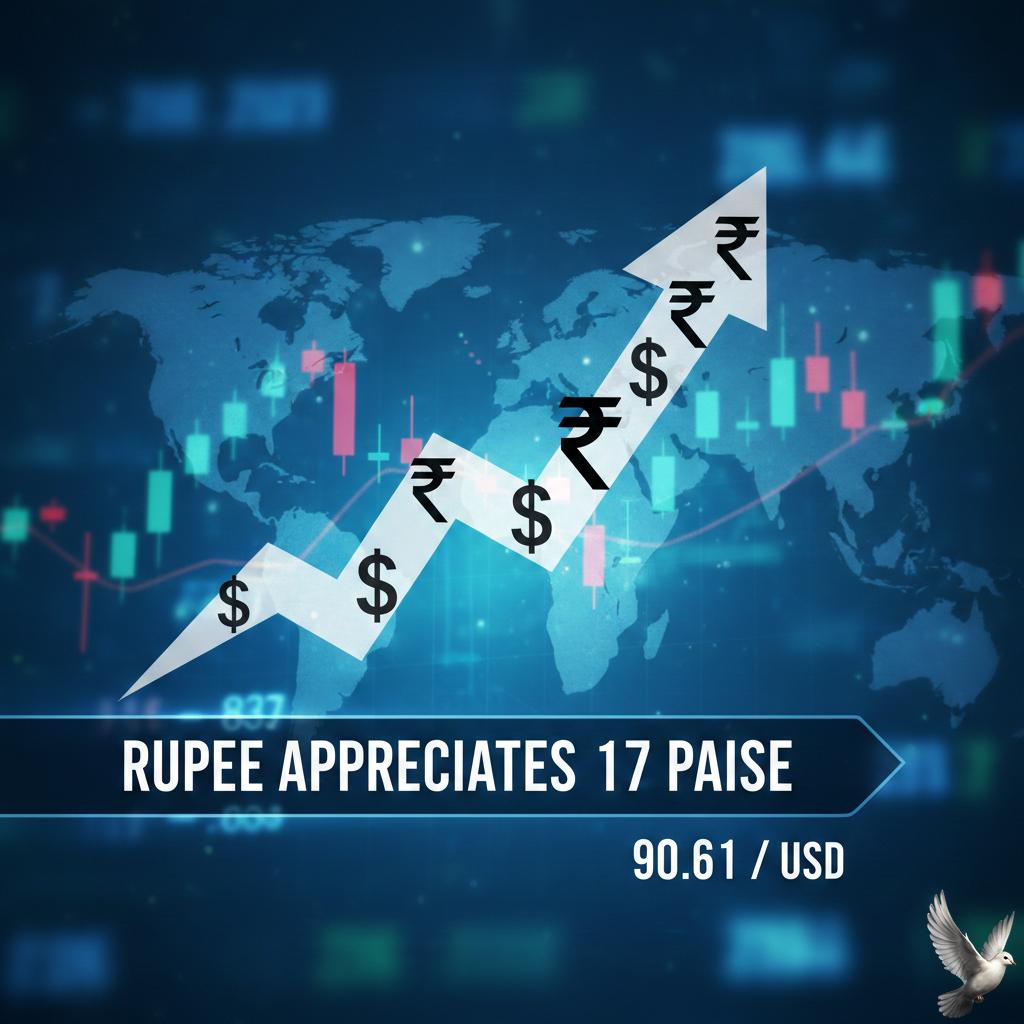
Rupee Appreciates 17 Paise to 90.61 Per US Dollar
The Indian rupee strengthened on Thursday, February 12, 2026, gaining **17 paise** to close at **90.61** against the US dollar. This recovery follows a volatile session on Wednesday where the currency had slipped to **90.78**. Market sentiment was primarily bolstered by a steady return of foreign fund investments and a landmark trade development with the United States.
At the interbank foreign exchange market, the rupee exhibited strong momentum early in the day. It opened at **90.55** and surged to an intraday high of **90.40** before settling at its final provisional mark. This performance highlights a shift in risk appetite, as foreign portfolio investors (FPIs) turned net buyers in early February, infusing over **Rs 8,100 crore** into Indian equities after months of heavy selling.
The broader economic landscape is currently shaped by the recent India-US interim trade agreement. Under this deal, reciprocal tariffs on Indian goods have been reduced from **25%** to **18%**, a move expected to provide structural support to exports. Consequently, major financial institutions like Goldman Sachs have upgraded India’s real GDP growth forecast for 2026 to **6.9%**, citing the positive impact of lower trade barriers.
Inflation data released today shows a transition to a new CPI base year (**2024=100**). Under this revised series, retail inflation for January 2026 climbed to **2.75%**, up from the previous month's adjusted figures. Despite this uptick, the Reserve Bank of India (RBI) remains in a neutral stance, keeping the repo rate unchanged at **5.25%**. The central bank has been active in the background, ensuring banking system liquidity remains in surplus—recently averaging around **Rs 70,000 crore** per day.
External factors provided a supportive cushion as the dollar index, which tracks the greenback against six major currencies, eased slightly to **96.79**. Additionally, Brent crude prices softened to **$69.20** per barrel, reducing the "silent tax" on India's import-heavy economy. While the domestic equity markets saw some profit-booking, with the Sensex closing lower, the underlying currency stability reflects growing confidence in India’s macroeconomic fundamentals and its narrowing current account deficit, now projected at **0.8%** of GDP for 2026.