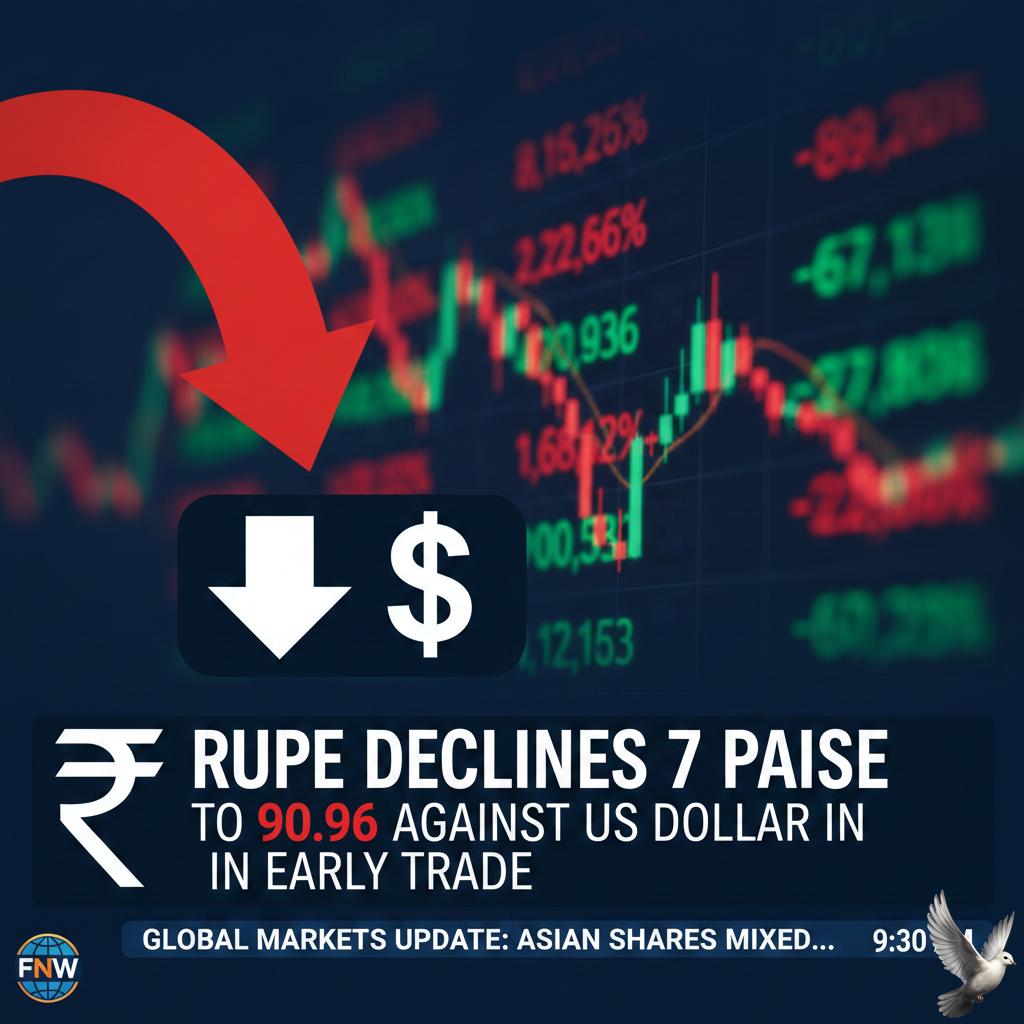
Rupee declines 7 paise to 90.96 against US dollar in early trade
Rupee Performance and Forex Dynamics
The Indian Rupee edged lower in early Tuesday trade, slipping **7 paise** to quote at **90.96** against the US Dollar. Persistent strength in the greenback and a cautious atmosphere in local equity markets have weighed on the currency.
The **US Dollar Index (DXY)**, which measures the buck against a basket of six major currencies, remained firm around the **97.85** level. While the index has faced recent volatility due to shifting US trade policies and legal rulings on tariffs, its relative strength continues to act as a primary headwind for emerging market currencies like the Rupee.
Energy Market Pressures
Global crude oil dynamics are further complicating the Rupee's trajectory. Brent crude futures rose to approximately **$72.08** per barrel, while West Texas Intermediate (WTI) climbed to **$66.90**.
Geopolitical tensions in the Middle East and concerns over supply disruptions have pushed oil prices toward six-month highs. As a major importer of crude, India faces increased demand for dollars to settle energy bills, which naturally puts downward pressure on the domestic currency.
[Image of crude oil price trend chart]
Domestic Equity Sentiment
The Indian benchmark indices opened Tuesday's session on a weak note, tracking a sell-off in global markets. The **BSE Sensex** dropped over **500 points** in early trade to hover near **82,800**, while the **NSE Nifty 50** slipped below the **25,600** mark.
Information Technology (IT) stocks have been the primary laggards, with major players like **Infosys** and **TCS** seeing declines of **3%** or more. This sectoral weakness stems from broader global concerns regarding technological shifts and potential disruption in traditional software services.
Institutional Inflows and Stability
Despite the downward pressure from oil and equities, the Rupee’s fall has been somewhat cushioned by consistent activity from foreign investors.
Recent data shows **Foreign Institutional Investors (FIIs)** were net buyers in the cash segment, infusing over **₹3,483 crore** into the market during the previous session. These steady inflows provide a necessary liquidity buffer, preventing a more aggressive depreciation of the Rupee.
While domestic institutions have engaged in selective profit-booking, the underlying interest from global participants remains a critical stabilizing factor for the Indian financial landscape. Market participants are now closely monitoring the **91.00** psychological level for the USD/INR pair as a key threshold for the sessions ahead.