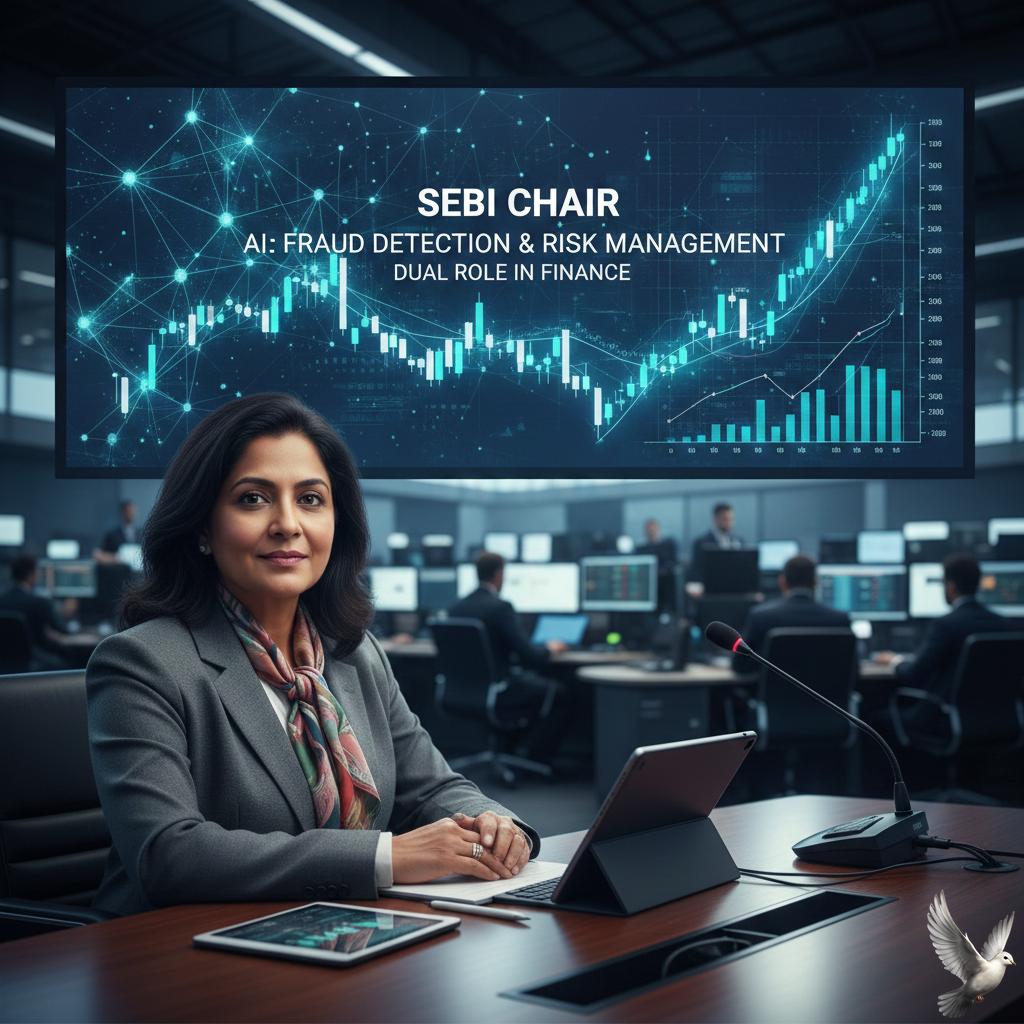
Sebi Chair Discusses Dual Role of AI in Fraud Detection and Risk Management
The Indian securities market is undergoing a structural transformation, shifting from a focus on individual institutions to a comprehensive oversight of systems and technology. SEBI Chairperson Tuhin Kanta Pandey recently outlined this "next regulatory frontier," emphasizing that regulation must become anticipatory rather than reactive to keep pace with rapid technological shifts.
A central theme of this evolution is the dual role of Artificial Intelligence. While AI offers powerful capabilities for market surveillance and fraud detection, it also introduces significant risks, including algorithmic bias, lack of transparency, and the potential for a dangerous concentration of technological power. To counter these, the regulator is advocating for markets that are resilient by design.
The scale of the Indian market now necessitates this high-tech approach. As of February 2026, India’s market capitalization has surged more than fourfold over the last decade, exceeding **Rs 470 trillion**. This represents **138%** of the national GDP, a massive increase from **81%** in FY15. The investor base has also expanded to a record **140 million** unique individuals.
Under the 2026 regulatory framework, SEBI has implemented strict mandates for algorithmic trading to ensure market integrity. All trading strategies must now receive mandatory exchange approval before deployment. Each order must carry a unique **Algo ID**, allowing for real-time monitoring and the immediate tracing of errors or suspicious activity.
Transparency is being reinforced through the classification of algorithms. "White box" strategies must be fully replicable and transparent, while "black box" providers are now required to register as Research Analysts and maintain exhaustive documentation of their logic. Furthermore, the use of open APIs for retail algorithmic trading is banned; all systems must reside within broker-hosted infrastructure to ensure a clear audit trail.
Technological resilience is also being tested by current market volatility. On February 13, 2026, the Sensex experienced a sharp correction, tumbling over **1,000 points** while the India VIX, a measure of market fear, surged by **14%**. During this period, Nifty 50 also slipped below the **25,500** mark, highlighting the importance of robust, automated risk controls like "kill switches" to prevent systemic glitches.
Capital mobilization remains strong despite these fluctuations. In the current fiscal year (FY26) through January, **Rs 11.6 trillion** has been raised, including proceeds from **329 IPOs**. India continues to lead globally in IPO activity, reinforcing the need for what the Chairperson describes as the "four Ts": Trust, Technology, Transparency, and Teamwork.
The shift toward "SupTech" (Supervisory Technology) and "RegTech" (Regulatory Technology) is intended to reduce the friction of compliance while strengthening data governance. By moving toward dynamic supervision and risk-based monitoring, the regulator aims to protect the growing volume of household capital now flowing into the markets through mutual funds, which currently manage assets equivalent to **23%** of India’s GDP.