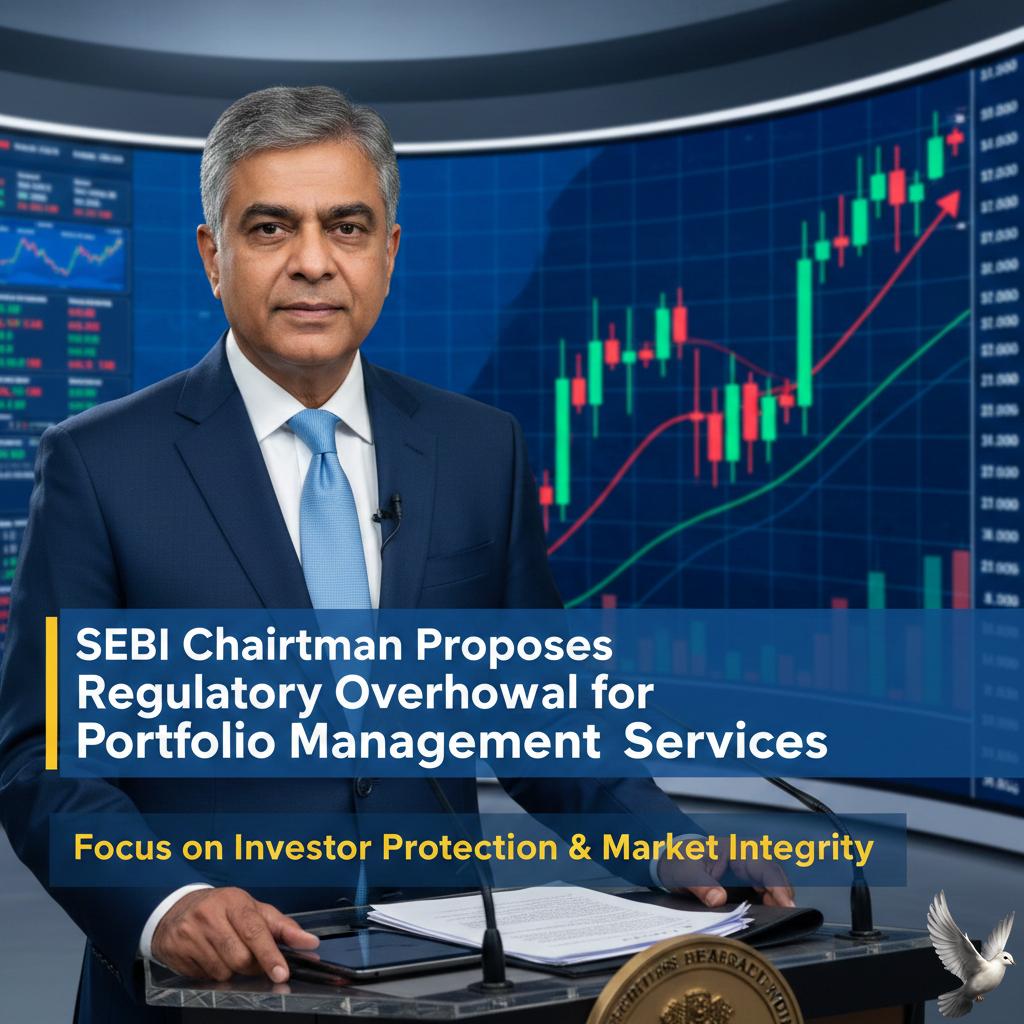
SEBI Chairman Proposes Regulatory Overhaul for Portfolio Management Services
The Securities and Exchange Board of India (SEBI) is executing a comprehensive overhaul of the Portfolio Managers Regulations to align the industry with rapid market shifts. As of late February 2026, SEBI Chairman Tuhin Kanta Pandey has confirmed that the regulator is targeting **June 2026** for a formal review, preceded by the release of a public consultation paper.
The Portfolio Management Services (PMS) industry has reached a significant scale, with assets under management (AUM) nearly doubling over the last five years. Excluding EPFO and provident fund contributions, the sector’s AUM has surged from **₹5 lakh crore** in 2021 to approximately **₹10.50 lakh crore** as of January 31, 2026. This represents a compound annual growth rate (CAGR) of roughly **17%**.
Investor participation is also at record levels. The total number of PMS clients has increased to about **2.15 lakh** as of early 2026. This growth is being driven by high-net-worth individuals (HNIs) seeking customized equity and debt strategies, often outperforming the Nifty benchmark by **5% to 10%** annually through high-conviction, focused stock selection.
A central pillar of the new regulatory review is the strengthening of governance and investor protection. Recent guidelines already mandate a minimum investment ticket size of **₹50 lakh** and have raised the minimum net worth for providers to **₹5 crore**. These thresholds are designed to ensure only serious, well-capitalized players operate in the high-stakes PMS space.
New transparency rules now require managers to report performance data net of all costs, fees, and taxes, moving away from the older practice of showing gross figures. Additionally, investment in the securities of "related parties" or associates is now capped at **30%** of a client's total portfolio, with prior explicit consent required to prevent conflicts of interest.
The regulator is also prioritizing the "Ease of Doing Business." SEBI recently introduced streamlined processes for the transfer of a PMS business during mergers or acquisitions. Such transfers must now be completed within a maximum of **two months** following regulatory approval, ensuring continuity of service for investors during corporate restructurings.
To maintain market integrity, the 2026 regulatory environment includes stricter oversight of non-discretionary portfolios and mandates that managers avoid below-investment-grade or unrated securities of related parties. These reforms transition the sector toward a preventive compliance model, shifting away from reactive enforcement.
With India's real GDP estimated to grow at **7.4%** for the 2026 fiscal year, the PMS industry is expected to remain a critical engine for capital formation. The upcoming June review will likely address further digital integration and disclosure gaps to ensure the framework remains robust for an increasingly sophisticated investor base.