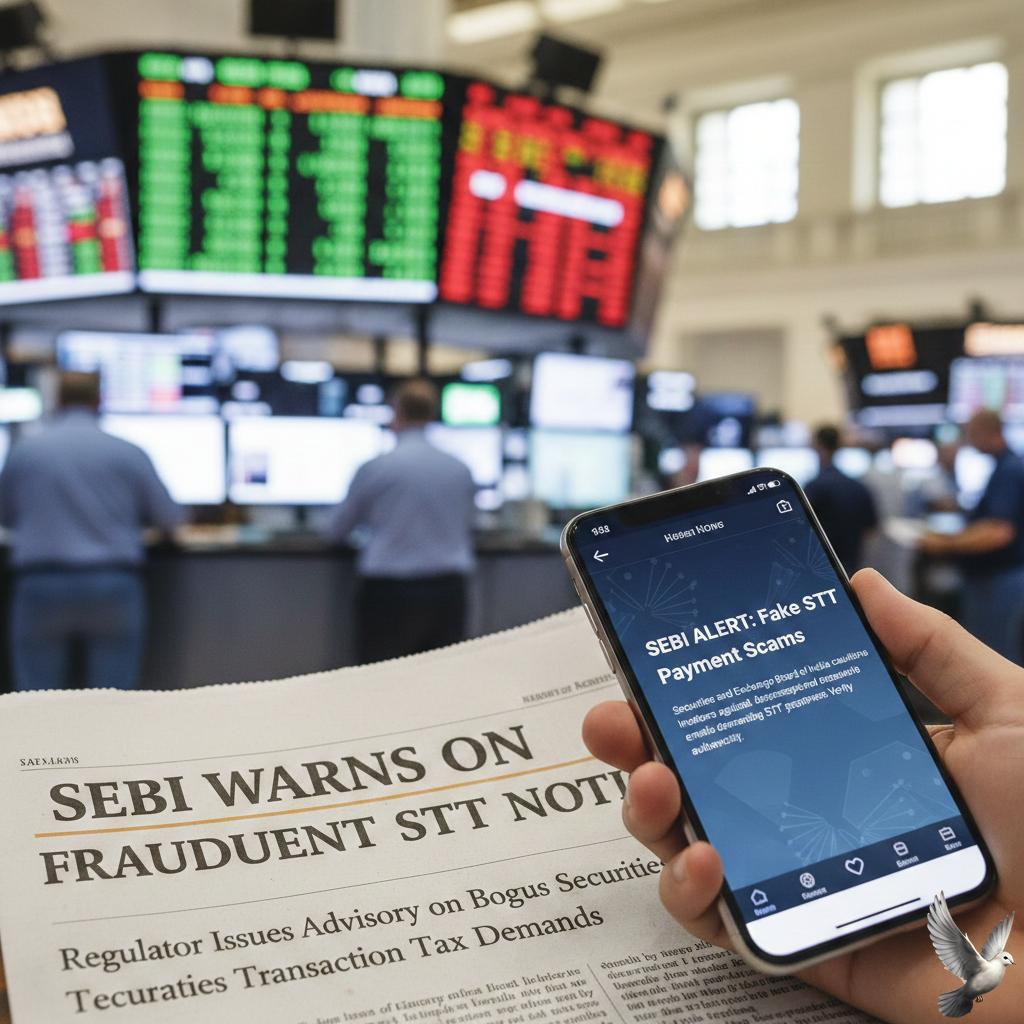
SEBI Issues Advisory on Fraudulent Securities Transaction Tax Payment Notices
The Securities and Exchange Board of India (SEBI) and the National Stock Exchange (NSE) have issued an urgent dual-alert following a surge in sophisticated financial scams targeting retail investors. The most critical warning involves the circulation of forged notices demanding immediate payment of Securities Transaction Tax (STT).
Fraudsters are now using high-quality forged SEBI letterheads, logos, and seals to demand tax payments under the Finance Act, 2004. These fake documents often cite the SEBI Act, 1992, to threaten legal action if payments are not made. The regulator has explicitly clarified that it never issues notices to individual investors for the collection of STT.
Investors must note that STT is an automated levy. It is charged on every buy and sell transaction executed on stock exchanges and is collected directly by brokers at the time of the trade. SEBI does not coordinate with the Reserve Bank of India (RBI) or any other body for the manual collection of this tax from individuals.
Beyond tax fraud, SEBI has flagged a rising trend in "account handling" scams. Unregistered individuals are posing as expert fund managers or portfolio providers, promising risk-free or guaranteed profits. These operators typically demand access to private trading credentials and ask for a share of the profits while leaving the investor to bear 100% of any losses.
To protect capital, investors are urged to verify the registration status of any entity on the official SEBI website before committing funds. Genuine communications from the regulator will only originate from official domains, and any request for a direct money transfer to a personal or non-official account should be treated as a red flag.
The market environment in February 2026 remains volatile, with the Nifty 50 down approximately 2.7% year-to-date as of late February. Amidst this uncertainty, retail participation remains high, with SIP inflows crossing 31,000 crore in recent months. This high level of activity has made the retail segment a primary target for impersonation tactics.
Security experts advise investors to stick to authentic trading apps and registered intermediaries. If you receive a suspicious notice, do not engage with the sender or provide sensitive financial data. Official verification of all documents through the SEBI and NSE portals is the only way to ensure the legitimacy of a communication.