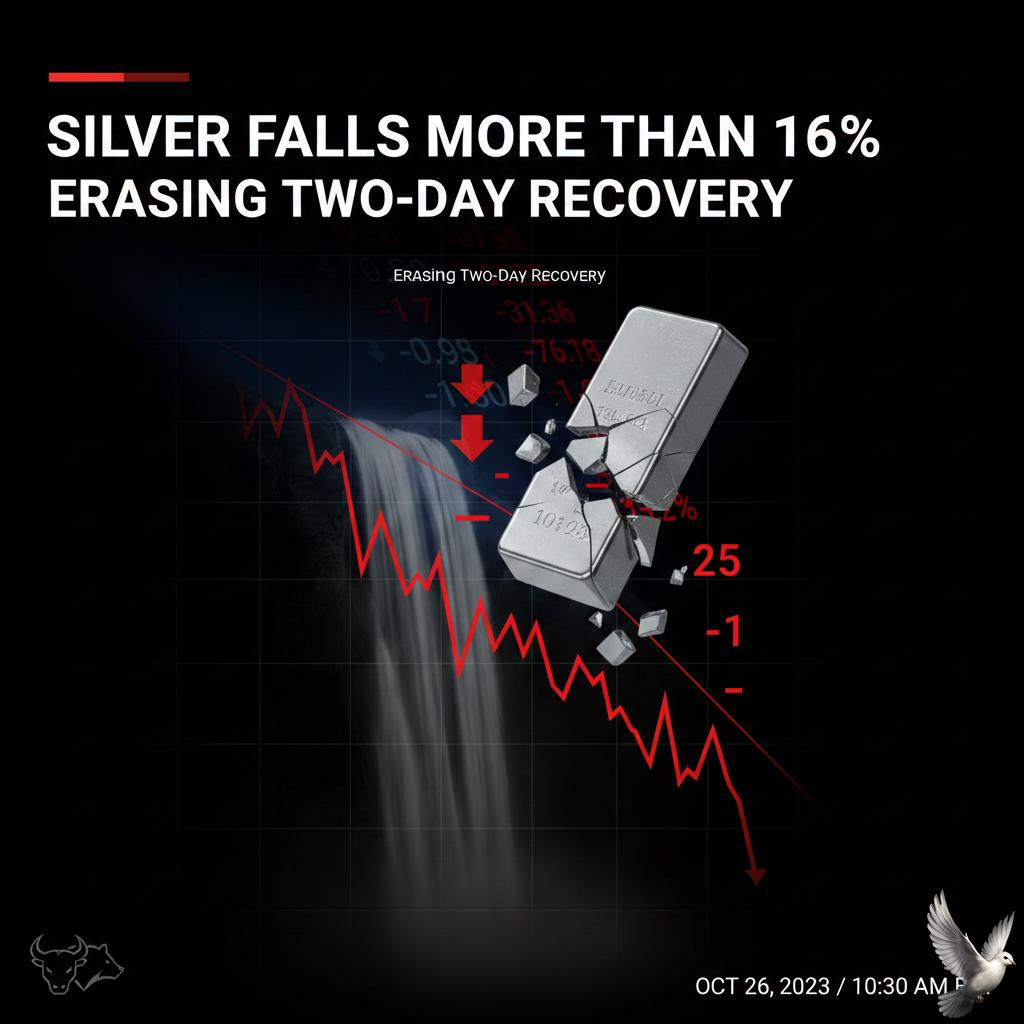
Silver Falls More Than 16%, Erasing Two-Day Recovery
**MARKET BRIEF: PRECIOUS METALS UPDATE**
**Snapshot: Volatility & Divergence**
The precious metals sector is currently navigating a period of extreme turbulence following a historic sell-off. After erasing recent record gains, the market is showing signs of a fractured recovery as of **February 5, 2026**.
**Gold (XAU/USD)** has managed to arrest its freefall, staging a rebound to trade near the **$5,016 per ounce** level. This represents a **1.1%** intraday gain, though it remains significantly below its recent all-time high of approximately **$5,600**.
**Silver (XAG/USD)**, however, remains under intense pressure. In stark contrast to gold’s stabilization, silver futures on the MCX have hit lower circuits, trading near **₹2,80,000 per kg**. The white metal has suffered a dramatic collapse, dropping nearly **46%** from its recent peaks, highlighting a severe liquidity crunch and panic selling in the industrial metal.
**Key Drivers of the Crash**
The "significant drop" mentioned in previous reports has been catalyzed by three specific, high-impact developments:
**1. The "Warsh" Hawk Factor**
Investor sentiment shifted violently following the nomination of **Kevin Warsh** as the next Federal Reserve Chair. Known as an "inflation hawk" who favors a smaller central bank balance sheet, his nomination triggered a rapid repricing of interest rate expectations. Markets are now pricing in higher real rates for longer, which strengthens the US Dollar and acts as a direct headwind for non-yielding assets like bullion.
**2. Regulatory Crackdown & Margin Calls**
A major liquidity squeeze was triggered when the **CME Group** raised margin requirements for silver futures. This forced highly leveraged speculative traders to liquidate positions immediately to cover costs, exacerbating the sell-off. This regulatory move is a primary reason why silver has underperformed gold so significantly during this correction.
**3. US Dollar (DXY) Resurgence**
The US Dollar Index has rebounded to the **97.50** level. As the greenback strengthens on the back of hawkish Fed signals and solid economic data (such as the recent ADP payroll report), dollar-denominated commodities have become more expensive for international buyers, dampening demand.
**Market Outlook**
**Short-Term: Caution Advised**
Analysts suggest that volatility will remain elevated until there is definitive clarity on the Federal Reserve's immediate policy path under the new leadership. The divergence between gold and silver suggests the market is still searching for a floor. While gold is re-attracting safe-haven flows due to lingering geopolitical tensions in the Middle East (specifically involving Iran-US discussions), silver remains vulnerable to industrial demand concerns.
**Long-Term: Structural Support**
Despite the brutal short-term correction, the macro thesis for precious metals remains intact. Leading financial institutions, including **J.P. Morgan**, maintain a bullish long-term forecast, projecting gold prices could average **$5,400 per ounce** by 2027.
The "buy-the-dip" narrative is supported by:
* Continued central bank accumulation of gold reserves to diversify away from fiat currencies.
* Persistent global debt concerns and "de-dollarization" trends.
* Structural supply deficits in silver relative to its demand in green energy technologies (solar and EVs).
**Summary**
The market has shifted from a euphoric rally to a defensive stance. While the "historic rout" has shaken out speculative froth—particularly in silver—gold’s ability to hold the **$5,000** psychological support level indicates that the long-term bull market, while bruised, is not broken.
***
**