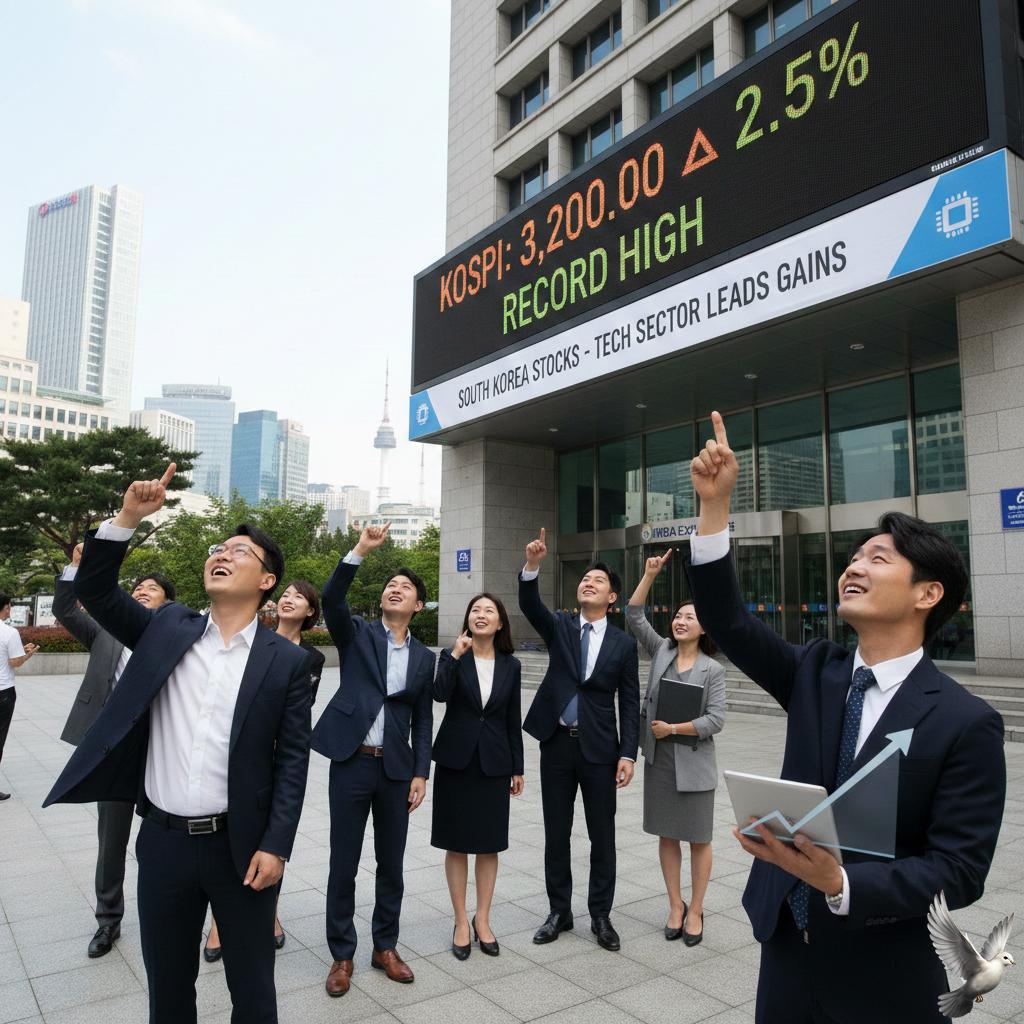
South Korea Stocks Reach Record High Led by Technology Sector Gains
South Korean financial markets reached a historic milestone on February 19, 2026, as the benchmark KOSPI index breached the **5,600** level for the first time. The index closed at a new all-time high of **5,677.25**, surging **3.09%** or **170.24 points** in a single session.
This record-breaking rally was ignited by a tech-led rebound on Wall Street and a massive upgrade in corporate earnings forecasts. Domestic sentiment remains highly bullish following the Lunar New Year holiday, with analysts projecting the index could eventually test much higher ceilings as semiconductor profits reach record levels.
Tech and Auto Giants Lead the Surge
Semiconductor heavyweights were the primary engines of growth. Samsung Electronics jumped **4.97%** to reach **190,200 won**, while SK Hynix climbed **2.73%** to hit **904,000 won**. These gains were fueled by global demand for high-bandwidth memory (HBM) chips and a spillover effect from overnight rallies in major U.S. tech stocks.
The automotive and industrial sectors also posted significant gains. Hyundai Motor rose nearly **4%**, and its affiliate Kia advanced **2.50%**. Notable strength was seen in shipbuilders, with HD Hyundai Heavy Industries and Hanwha Ocean both spiking more than **7%** during the session.
Currency and Bond Market Shifts
Despite the stock market optimism, the South Korean won showed signs of weakness. The local currency opened at **1,451.0 won** against the U.S. dollar, a decline of **6.1 won** from the previous closing rate. By mid-morning, it was trading as low as **1,452.5 won**.
Benchmark bond yields moved higher as investors adjusted to a "higher-for-longer" interest rate environment. The 10-year government bond yield climbed to approximately **3.57%**, reflecting faded expectations for immediate rate cuts by the Bank of Korea.
Market Participation and Outlook
Market dynamics revealed a split in investor behavior. Individual domestic investors were aggressive net buyers, injecting over **1.3 trillion won** into the market. Conversely, foreign investors were net sellers of approximately **1.5 trillion won**, likely engaging in profit-taking at these record valuation levels.
The semiconductor sector now accounts for an unprecedented **55%** of total KOSPI net profit forecasts for 2026. This structural shift in earnings, combined with ample global liquidity, suggests that the South Korean market is undergoing a fundamental valuation re-rating despite the pressures of a weaker currency and rising yields.