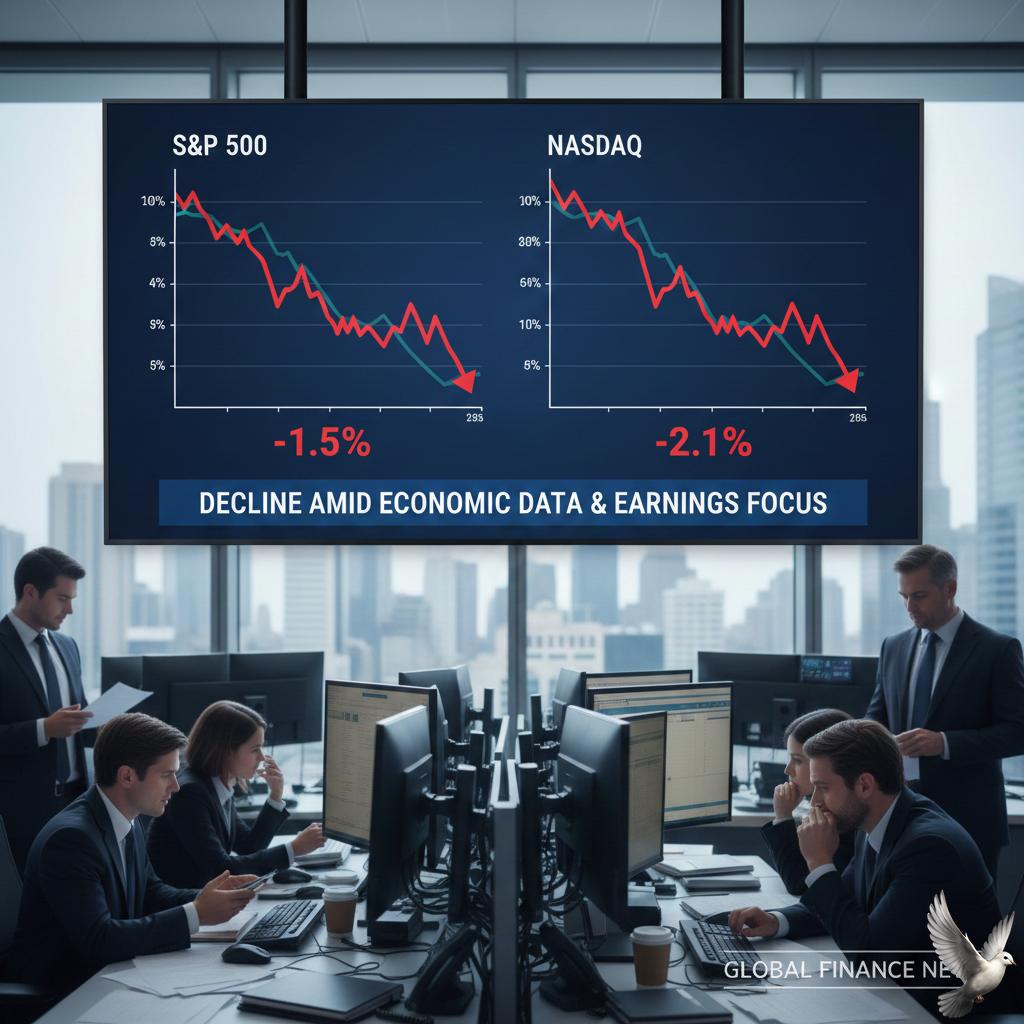
S&P 500 and Nasdaq Decline Amid Economic Data and Corporate Earnings Focus
The US stock market currently presents a sharp contrast for global investors. While the Dow Jones Industrial Average has reached a historic new peak, the tech-heavy Nasdaq and the broader S&P 500 have retreated.
The Dow Jones recently climbed 0.10% to close at 50,188.14 points. This marks a significant milestone as the index solidified its position above the 50,000-point threshold for the first time. In contrast, the S&P 500 fell 0.33% to 6,941.81, and the Nasdaq Composite dropped 0.59% to 23,102.47.
Market psychology is currently dominated by massive capital expenditure in the artificial intelligence sector. Tech giants are estimated to spend over $400 billion on AI infrastructure this year alone. However, this aggressive spending is a double-edged sword. While it fuels growth for chipmakers, it is creating pressure on the profit margins of major software and internet companies.
Among the "Magnificent Seven" tech leaders, Tesla was the sole gainer in the latest session, rising nearly 2%. Other giants, including Microsoft, Alphabet, and Meta, saw declines as investors weighed the high costs of AI development against immediate returns.
Attention is now firmly fixed on upcoming economic data. Retail sales figures showed consumer spending remained flat in December, missing expectations. This has shifted the focus to the next set of labor statistics. Analysts expect January job growth to be a critical indicator of whether the current economic rally can be sustained.
The labor market appears to be in a period of stabilization. Recent reports show the US economy added 151,000 jobs, with the unemployment rate holding steady at 4.1%. While these figures suggest a healthy environment, the concentration of job growth in only a few sectors like healthcare and finance is causing some caution.
Yields on 10-year Treasuries have dipped to their lowest level in nearly a month, currently around 4.54%. This shift reflects a cautious outlook on future interest rate cuts, as the Federal Reserve remains in no hurry to ease policy until further progress on inflation is evident.
For investors, the current environment is defined by rotation. Funds are moving away from stretched technology valuations and into sectors seen as less vulnerable to AI-related volatility. Gold remains a preferred hedge, maintaining its position above the $2,600 mark despite recent short-term consolidation.