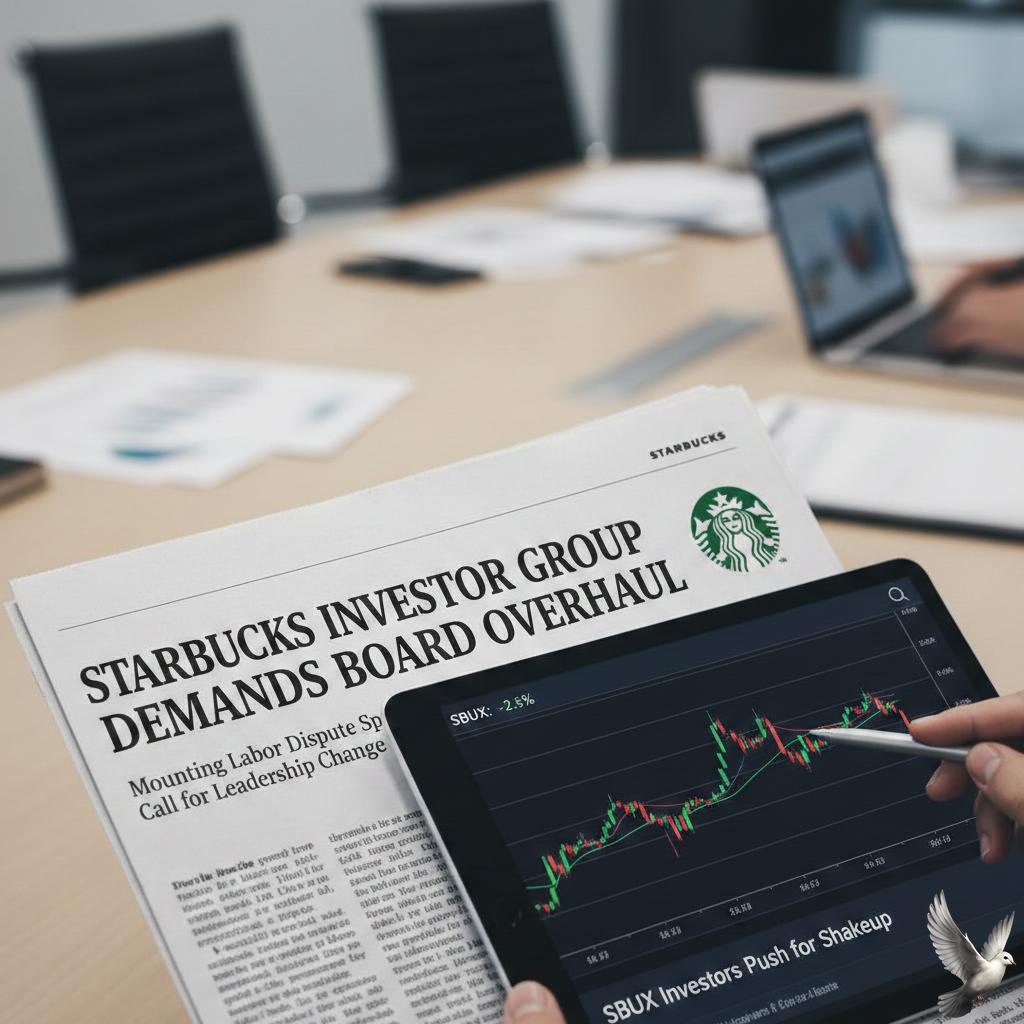
Starbucks Investor Group Seeks Board Changes Amid Labor Dispute
Starbucks is currently navigating a pivotal transformation period as shareholders prepare for the 2026 Annual Meeting on March 25. A coalition of institutional investors, including the New York City Comptroller, is formally urging a vote against the re-election of directors Jørgen Vig Knudstorp and Beth Ford.
The pressure stems from what investors describe as sustained oversight failures regarding labor relations. Despite a public commitment to reach a first contract with the Starbucks Workers United union by the end of 2024, negotiations have reportedly stalled. To date, no collective bargaining agreement has been ratified for the more than 11,000 unionized baristas across 490 stores.
Financial and operational risks are mounting alongside these disputes. In December 2025, Starbucks reached a record 38.9 million dollar settlement with New York City over Fair Workweek Law violations. Furthermore, the "Red Cup Rebellion" strikes have expanded to over 670 locations, impacting brand reputation and consistent store performance.
On the market front, the "Back to Starbucks" strategy led by CEO Brian Niccol is showing early signs of financial recovery. For the first quarter of fiscal 2026, the company reported total revenue of 9.9 billion dollars, a 6% increase year-over-year. Global comparable store sales grew by 4%, marking the first U.S. transaction growth in eight quarters.
Stock performance remains steady but cautious. As of mid-February 2026, Starbucks shares are trading around 95.39 dollars, with a market capitalization of approximately 107 billion dollars. While revenue is rising, operating margins have contracted to 10.1% due to heavy investments in labor and technology.
Management continues to emphasize a "partners-first" approach, highlighting significant investments in worker benefits and store-level technology. However, the investor group argues that the recent elimination of the Board’s dedicated labor oversight committee signals a retreat from these promises.
The outcome of the March director vote will likely serve as a referendum on whether the current leadership can balance aggressive financial growth with the resolution of long-standing labor conflicts. For now, the company maintains its fiscal 2026 guidance, targeting earnings per share between 2.15 and 2.40 dollars while continuing its global expansion.