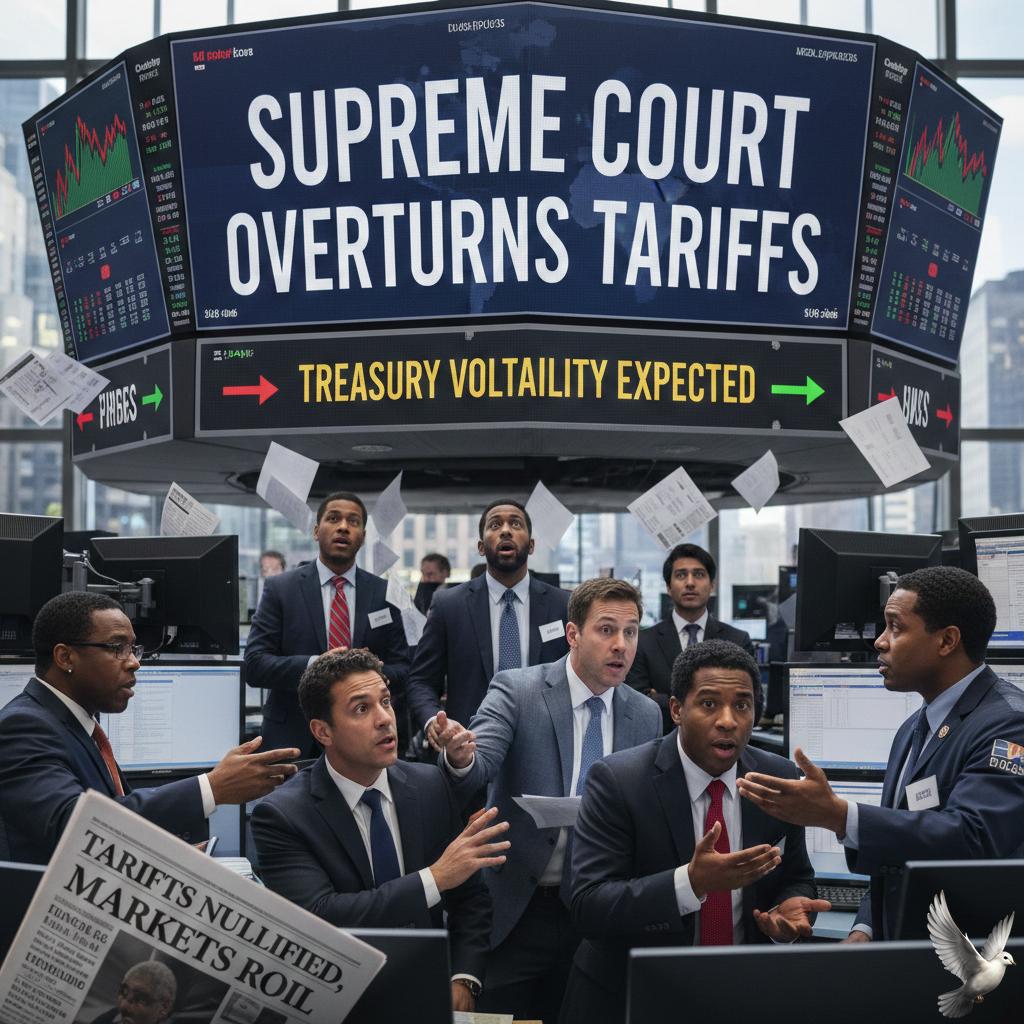
Supreme Court Decision Overturning U.S. Tariffs May Influence Treasury Market Volatility
In a landmark 6-3 decision on **February 20, 2026**, the U.S. Supreme Court struck down a central pillar of the administration's trade policy. The court ruled that the **International Emergency Economic Powers Act (IEEPA)** of 1977 does not grant the president authority to levy duties, as the power to tax remains a strictly congressional prerogative.
The ruling immediately nullified several sweeping measures, including the **25%** tariffs on Canadian and Mexican goods and the "reciprocal" tariffs that reached as high as **50%** for certain trading partners. Chief Justice John Roberts clarified that while the president can regulate imports during emergencies, the law is silent on the specific power to impose taxes or surcharges.
The fiscal implications are substantial. Current estimates suggest the government may be required to refund between **$150 billion** and **$200 billion** to importers who paid these illegal duties. Independent budget groups warn that without the projected IEEPA revenue, federal debt could climb to **125%** of GDP by 2036, adding roughly **$2.4 trillion** to the long-term national deficit.
Within hours of the decision, the White House announced a shift in strategy. The president signed a new executive order to impose a **10%** global baseline tariff under **Section 122** of the Trade Act of 1974. This authority allows for a temporary "import surcharge" during balance-of-payments emergencies for a period of **150 days**.
Market reactions remained cautious yet resilient. The **S&P 500** closed up **0.69%** following the news, buoyed by the prospect of corporate refunds for automakers and consumer goods retailers. However, tech and industrial sectors—heavily reliant on global supply chains—face renewed uncertainty as the administration launches fresh trade investigations under **Section 301** to find more permanent legal footing for duties.
Treasury Secretary Scott Bessent has downplayed the long-term fiscal damage. In recent statements, he projected that the pivot to a **10%** blanket tariff and other legal alternatives will result in "virtually unchanged" revenue for **2026**. Bessent maintains a growth forecast of at least **3.5%** for the coming year, arguing that domestic tax breaks and falling energy prices will offset the trade-related volatility.
For households, the landscape remains complex. While the removal of illegal tariffs could offer relief, the new **10%** surcharge is expected to result in an average tax increase of approximately **$1,300** per household in 2026. Global trading partners, including India and China, are now recalibrating as the average effective U.S. tariff rate is projected to settle at roughly **4.5%** under the new legal framework.