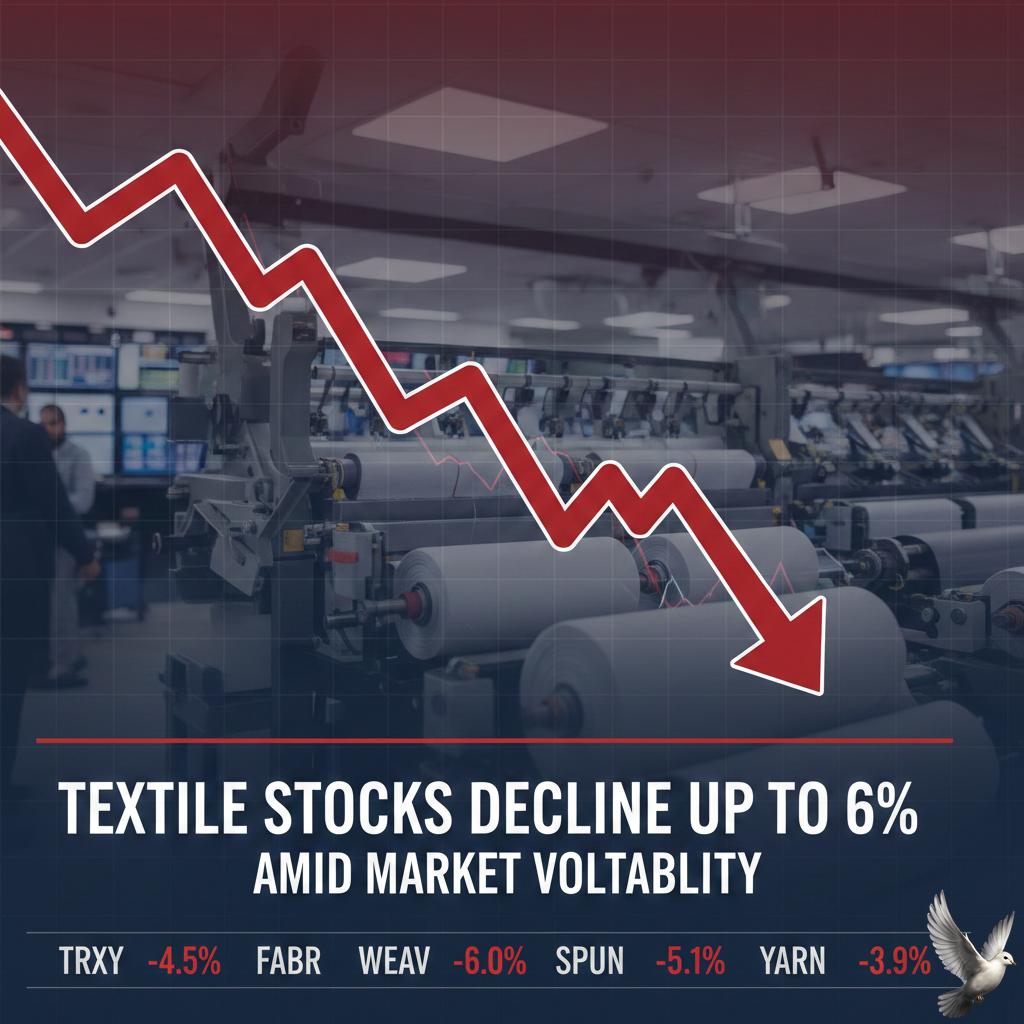
Textile Stocks Decline Up to 6% Amid Market Volatility
Market Brief: Textile Sector Faces Policy Headwinds
India’s textile and apparel sector encountered a significant hurdle this week as the government implemented a sharp reduction in export incentives. A sudden notification from the Directorate General of Foreign Trade (DGFT) has restricted benefits under the Remission of Duties and Taxes on Exported Products (RoDTEP) scheme.
Effective immediately, the applicable duty refund rates and value caps have been slashed by 50%. This policy shift aims to align with tighter fiscal management, as the budgetary allocation for the scheme was lowered to 10,000 crore for the 2026-27 fiscal year, down from over 18,232 crore previously.
Equity Markets React
Shares of leading textile exporters felt the immediate impact of the news. During the latest trading sessions, several key players saw a marked decline in valuation:
- Gokaldas Exports dropped 5.39% to settle at 746.60
- Pearl Global and Trident witnessed sharp intraday corrections
- Sector-wide losses ranged between 4% and 6%
Market analysts note that the sentiment shift is particularly pronounced because the industry had recently enjoyed a "golden phase" rally following trade optimism with the US and UK.
Export Impact and Industry Concerns
The RoDTEP scheme is vital for exporters as it refunds non-rebated taxes and levies incurred during production. Before this cut, refund rates ranged from 0.3% to 3.9% of the export value. These have now been effectively halved to a range of roughly 0.15% to 1.95%.
Industry bodies, including the Federation of Indian Export Organisations (FIEO), have urged an immediate review. Exporters argue that the timing is critical due to:
- Rising operational and logistics costs
- Sluggish global demand and protectionist trends
- A widening trade deficit, which hit a three-month high of 34.68 billion in January
Economic Context
Despite these policy challenges, the Indian textile market remains a cornerstone of the economy, valued at approximately 194 billion for the 2025-26 period. While domestic demand continues to drive 80% of the industry, the government’s Vision 2030 target of 100 billion in exports now faces a steeper climb.
Exporters are currently navigating a high-stakes environment where even a 1% shift in costs can determine the loss of international orders to regional competitors. The industry now looks toward potential relief through upcoming Free Trade Agreements (FTAs) to offset the increased fiscal burden.