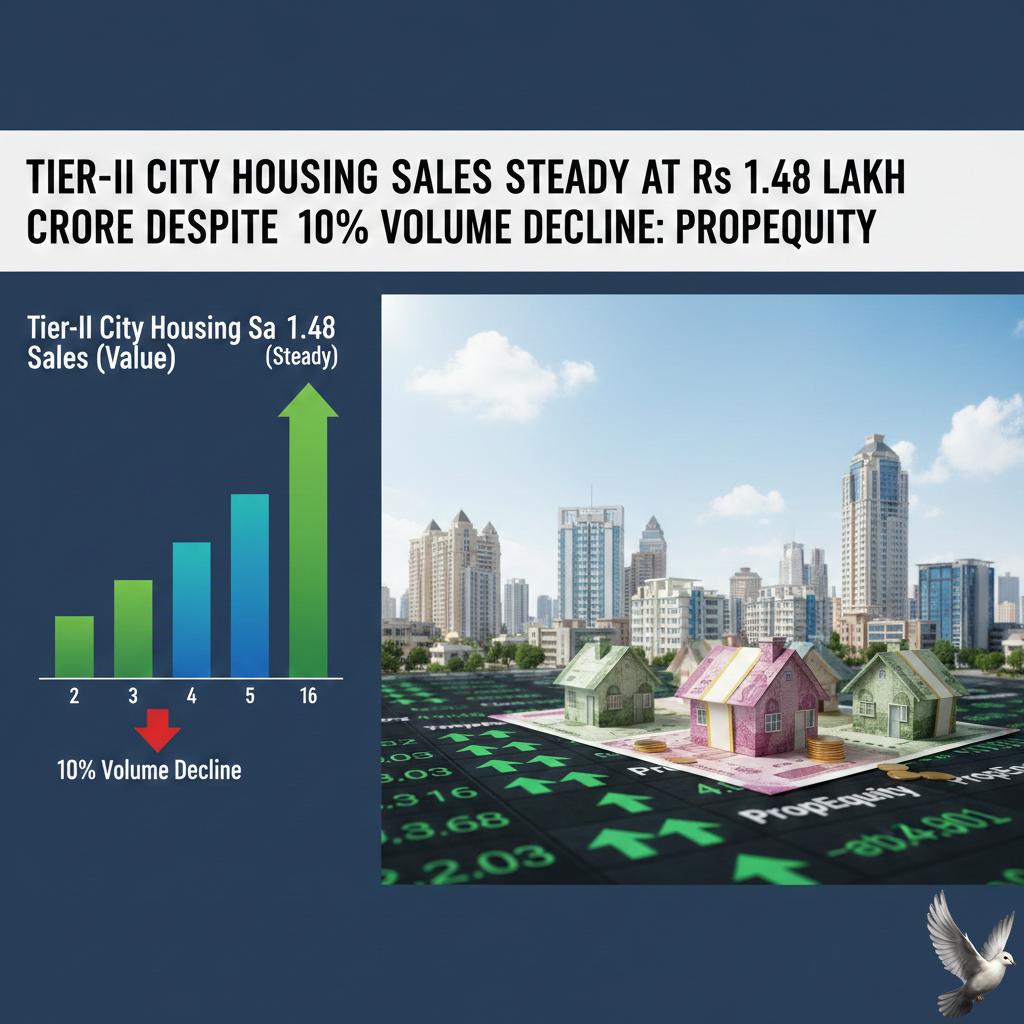
Tier-II City Housing Sales Steady at Rs 1.48 Lakh Crore Despite 10% Volume Decline: PropEquity
Housing sales across India’s top 15 tier-II cities experienced a 10 per cent decline in volume during 2025, with total transactions falling to 1,56,181 units. Despite this drop in the number of homes sold, the market remained resilient in value terms, holding steady at 1.48 lakh crore. This trend highlights a significant shift in buyer behavior and market dynamics as secondary urban centers begin to mirror the premiumization seen in major metropolitan hubs.
The stagnation in sales value amidst falling volumes is primarily driven by a surge in property prices. Average housing costs have risen due to escalating land acquisition expenses and a 40 per cent increase in construction costs over the last five years. Labor costs alone have jumped nearly 150 per cent since 2019, while essential materials like steel and cement have seen price hikes of up to 57 per cent.
A critical factor in the volume decline is the shrinking supply of affordable housing. Projects priced below 1 crore, which historically anchored the tier-II market, saw a 15 per cent drop in sales volume. The market share for this segment fell from 77 per cent in 2024 to 72 per cent in 2025. Conversely, the premium segment is thriving. Homes priced above 1 crore witnessed a 9 per cent growth in sales, now accounting for 28 per cent of the total market.
City-wise performance shows a stark contrast across regions. Visakhapatnam recorded the steepest decline in sales at 38 per cent, followed by Bhubaneswar at 25 per cent and Vadodara at 19 per cent. Ahmedabad remains the largest contributor to the tier-II landscape, representing 33 per cent of total sales with over 51,000 units sold. Notably, Mohali and Lucknow bucked the broader downward trend, posting sales growth of 34 per cent and 6 per cent, respectively.
The investment outlook is supported by a more favorable interest rate environment. The Reserve Bank of India has actively reduced the repo rate throughout 2025, bringing it down to 5.25 per cent as of December. These cuts have started to lower borrowing costs, with home loan rates from major banks now hovering around 7.90 per cent to 8.25 per cent.
Looking ahead, infrastructure development remains a primary catalyst for growth. Government initiatives like the Smart Cities Mission and the expansion of industrial corridors are enhancing the liveability of these cities. Ahmedabad is already being positioned for a transition to tier-I status by 2026 due to its massive scale of new launches and absorption. While affordability pressures are mounting, the move toward lifestyle-led upgrades and integrated community living is expected to define the next phase of the residential market.