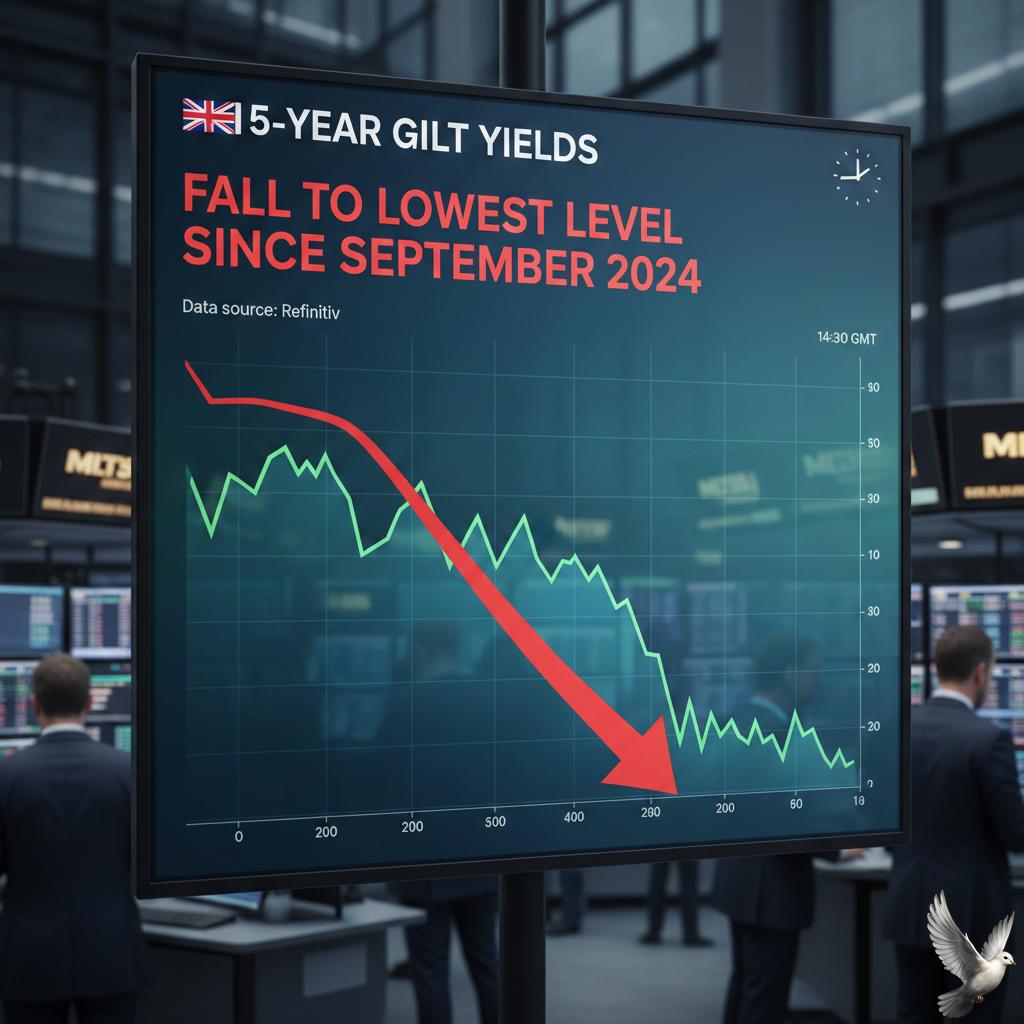
UK 5-year gilt yields fall to lowest level since September 2024
British government bonds are experiencing a notable shift as of late February 2026, with short-dated gilt yields trending lower. This movement comes as investors increase their bets on upcoming interest rate cuts, fueled by a cooling inflationary environment and a loosening labor market.
The UK 2-year gilt yield recently eased to approximately 3.57%, reflecting growing market conviction that the Bank of England will transition to a more accommodative stance. Similarly, the 10-year benchmark yield has softened to 4.37%, hitting its lowest level since mid-January.
Recent data confirms that headline CPI inflation fell to 3.0% in January, a significant drop from the 3.4% recorded in December. This brings inflation back toward the central bank’s 2% target more quickly than many analysts had anticipated. Core inflation also slowed to 3.1%, marking its lowest point in over four years.
Labor market signals are further reinforcing the case for easing. The unemployment rate has climbed to 5.2%, the highest level since early 2021 when excluding the pandemic years. Wage growth is also moderating, with average weekly earnings rising 4.2%—the slowest pace in nearly two years.
Despite these cooling indicators, the domestic economy is showing signs of life. Retail sales volumes surged by 1.8% in January, vastly outperforming the modest 0.2% growth forecasted by markets. This represents the largest monthly increase since May 2024, suggesting that household spending is beginning to recover after a period of stagnation.
The public sector also reported a record budget surplus of £30.37 billion for January. While seasonally expected, this figure exceeded consensus estimates and provides the government with slightly more fiscal breathing room ahead of the upcoming Spring Statement.
The Bank of England’s Monetary Policy Committee remains closely divided. In its most recent meeting, the group voted 5-4 to hold the Bank Rate at 3.75%. However, the narrow margin—with four members already pushing for a 0.25% cut—highlights the intensifying debate over the timing of the next move.
Financial markets are currently pricing in a high probability of a rate reduction by the second quarter of 2026. Many traders are now eyeing the March or April meetings for a potential 25-basis-point cut, with expectations that the benchmark rate could fall toward 3.25% by the end of the year.
The outlook for the British Pound remains cautiously constructive. While rate cuts typically pressure a currency, the gradual pace of the Bank of England compared to other central banks has helped the Sterling maintain a favorable interest rate differential. Forecasts suggest GBP/USD could stabilize between 1.30 and 1.38 throughout the remainder of 2026.