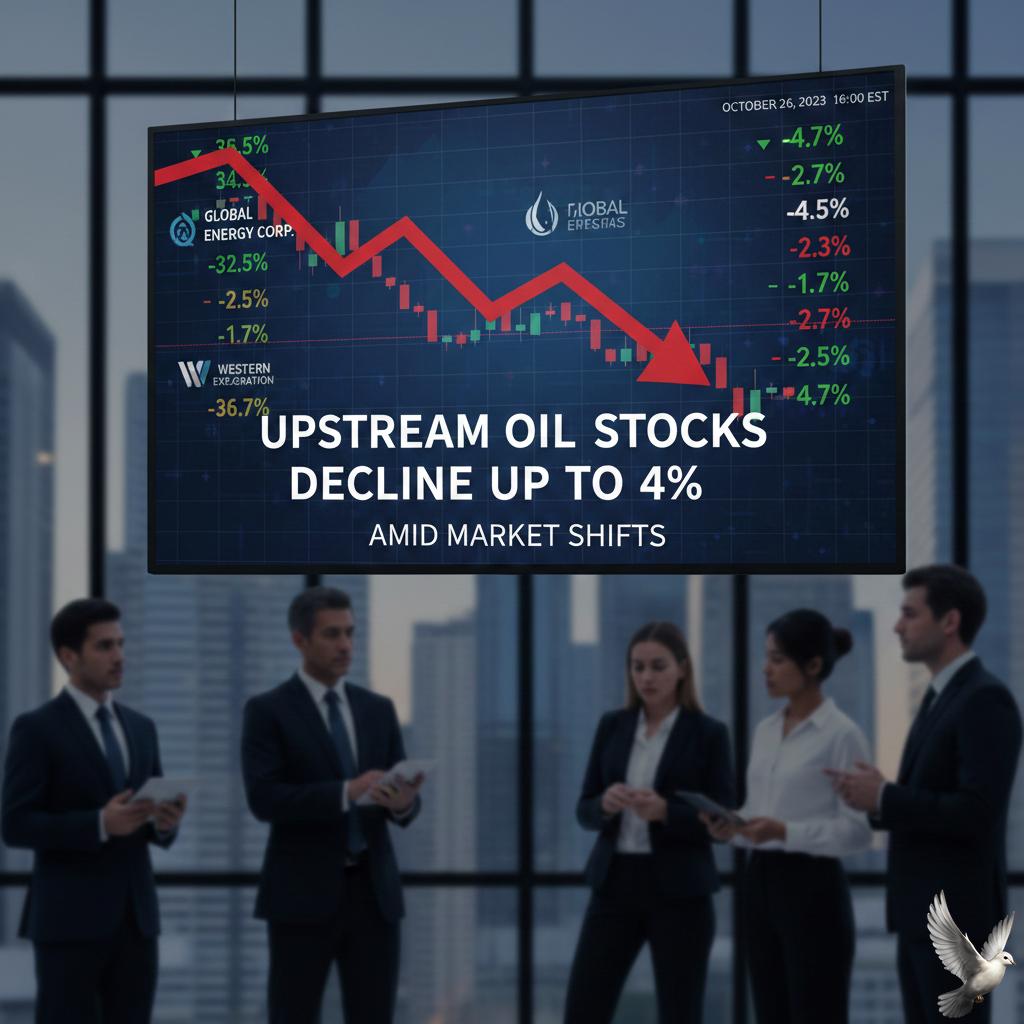
Upstream oil stocks decline up to 4% amid market shifts
Upstream oil and gas stocks experienced a sharp sell-off on Wednesday, February 18, 2026, as global crude prices retreated toward two-week lows. The decline was primarily fueled by reports of diplomatic progress between the United States and Iran, which raised the possibility of increased supply entering an already well-stocked market.
Crude Prices and Geopolitical Shifts
Benchmark Brent crude fell to **$67.39** per barrel, while West Texas Intermediate (WTI) hovered around **$62.28**. This downward movement reflects a reduction in the "geopolitical risk premium" that had previously propped up prices. Recent talks in Geneva have led to a "general agreement" on guiding principles regarding Iran’s nuclear program, signaling a potential path for the removal of sanctions.
Market sentiment has also been impacted by rising output at the Tengiz field in Kazakhstan and a projected global supply surplus of nearly **4 million barrels per day** for the first quarter of 2026. This oversupply remains a dominant theme, even as OPEC+ considers whether to resume production hikes in April.
Impact on Indian Upstream Majors
The drop in global prices directly pressures the realizations and profit margins of domestic producers. In Mumbai, shares of major upstream players saw significant corrections:
* **ONGC** and **Oil India** shares tumbled by as much as **4%** during intraday trading.
* **Seamec Ltd** also faced pressure, compounded by news that its vessel, *SEAMEC Diamond*, was off-hired for mandatory drydocking maintenance.
For these companies, lower crude prices translate to reduced revenue per barrel and may lead to a more cautious approach toward capital expenditure on new exploration projects.
Shifting Trade Dynamics
The domestic energy landscape is also adapting to changing import patterns. Data from early 2026 shows that Indian refiners have significantly reduced purchases of Russian crude, with imports plunging over **40%** in January compared to the previous year.
This shift follows increased international pressure and new tariff structures, forcing a diversification of supply sources. While upstream producers face a softer pricing environment, the broader sector is increasingly looking toward natural gas and digital optimization to defend profitability in a volatile market.