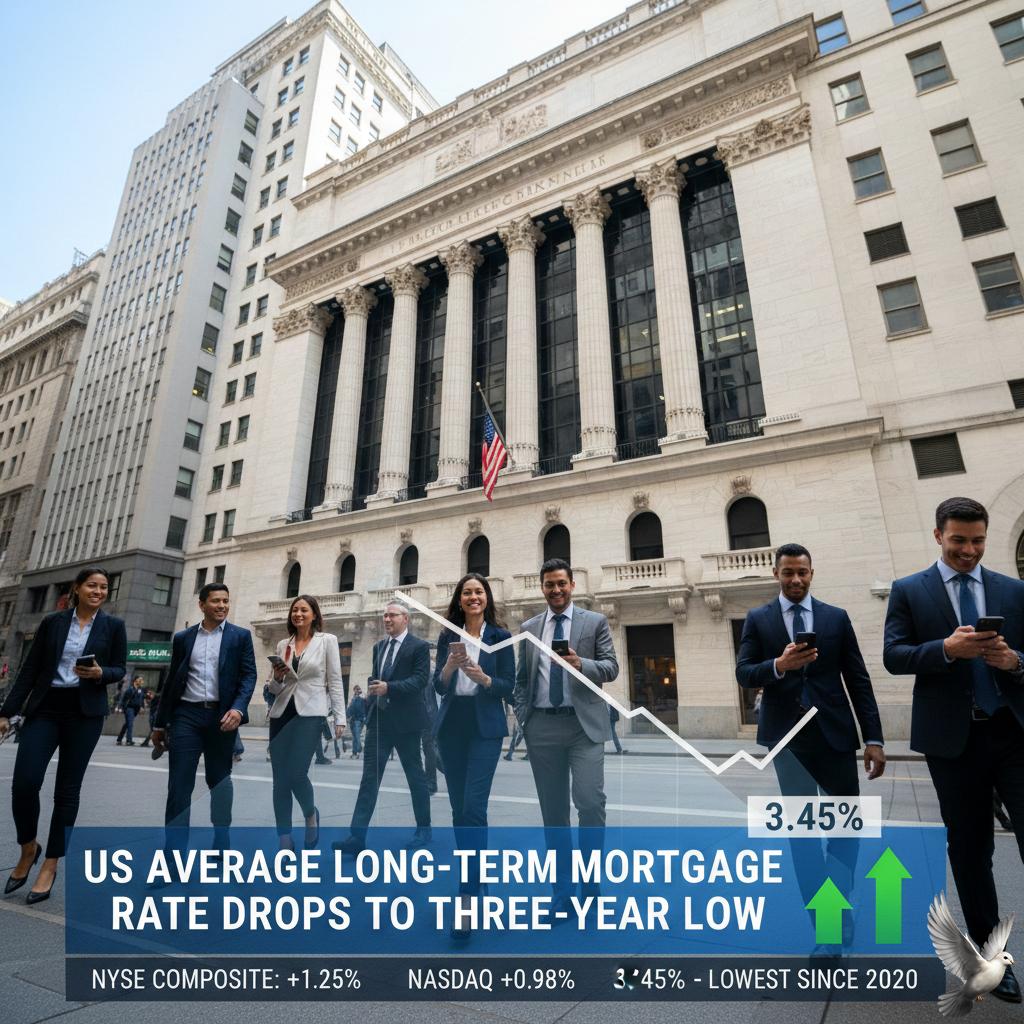
US Average Long-Term Mortgage Rate Drops to Three-Year Low
Federal Reserve Policy and Mortgage Trends
The Federal Reserve does not exert direct control over mortgage rates. Instead, the central bank manages the **federal funds rate**, a short-term benchmark that influences the broader cost of credit across the financial system.
When the Fed implements a rate cut, it often signals expectations for decelerating economic growth or cooling inflation. This shift in outlook typically triggers an increased demand for **U.S. Treasury bonds** as investors seek stable, long-term returns.
Because mortgage-backed securities track the yields of these government bonds, a surge in bond buying pushes yields lower. Consequently, while the Fed’s actions are indirect, they serve as a primary catalyst for downward movement in residential lending rates.