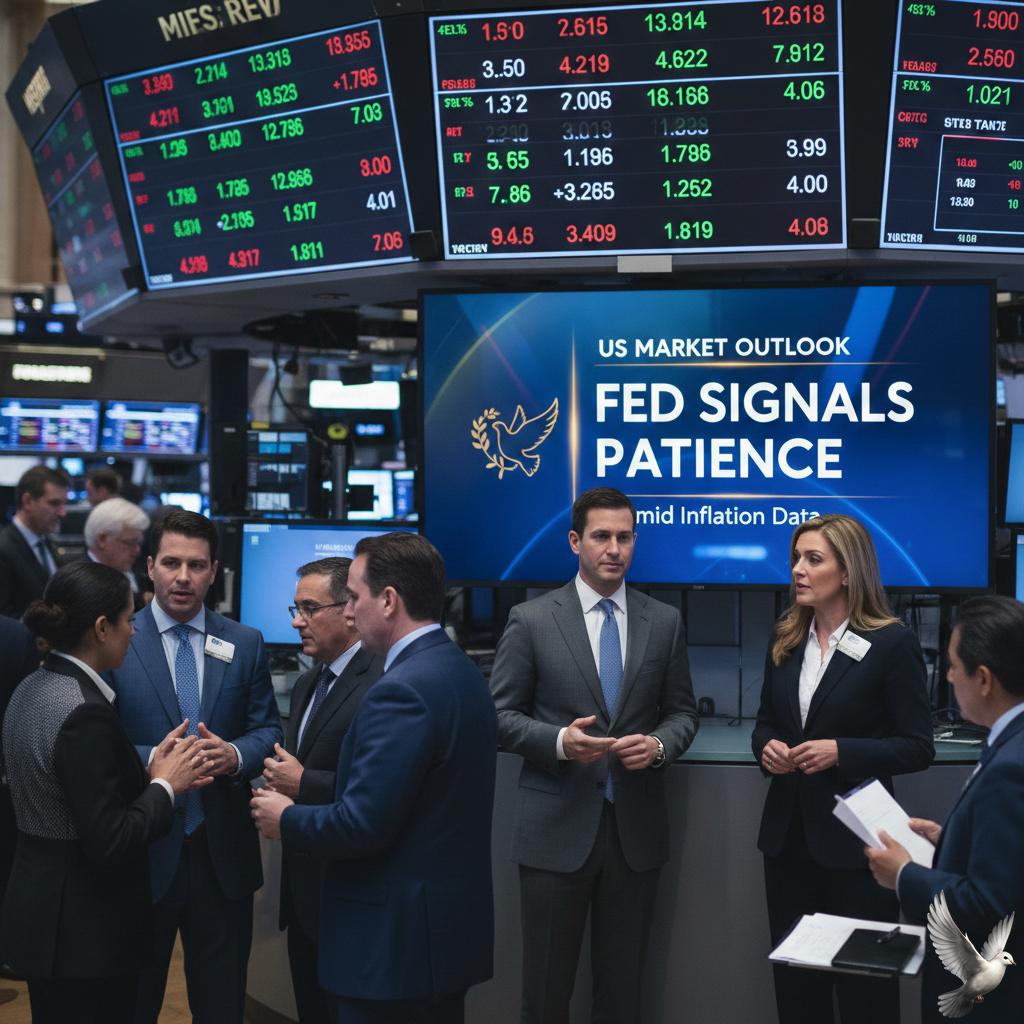
US Market: Fed Signals Interest Rate Patience Amid Inflation Data
Federal Reserve policymakers have signaled a period of extended stability for interest rates, opting for a "wait-and-see" approach as they navigate a complex economic landscape. Following the central bank’s decision in late January to hold the federal funds target range steady at 3.5% to 3.75%, voting members emphasize that there is no immediate urgency to adjust policy further.
Current monetary positioning is described as "neutral," aimed at neither restricting nor over-stimulating growth. This follows a cycle of three consecutive rate reductions totaling 75 basis points at the end of last year. Officials now prefer to err on the side of patience to fully assess the impact of those cuts on the broader economy.
Inflation remains the primary focal point. While price pressures have eased from their peaks, headline figures like the Consumer Price Index (CPI) recently hovered near 2.7%. Policymakers remain wary of "sticky" inflation, particularly in the services and housing sectors, with some warnings that price growth could remain stalled near the 3% mark throughout 2026.
The labor market is currently characterized as a "low-hire, low-fire" environment. Job growth has shown signs of sluggishness, with non-farm payrolls adding approximately 70,000 jobs in January—a modest pickup from the 50,000 added in December. The unemployment rate holds steady at 4.4%, reflecting a market that is stabilizing rather than rapidly expanding.
Market sentiment is also being shaped by external factors, including fiscal support and shifting trade policies. The nomination of Kevin Warsh to succeed Jerome Powell as Fed Chair in May has introduced a new layer of anticipation regarding future policy direction. Additionally, the impact of import tariffs on goods inflation continues to be monitored closely as these costs filter through to consumers.
Equity markets have reacted with cautious optimism. The S&P 500 recently surpassed the 7,000 level for the first time, supported by resilient consumer spending and a broadening of market leadership beyond the technology sector. Energy and materials have emerged as top performers, gaining 14.1% and 8.6% respectively in the most recent monthly cycle.
Investors are now looking toward upcoming data releases, including the next Personal Consumption Expenditures (PCE) report on February 20, for confirmation that inflation is trending back toward the 2% target. Until then, the Federal Reserve appears committed to its steady-hand strategy, balancing the need for price stability with the goal of sustaining a balanced labor market.