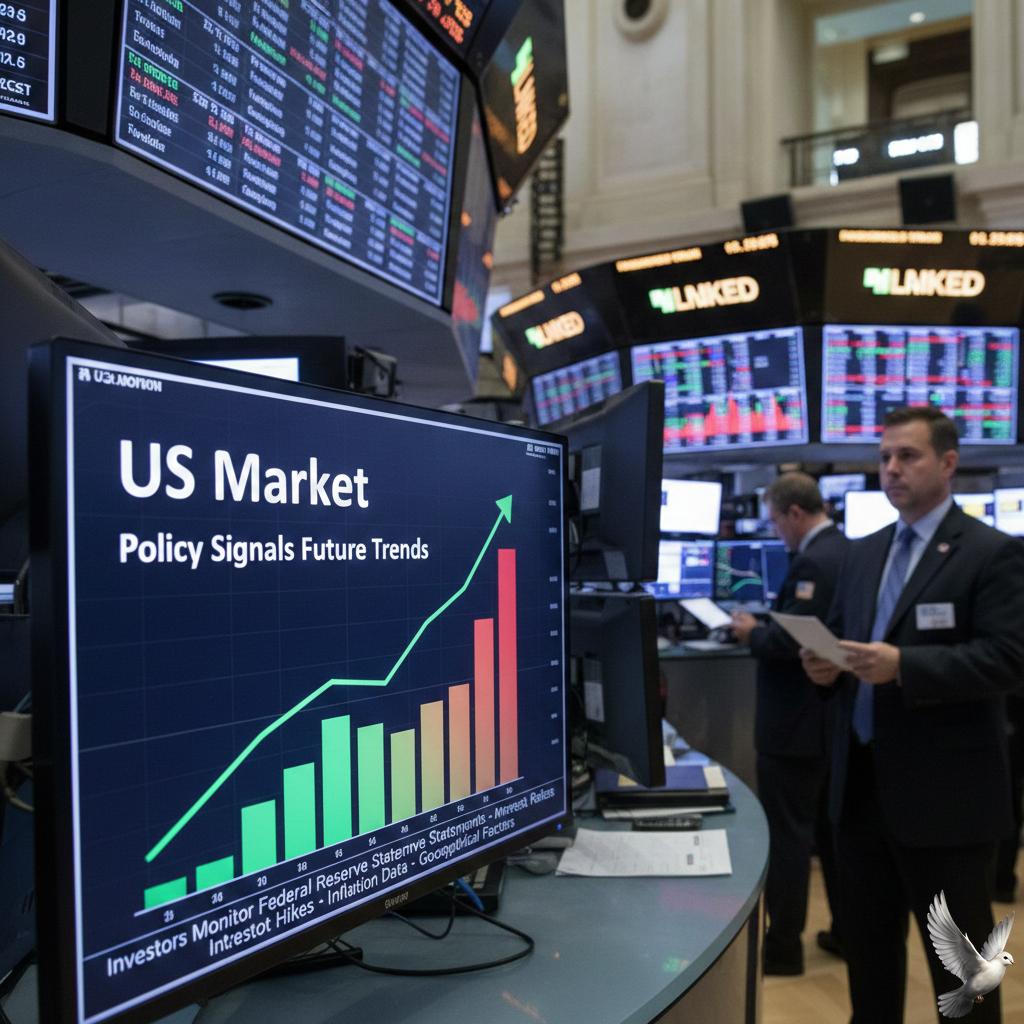
US Market: Investors Monitor Policy Signals for Future Trends
Global markets are positioning for a critical week as the International Monetary Fund prepares to release its annual "Article IV" review of U.S. economic policies on February 25. This assessment comes at a volatile moment for Wall Street, following a year of aggressive fiscal shifts and persistent trade imbalances.
Market participants are primarily focused on the IMF’s verdict regarding fiscal sustainability. Recent legislative changes and tax cuts have pushed the projected annual deficit to approximately 5.8% of GDP for 2026, totaling roughly 1.9 trillion dollars. Total public debt is now on a trajectory to reach 101% of GDP this year, with some estimates suggesting it could climb to 120% by 2036.
Equity markets have reacted to these headwinds with caution. Recent sessions saw the S&P 500 dip 0.3%, while the Dow Jones Industrial Average fell 0.5% as investors weighed the implications of "fiscal dominance." This phenomenon occurs when massive government borrowing potentially constrains the Federal Reserve's ability to maintain its independence, as rising interest rates significantly increase the cost of servicing the national debt.
The U.S. dollar remains a central pillar of the global financial system, though its valuation is under scrutiny. Despite recent volatility, the dollar is currently trading near its 10-year historical average. However, it has depreciated roughly 1.2% year-to-date against a basket of major currencies. Analysts are monitoring whether the IMF will highlight the dollar as overvalued or express concerns over its role in financing the widening 901 billion dollar trade deficit recorded last year.
Labor market data also presents a complex picture for the review. The unemployment rate is holding steady at 4.6%, but hire rates have slowed. At the same time, inflation shows signs of cooling, with the headline Consumer Price Index most recently recorded at 2.7%, down from 3.0% in late 2025.
Investors are looking for the IMF to provide a definitive roadmap on macro risks, particularly regarding how the U.S. can balance robust growth—projected at 2.4% for 2026—against a debt burden that now exceeds post-World War Two records. The results of this review are expected to influence interest rate expectations and the long-term direction of global capital flows.