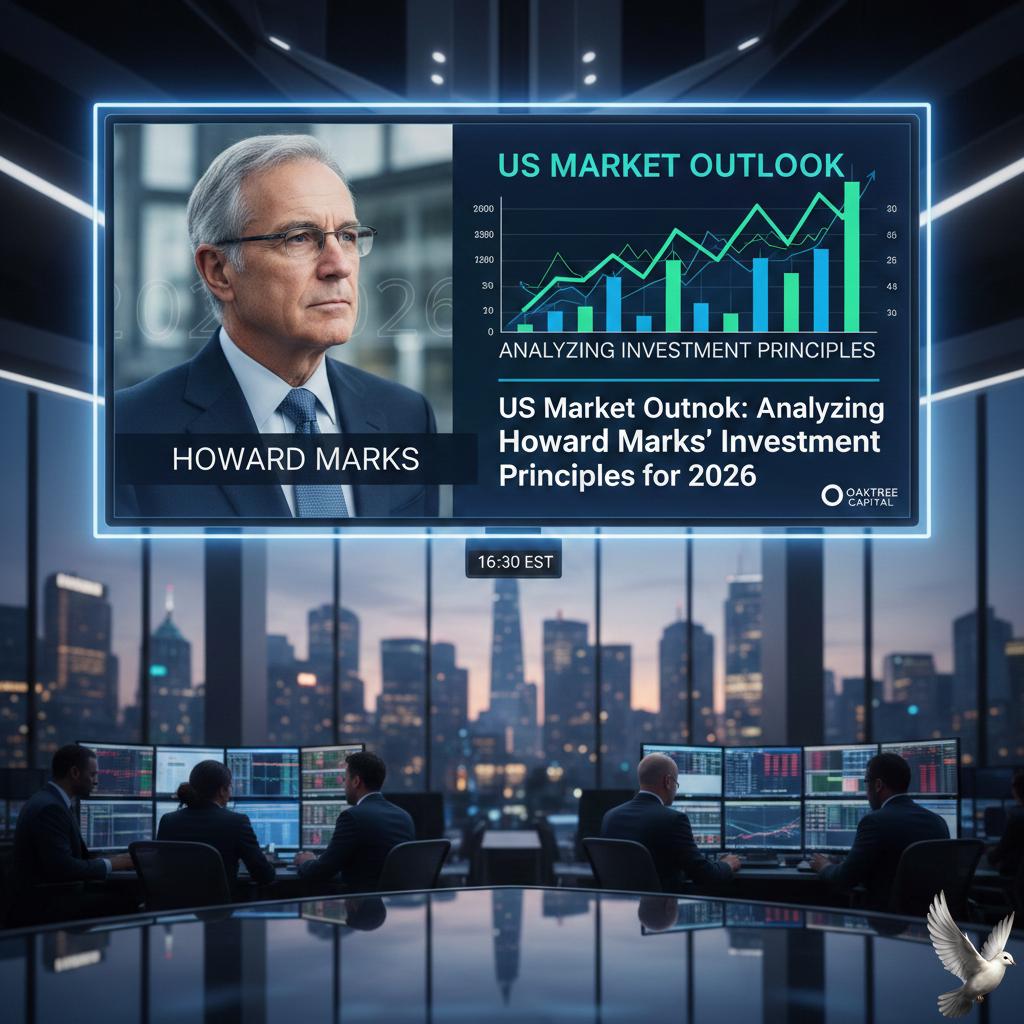
US Market Outlook: Analyzing Howard Marks’ Investment Principles for 2026
In today's landscape of high-tech optimism and elevated valuations, veteran investor Howard Marks emphasizes that understanding market cycles is more critical than predicting exact turning points. Rather than making drastic moves, he advises calibrating risk by gradually adjusting portfolios based on prevailing market signals.
Global sentiment remains in a state of fragile equilibrium. In the U.S., equity indices like the S&P 500 have maintained a buoyant tone, yet risk appetite has recently moderated. The Risk Appetite Index dropped to 13% in February 2026, down significantly from 41% in January. This shift reflects growing caution over high-stakes macroeconomic data, including resilient wage growth and sticky inflation, which continue to challenge expectations for Federal Reserve rate cuts.
A massive surge in capital expenditure defines the current cycle. The top five U.S. "hyperscalers" are projected to spend over 700 billion USD in 2026, a 60% increase driven by the race for infrastructure. While this signals confidence, the sheer scale of investment is beginning to strain free cash flows, forcing a transition toward external financing for tech giants that were previously self-funded.
The Indian market is mirroring this need for caution. On February 13, 2026, the Nifty 50 experienced a sharp decline of 336 points, or 1.30%, to close at 25,471.10. Similarly, the BSE Sensex plummeted over 1,048 points to end at 82,626.76. This sell-off wiped out approximately 2.80 lakh crore INR in investor wealth in a single session, largely driven by a retreat in IT heavyweights like TCS and Infosys, which fell as much as 6%.
Valuation discipline is now the primary tool for Indian investors. While structural growth remains intact, the "value" theme is outperforming "growth" strategies as the market punishes stocks with excessive premiums. Recent volatility has pushed the India VIX up by 13% to reach 13.29, signaling an expectation of continued near-term turbulence.
In this environment, Howard Marks suggests that while no one can definitively label the current trend a bubble, going "all-in" poses an unnecessary risk of ruin. The strategy for 2026 shifts toward a barbell approach: maintaining exposure to long-term structural winners while increasing allocations to high-quality value stocks that can weather periods of high dispersion and market cooling.