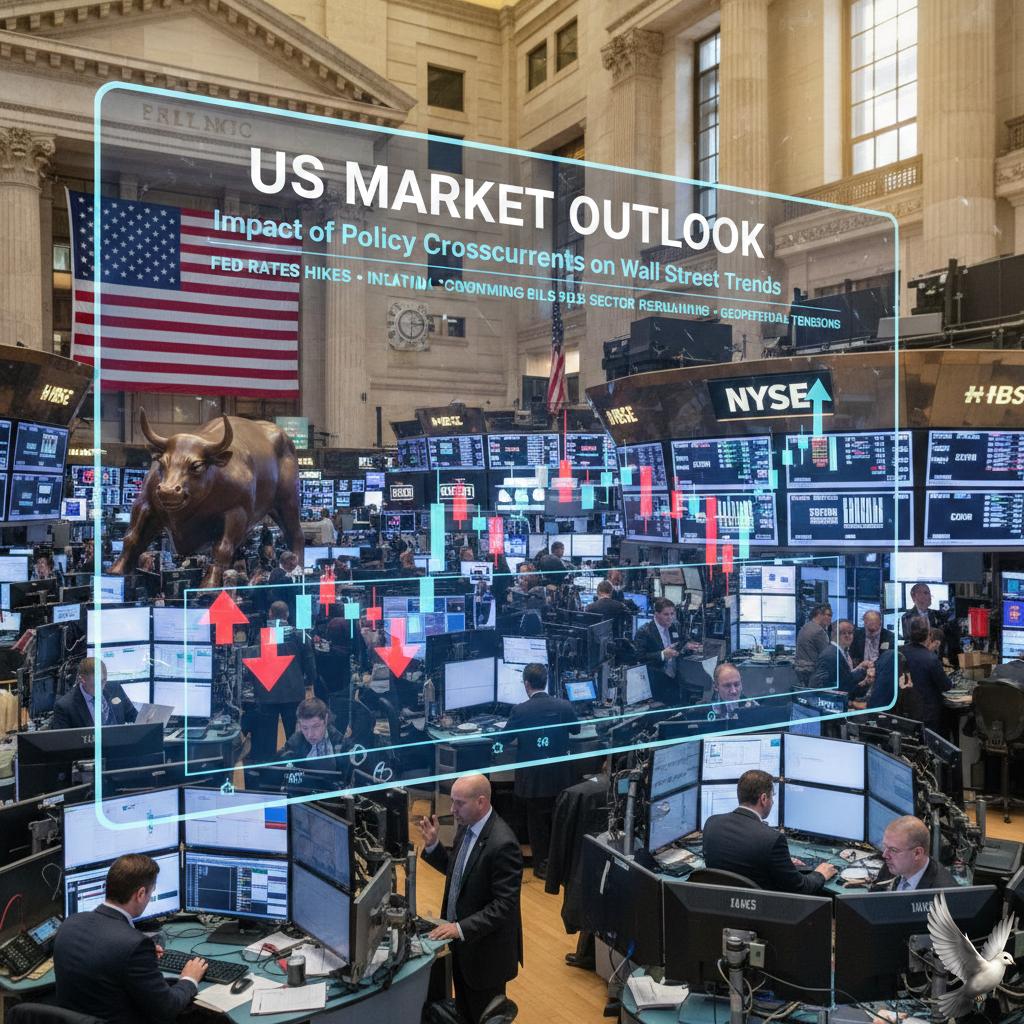
US Market Outlook: Impact of Policy Crosscurrents on Wall Street Trends
The U.S. Supreme Court’s February 2026 ruling against the International Emergency Economic Powers Act (IEEPA) has invalidated a significant portion of the current administration’s trade policy. This decision effectively strikes down broad reciprocal duties, removing a projected $2 trillion in revenue over the next decade. While this provides immediate cost relief to some sectors, the Federal Reserve remains cautious, signaling that the ruling's impact on monetary policy may be limited.
Despite the judicial setback, the administration immediately announced new 10% global tariffs under Section 122 of the Trade Act of 1974, later increasing the proposed rate to 15%. This shift keeps the effective tariff rate near 14.5%, maintaining upward pressure on consumer prices. The New York Federal Reserve estimates that 90% of previous tariff costs were borne by domestic consumers and businesses, contributing to a persistent inflationary floor.
Economic growth for 2026 is currently forecast at 2.4%, though the invalidation of IEEPA tariffs may provide a modest boost by reducing long-run GDP drag from 0.3% to 0.1%. Markets are closely monitoring a potential $160 billion in refunds for "illegally" collected duties. If processed, this would act as a substantial fiscal stimulus, further complicating the Federal Reserve's effort to cool demand.
The labor market shows signs of a "low-hire, low-fire" stagnation. While January 2026 nonfarm payrolls added 130,000 jobs—beating expectations—the 12-month average monthly gain has plummeted to 30,000. The unemployment rate currently sits at 4.3%, with the ratio of job openings to unemployed persons falling below 1.0. This cooling trend provides some leeway for the Fed, yet wage growth remains sticky at 3.7% year-over-year.
The Federal Reserve held the federal funds rate steady at 3.5%–3.75% during its most recent meeting. Futures markets reflect almost zero chance of a rate cut in March, as core PCE inflation is projected to end the year at 2.4%. While some financial institutions predict two 25-basis-point cuts by December 2026, the potential for new trade barriers and volatile energy prices—with Brent crude recently hitting $71.44 per barrel—keeps the path for easing highly uncertain.