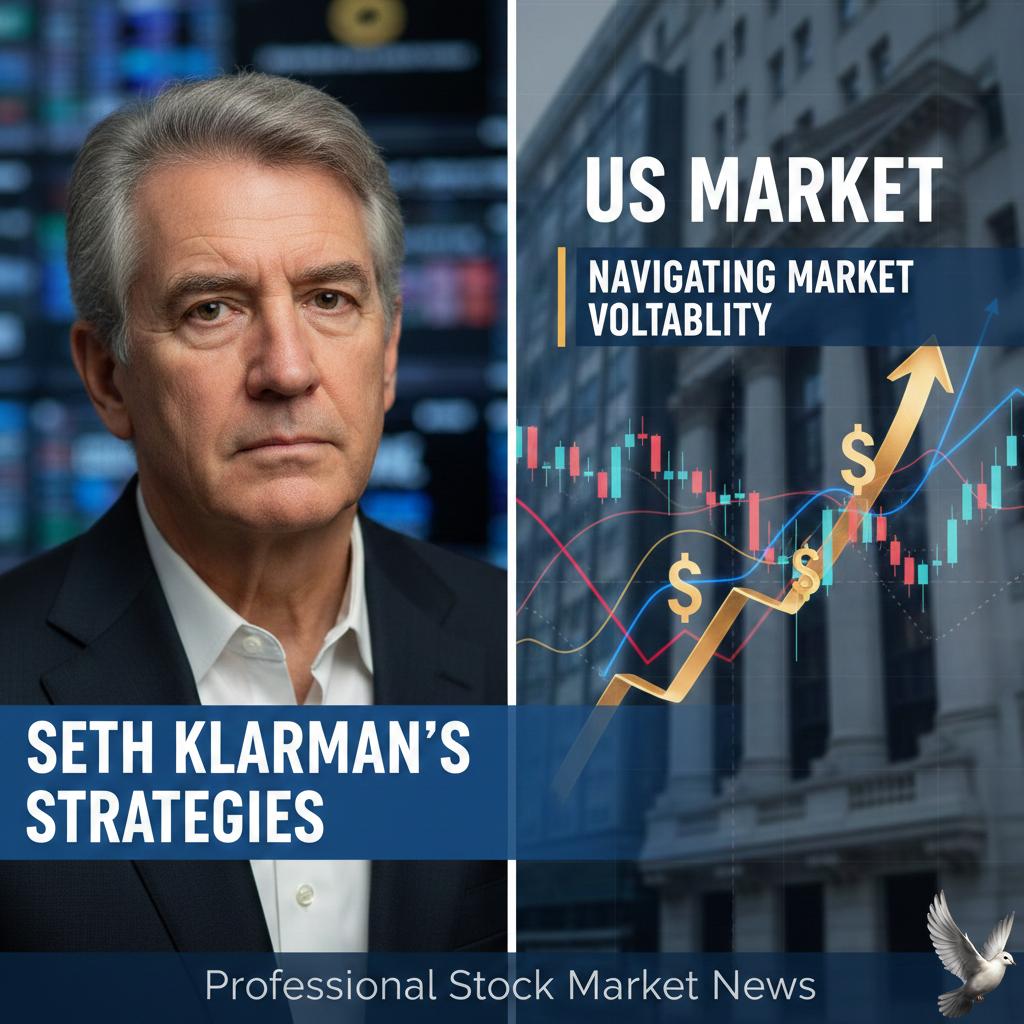
US Market | Seth Klarman’s Strategies for Navigating Market Volatility
Market dynamics are undergoing a structural shift as the era of easy liquidity gives way to trade volatility and geopolitical realignment. For the thoughtful investor, the core tenets of value investing—capital preservation and a strict margin of safety—have moved from the background to the center of portfolio strategy.
**The Seth Klarman Blueprint**
In an environment characterized by erratic policy shifts, Seth Klarman’s approach at Baupost Group offers a stabilizing framework. Klarman continues to emphasize that risk is not just a number, but the potential for permanent capital loss.
Recent filings show a disciplined rotation into resilient sectors. His top holdings now include **Restaurant Brands International (10.4%)**, **Amazon (9.3%)**, and **Willis Towers Watson (8.5%)**. Notably, Klarman has significantly reduced exposure to high-flying tech, cutting his Alphabet stake by over **41%**. This move underscores a pivot toward businesses with tangible assets and reliable cash flows, typically holding cash reserves as high as **30% to 50%** to wait for "the perfect pitch."
**The US-India Trade Reset**
A major breakthrough in bilateral relations has significantly altered the trade landscape. US tariffs on Indian goods, which had spiked to punitive levels of **50%** in late 2025 due to disputes over oil sourcing and reciprocal duties, have been slashed to an effective rate of **18%** as of February 2026.
This de-escalation follows a high-level agreement where India committed to purchasing **$500 billion** in US goods over five years, focusing on energy, technology, and agriculture. This policy pivot has immediately boosted export-heavy sectors that were previously bracing for a **70%** collapse in US-bound volumes.
**Sectoral Impact and Market Reactions**
The reduction in tariffs has triggered a relief rally across the Indian markets. The **Nifty Pharma Index** jumped over **4.5%**, led by gains in Aurobindo Pharma (**+5.7%**) and Divi’s Labs (**+4.2%**). While pharma was largely exempt from the harshest duties, the new 18% framework provides the long-term pricing clarity needed for generic drug manufacturers to maintain their **11%** share of the total US trade basket.
The **Nifty IT Index** also surged by **5.5%**, reflecting optimism that stabilized trade relations will support discretionary spending from US clients, who provide over **60%** of the sector's revenue.
In contrast, labor-intensive sectors like textiles, gems, and jewelry are in a recovery phase. These industries, which faced the highest exposure under the previous **50%** regime, are now regaining competitiveness against Asian peers like Vietnam and Bangladesh.
**Strategic Takeaway**
The current market demands a blend of opportunistic growth and defensive caution. While the tariff reduction to **18%** removes a massive overhang on Indian equities, the broader lesson remains one of discipline. By prioritizing a margin of safety and maintaining liquidity, investors can navigate the "unpredictable art" of valuation in a world where trade policy can shift overnight.