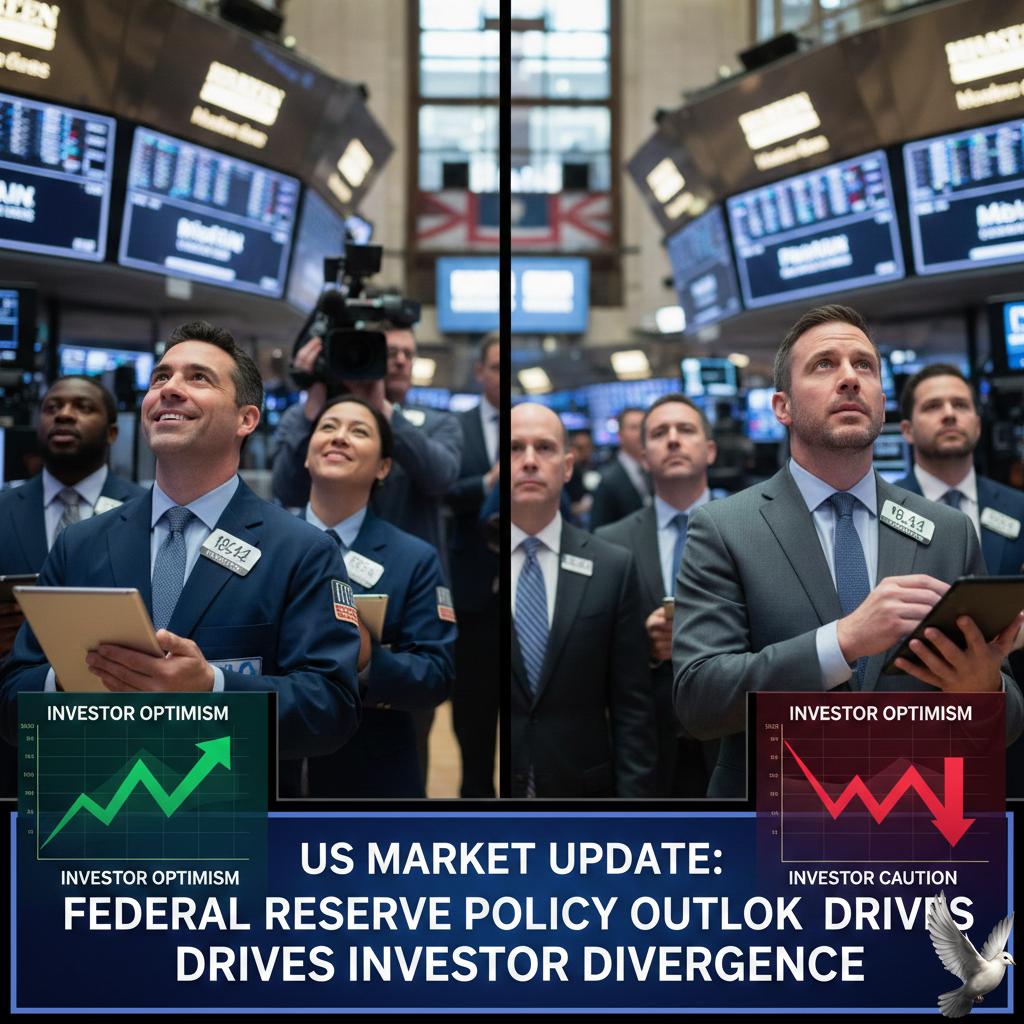
US Market Update: Federal Reserve Policy Outlook Drives Investor Divergence
Fed Policy Outlook: Restrictive Stance vs. Labor Support
Federal Reserve Governor **Stephen Miran** has intensified his call for a transition to looser monetary policy. He warns that the current settings may be overly restrictive and could stifle economic growth.
This position stands in sharp contrast to the prevailing consensus within the Federal Open Market Committee. In the January 2026 meeting, Miran was one of only two dissenters in a **10-2 vote** to maintain the federal funds rate at its current range of **3.50% to 3.75%**.
Inflation Crosscurrents
Miran argues that inflation is no longer a primary threat to the economy. His perspective is rooted in the significant cooling of shelter inflation, which typically carries heavy weight in price indices.
He suggests that low housing costs can effectively offset price pressures in other sectors. Recent data supports a cooling trend, with some measures of everyday household purchases showing a **0.23% decline** in January—the first monthly drop in nearly a year.
Annualized Core PCE inflation was last recorded at **2.8%** at the end of 2025. While this remains above the **2.0%** target, Miran contends that expanding supply conditions allow for growth without reigniting high inflation.
Labor Market Resilience
The push for rate cuts comes as the labor market displays unexpected strength. January 2026 payroll data showed a gain of **130,000 jobs**, significantly outperforming economist expectations of **70,000**.
The unemployment rate also edged down to **4.3%** from previous levels. This stability has led many Fed officials, including Chair Jerome Powell, to favor a "wait-and-see" approach.
Market expectations for the next rate cut have shifted further into the year. Futures markets now point toward **July 2026** as the likely window for the next reduction, moving away from earlier hopes for a spring adjustment.
Divergent Internal Views
The Federal Reserve is currently navigating a period of internal transition and differing economic philosophies. While Miran emphasizes the risk of a "hiring recession" and advocates for immediate easing, other officials remain cautious.
* **Lorie Logan (Dallas Fed):** Opposes further cuts, citing concerns that policy is not yet doing enough to restrain stubbornly high prices.
* **Hawkish Shift:** Recent policy statements have upgraded the description of economic growth from "moderate" to **"solid."**
* **Fiscal Influence:** The impact of tax cuts and shifting trade policies continues to complicate the Fed's "data-dependent" path.
With the effective federal funds rate holding at **3.64%**, the debate centers on whether to prioritize labor market protection or continue the fight against a "sticky" inflation floor. Miran’s stance remains the most prominent dovish signal in an otherwise cautious central bank environment.