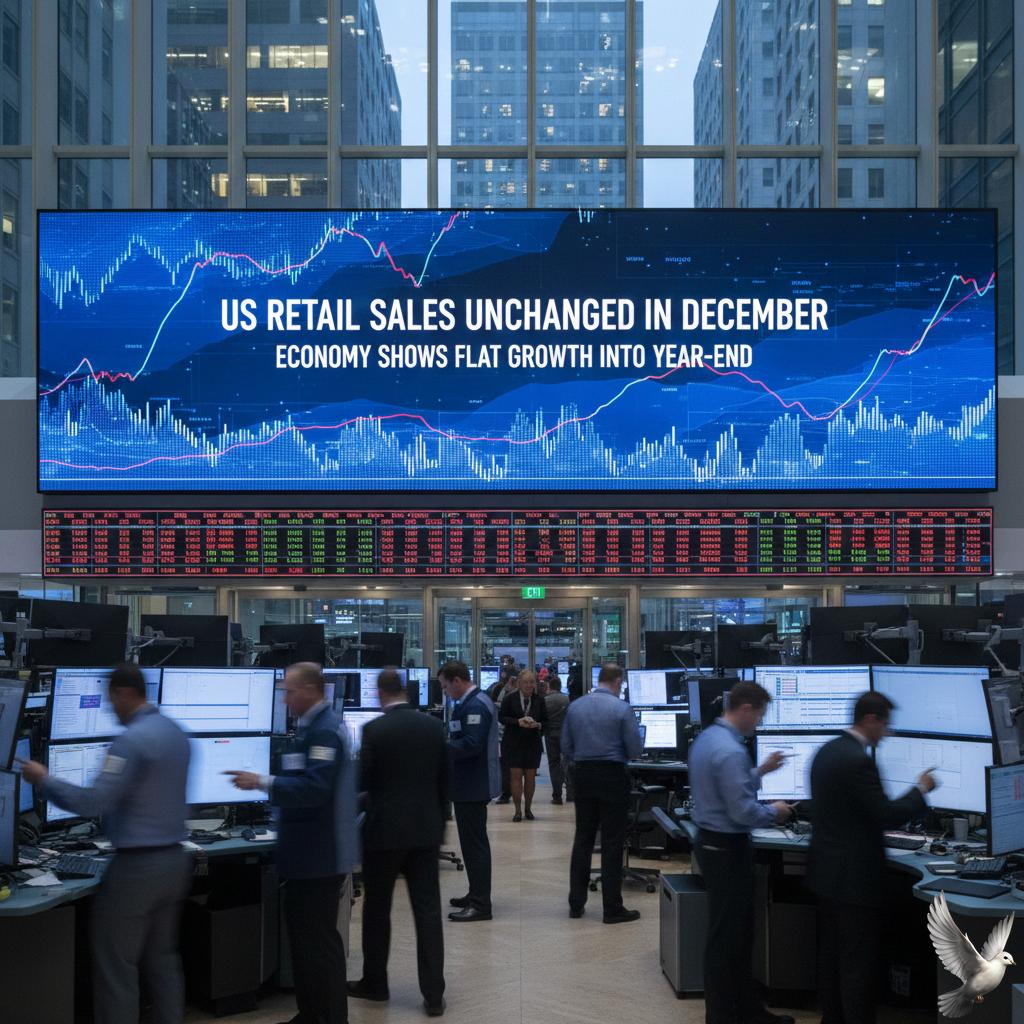
US Retail Sales Unchanged in December
US retail sales remained unexpectedly flat in December, coming in at 0.0% growth. This figure, released in a delayed government report on February 10, 2026, missed the 0.4% expansion forecasted by analysts. The stagnation follows a stronger 0.6% increase in November and marks a sharp cooling of consumer activity at the close of the holiday season.
The flat headline number reflects a cautious shift in consumer behavior. Total sales for the month were estimated at $735 billion, a figure unchanged from the previous month. While annual growth for 2025 reached 3.7%, the recent slowdown suggests that high interest rates and persistent inflation are finally weighing on the American consumer's appetite.
Sector performance was notably mixed. Building materials and garden centers saw a 1.2% increase, providing a rare bright spot. However, these gains were offset by significant declines in discretionary spending. Furniture and home furnishing stores dropped by 0.9%, clothing and accessories fell by 0.7%, and electronics retailers saw a 0.4% decrease.
A critical indicator of broader economic health, restaurant and bar spending, also registered a slight dip of 0.1%. Because dining out is often the first expense cut during times of financial anxiety, this decline is being closely watched as a potential signal of waning consumer confidence.
Market analysts point to several factors for this late-year "fizzle." Many Americans reportedly pulled their spending forward into the summer to avoid price hikes linked to new tariffs. Additionally, a 43-day government shutdown last fall disrupted typical shopping patterns and delayed the release of these official figures by more than a month.
The 2.4% annual increase in retail sales failed to keep pace with the 2.7% rise in the consumer price index over the same period. This gap indicates that while shoppers are spending more in nominal terms, they are often receiving fewer goods for their money as purchasing power erodes.
Investors are now turning their attention to upcoming data for early 2026, including the January jobs report and the latest Consumer Price Index readings. These reports will clarify whether the December stagnation was a temporary holiday hangover or the start of a more significant downward trend for the world's largest economy.