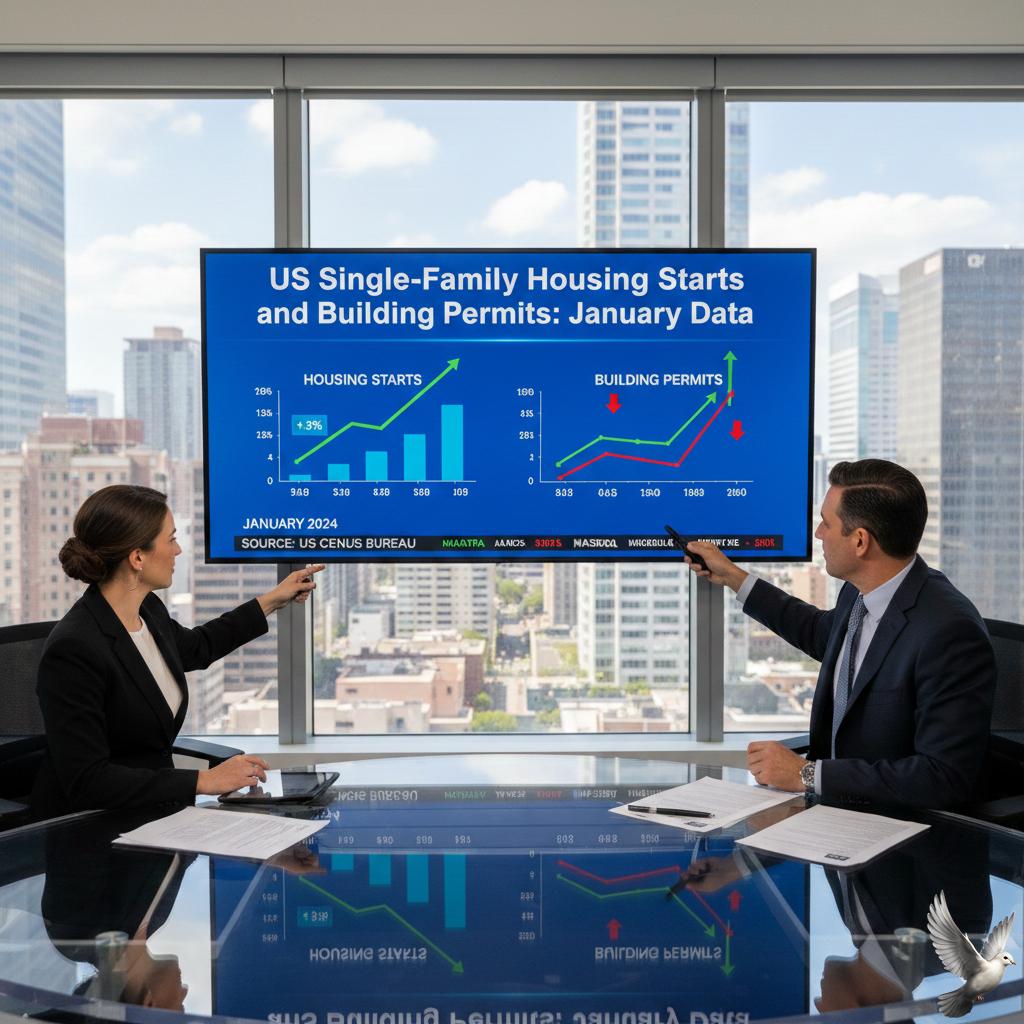
US Single-Family Housing Starts and Building Permits: January Data
U.S. Housing Construction Brief
U.S. single-family homebuilding activity saw a notable rebound at the close of last year. Housing starts for single-family units rose **4.1%** in December to a seasonally adjusted annual rate of **981,000** units. This growth followed a strong November, marking a recovery from earlier autumn lows.
Total housing starts, including multifamily projects, jumped **6.2%** in December to an annual rate of **1.404 million**. This exceeded market expectations of **1.33 million**, driven largely by an **11.3%** surge in the multifamily sector. Despite this late-year rally, total starts for the full year 2025 remained **0.6%** lower than the previous year.
Leading Indicators and Future Outlook
While construction activity increased, forward-looking data suggests a cautious outlook. Building permits for single-family homes—a key indicator of future supply—slipped **1.7%** in December to a rate of **881,000** units.
Total permits across all sectors rose **4.3%** to **1.448 million**, but this was primarily fueled by a **15.2%** spike in apartment and condo authorizations. The persistent decline in single-family permits indicates that builders remain hesitant to break new ground on individual homes heading into the spring season.
Builder Sentiment and Market Pressures
Homebuilder confidence has hit its lowest level in five months. The NAHB/Wells Fargo Housing Market Index dropped to **36** in February 2026, missing the forecast of **38**. Sentiment is weighed down by high material costs, labor shortages, and a significant drop in prospective buyer traffic.
Builders are increasingly turning to incentives to move inventory. Approximately **36%** of builders reported cutting prices in February, while **65%** utilized sales incentives such as mortgage rate buydowns.
Financing and Affordability Constraints
Mortgage rates continue to act as a primary barrier to market expansion. The 30-year fixed mortgage rate is currently hovering around **6.1%**. While this is an improvement from the **6.86%** seen a year ago, it remains high enough to keep many potential buyers on the sidelines.
Affordability is further strained by rising construction expenses. Tariffs on imported materials like lumber and cabinetry, combined with a shortage of approximately **300,000** workers in the construction sector, have kept new home prices elevated.
The median new home price has seen downward pressure from builder discounts, yet the "lock-in effect" persists. With **80%** of current mortgage holders locked into rates below **6%**, existing inventory remains tight, forcing the market to rely heavily on new construction that is increasingly expensive to deliver.