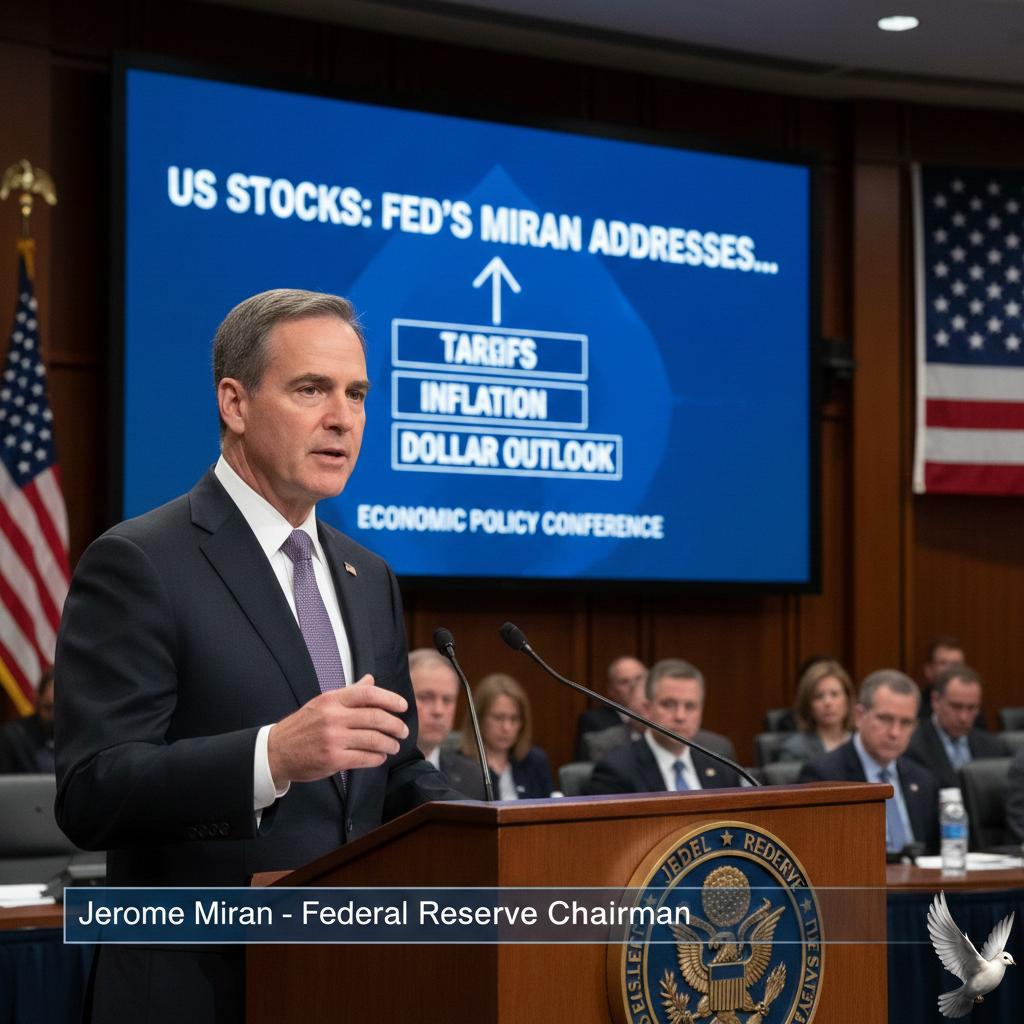
US Stocks: Fed’s Miran Addresses Tariffs, Inflation, and Dollar Outlook
Federal Reserve Governor Stephen Miran has reported that recent trade policies have been significantly less damaging to the U.S. economy than critics initially projected. According to Miran, foreign companies have absorbed a large portion of the costs associated with new tariffs, limiting the direct impact on American consumers.
The U.S. economy continues to demonstrate resilience as of February 2026. While many analysts feared a spike in inflation, Miran argues that the burden of these trade measures has fallen primarily on foreign exporters who are unable to easily shift their production or supply chains.
Key financial data supports this outlook of fiscal benefit. The federal government has collected approximately **$90 billion** in customs duties in the 2026 fiscal year through December. This represents a staggering **332% increase** compared to the same period in the previous year. For the full 2025 calendar year, total tariff-related collections reached **$287 billion**, nearly tripling previous records.
Market shifts are also becoming visible as the administration refines its strategy. A historic trade deal with India was reached this week, reducing reciprocal tariffs from **25% to 18%** and removing certain penalties in exchange for commitments to stop purchasing Russian oil. Additionally, reports indicate the administration plans to carve out Big Tech from upcoming chip tariffs to protect investments in artificial intelligence data centers.
Despite a projected slowdown in real GDP growth to **1.5%** for 2026, the average effective tariff rate on imports has climbed to **11.4%**, the highest level since the 1940s. Proponents argue these revenues provide a critical buffer for government finances, potentially raising up to **$2 trillion** over the next decade.
The broader market remains cautiously optimistic. Equity indices have seen recent gains, with the BSE benchmark rising over **2,800 points** following trade clarifications. While household costs for specific items like apparel and electronics have seen some upward pressure, the overall inflationary impact is currently estimated at a manageable **0.9% to 1.3%**.
Strategic exemptions for essential household goods and critical technology sectors are being used to balance revenue goals with consumer affordability. This evolving trade framework suggests a transition toward a rules-based system that prioritizes American manufacturing and supply chain security.