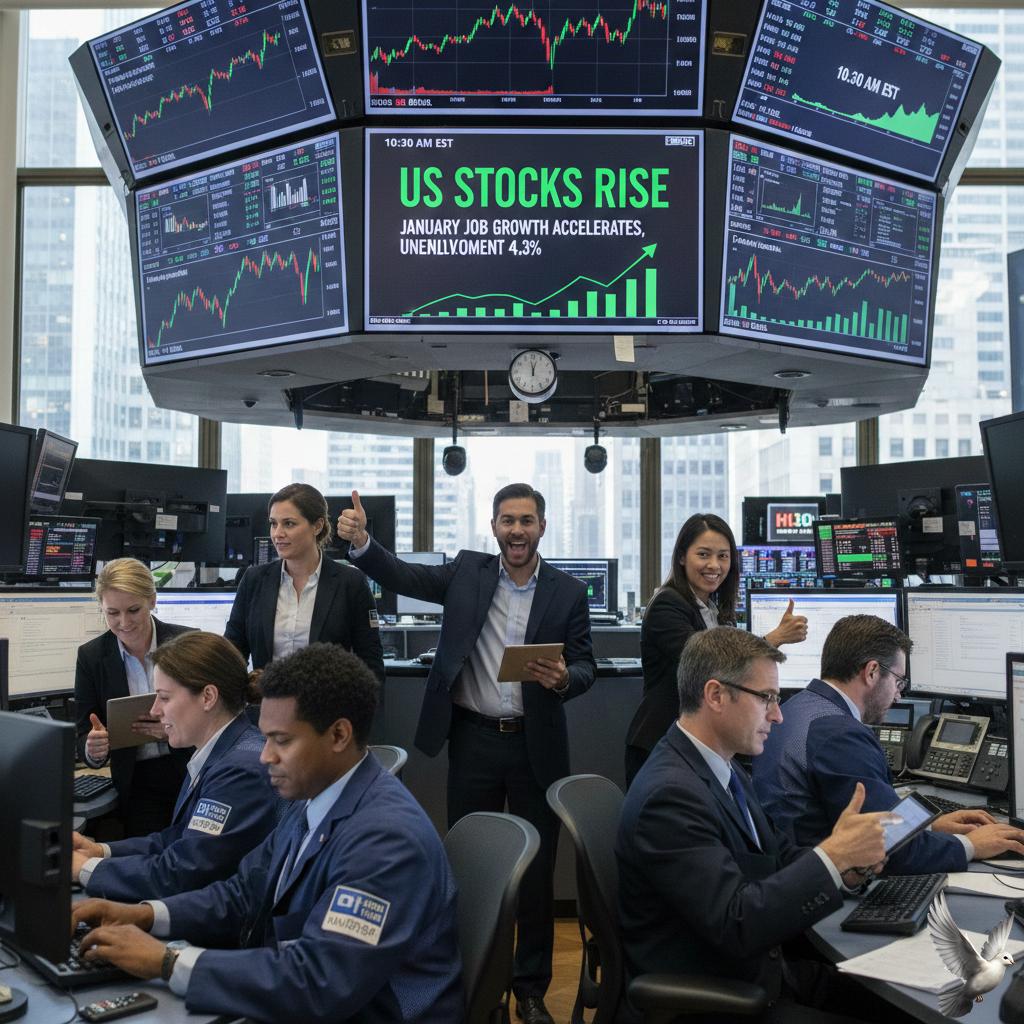
US Stocks Rise as January Job Growth Accelerates and Unemployment Rate Hits 4.3%
U.S. Labor Market Brief: January 2026
The U.S. labor market started the year with unexpected momentum, as nonfarm payrolls rose by **130,000** in January **2026**. This figure significantly outperformed market expectations of roughly **70,000** to **80,000** new jobs and marked the strongest monthly gain since late **2024**.
The unemployment rate edged down to **4.3%** from **4.4%** in December. This decline signals a stabilizing trend following a sluggish **2025**, where job growth averaged only **15,000** per month. While the rate is higher than the **4.0%** seen a year ago, the recent dip suggests the "low-hire, low-fire" cycle may be shifting.
Sector performance was mixed but led by high-demand industries. Healthcare added **82,000** positions, while social assistance grew by **42,000**. Construction also showed resilience with **33,000** new jobs. Conversely, the federal government saw a decline of **34,000** roles, and financial activities dropped by **22,000**.
Wage growth remains a key factor for inflation monitoring. Average hourly earnings increased by **0.4%** for the month, reaching **$37.17**. On an annual basis, wages have climbed **3.7%**. This steady growth in earnings, combined with a labor force participation rate of **62.5%**, reflects a tight but functional labor environment.
Benchmarking revisions released with this data provided a clearer picture of the past year. Historical figures were adjusted downward, revealing that job growth through March **2025** was nearly **900,000** lower than originally reported. These corrections highlight that the current **130,000** gain represents a genuine acceleration rather than a continuation of past trends.
For the Federal Reserve, this data supports a cautious "holding pattern." With the economy expanding at a solid pace and the labor market finding its footing, policymakers have less immediate pressure to adjust interest rates. The current federal funds rate target range remains at **3.50%** to **3.75%** as officials wait for further proof that inflation is returning to its **2%** target.
Underlying indicators suggest some remaining pressure. The number of long-term unemployed individuals held steady at **1.8 million**, and January saw the highest number of announced job cuts since **2009**, totaling over **108,000**. These figures provide a counterweight to the headline payroll growth, suggesting that while hiring has accelerated, corporate conservatism persists.