US Supreme Court Ruling on Trump Tariffs: Global Market Implications
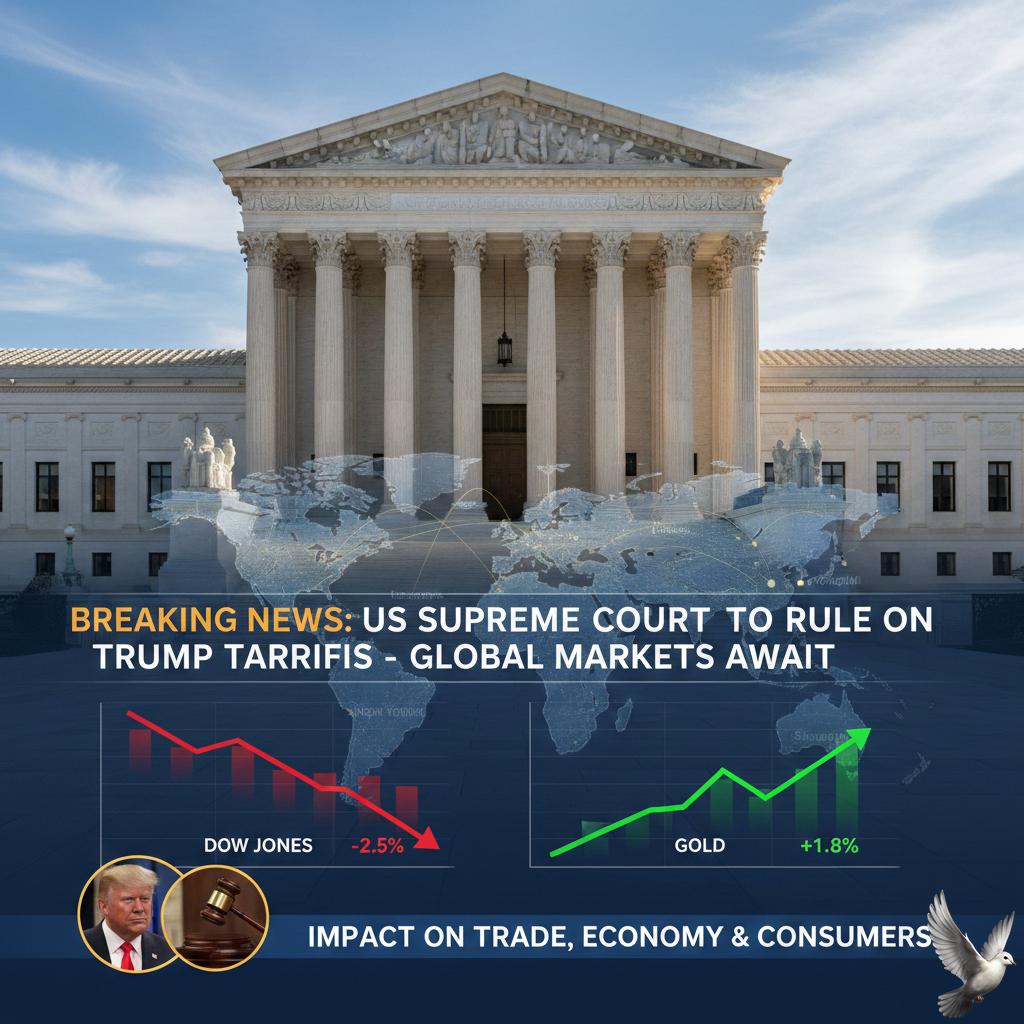
Global markets have entered a period of volatile relief following a landmark February 20, 2026, ruling by the US Supreme Court. In a 6-3 decision, the Court struck down sweeping global tariffs, ruling that the executive branch exceeded its authority under the International Emergency Economic Powers Act (IEEPA) of 1977.
This decision has effectively lowered the trade-weighted average US tariff rate from 15.4% to approximately 8.3%. Investors and trade partners are currently assessing the impact of this legal reset, which invalidates country-specific "reciprocal" duties and emergency levies that had generated over $175 billion in revenue.
Financial markets responded immediately to the news. The Dow Jones Industrial Average rose 207 points to reach 49,602, while the S&P 500 climbed 0.52% to 6,895. This rally reflects short-term optimism as businesses anticipate a more predictable trade environment and the potential for billions of dollars in tariff refunds.
However, the relief may be temporary. Within hours of the ruling, the administration invoked Section 122 of the Trade Act of 1974 to impose a new 10% global import surcharge. This was quickly adjusted on February 21 to a 15% global tariff framework. Unlike the previous emergency levies, these new duties are subject to a 150-day statutory limit unless extended by Congress.
Key sectors remain under pressure. The Court’s ruling does not affect industry-specific duties on steel, aluminum, and automotive imports, which remain in place under separate national security authorities. For major partners like India, the effective tariff burden has shifted from 18% under previous deals to 15% under the current revised framework.
Global trade dynamics are now focused on legislative hurdles. With the 150-day window active for the new 15% tariffs, the focus shifts to the US Congress, which now holds a more central role in determining trade policy. Markets are bracing for continued uncertainty as the administration explores alternative legal avenues to maintain its trade agenda.
Current economic indicators suggest that while the ruling provides a structural check on executive power, the broader trend of economic nationalism persists. Analysts expect persistent price pressures, as the effective US tariff rate remains significantly higher than the 3% level seen at the start of 2025. Trade partners including the EU, China, and Canada are now re-evaluating bilateral agreements that may have been rendered obsolete by the Court's decision.